3 weeks ago
Does Knuckle Cracking Damage Joints? Doctors and Research Say No
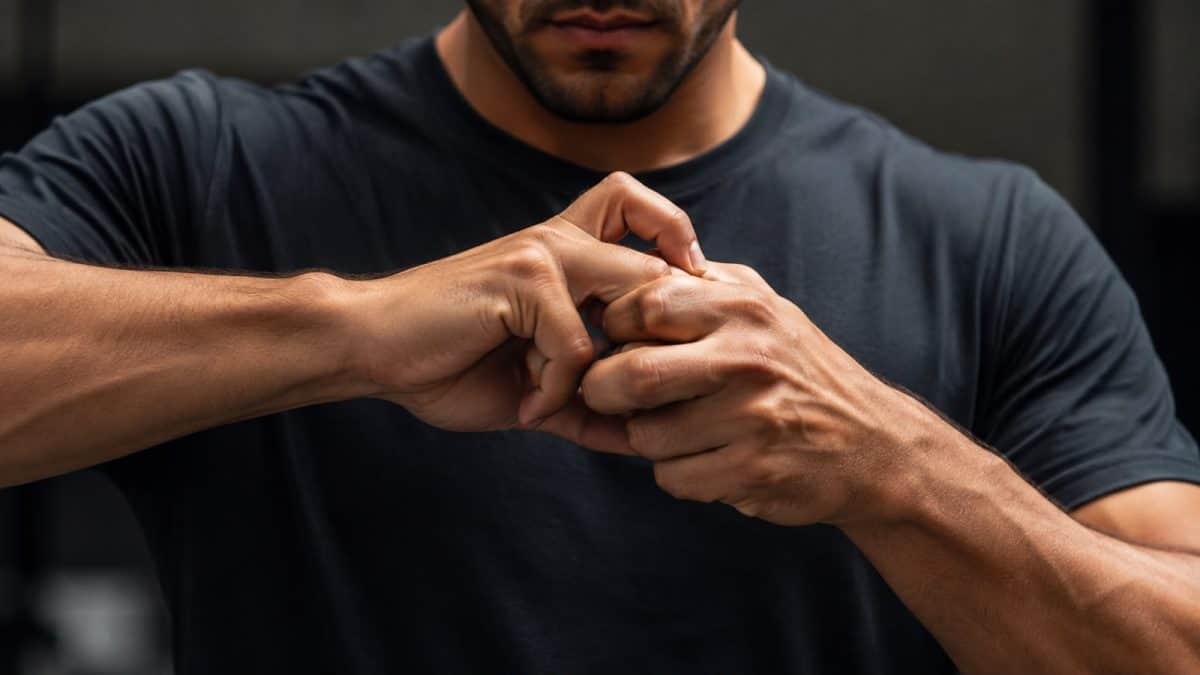
Have you ever heard a loud pop when someone cracks their knuckles?
Some people love that sound, while other people worry that it is hurting their hands.
The pop does not mean your bones are breaking or rubbing together.
Inside your finger joints there is a slippery liquid called synovial fluid.
When you stretch your finger, the space inside the joint grows and the pressure drops, which makes a tiny gas bubble form in the liquid.
That bubble, called joint cavitation, is what makes the popping sound.
Doctors and researchers have studied people who crack their knuckles for many years and have not found proof that the habit causes arthritis, a disease that makes joints painful and stiff.
Two studies, one from 1975 and another with 215 people, found no extra risk.
Cracking too hard can hurt you, so gentle cracking is best.
If a joint pops and also hurts, swells, or feels weak, you should see a doctor.

The popping sound comes from a gas-filled cavity (joint cavitation) forming in synovial fluid when pressure inside the joint drops suddenly.
The noise does not mean bones are grinding against each other or breaking.
Research has not established that habitual knuckle cracking causes osteoarthritis; a 1975 nursing home study and a 215-person study found no increased risk.
Gentle, painless cracking is generally considered harmless, but forceful cracking can cause finger sprains and forceful neck manipulation carries more serious risks.
A pop accompanied by pain, swelling, stiffness, locking, weakness, or reduced movement should be evaluated by a doctor.
- Who
- People who habitually or occasionally crack their knuckles, along with doctors and researchers such as Dr Archit Goyal of Amrita Hospital, Faridabad, who study joint health.
- What
- An explainer on why knuckles make a popping sound and whether cracking them harms the joints or causes arthritis.
- Where
- A general health-and-fitness feature by News18 Lifestyle; the expert quoted is based at Amrita Hospital, Faridabad, India.
- When
- Published on August 09, 2026.
- Why
- To determine whether the generations-old warning that knuckle cracking causes arthritis is supported by research.
Common Warning
Research Findings
Does knuckle cracking cause arthritis?
Common Warning
A widely repeated, generations-old belief holds that repeatedly cracking knuckles damages the joints and eventually causes arthritis.
Research Findings
Research has not established that habitual knuckle cracking causes osteoarthritis, with a 1975 nursing home study and a 215-person study finding no increased risk.
Key facts
- Publication
- News18 Lifestyle
- Published
- August 09, 2026
- Cause of the pop
- Joint cavitation: a gas-filled cavity forms in synovial fluid when joint pressure drops suddenly
- Main finding
- No established link between habitual knuckle cracking and osteoarthritis
- 1975 study
- Nursing home residents who cracked knuckles had similar arthritis rates to those who did not
- 215-person study
- No increased hand osteoarthritis risk tied to knuckle-cracking history
- Expert quoted
- Dr Archit Goyal, Orthopaedics and Joint Replacement and Spine Surgery, Amrita Hospital, Faridabad
- Warning signs
- Pain, swelling, stiffness, locking, weakness, or reduced movement accompanying a pop
Quotes
Dr Archit Goyal
Consultant and Assistant Professor of Orthopaedics and Joint Replacement at Amrita Hospital, Faridabad.
“"Studies comparing people who regularly crack their knuckles with those who do not have failed to show any meaningful increase in hand osteoarthritis due to this habit."”
 firstpost.com
“"Patients often come with the fear that knuckle cracking will damage their joints over time."”
firstpost.com
Sources
Related news
Saina Nehwal Opens Up About Arthritis Ending Her Badminton Career

Sonu Nigam's Finger Growth Returns After Surgery; Arthritis Suspected
Prayer Sign Test May Reveal Hidden Diabetes-Related Stiffness

Bipasha Basu Told She May Never Dance Again Over Osteoarthritis

Arthritis, Osteoporosis or Ageing? How to Tell What Symptoms Mean

Ultra-Flat Shoes Spark Back Pain Concerns, Orthopaedic Doctors Warn
National Nutrition Week Promotes A Truly Balanced Plate
H1N1 Recovery: Seven Mistakes To Avoid After Fever
H1N1 Cases Rise as Flu Vaccine Demand Surges Nationwide
Seven Ways Gym-Goers Can Prevent H1N1 During Flu Season

Amitabh Bachchan Gives Up Rice, But Should Older Adults?