1 week ago
Prayer Sign Test May Reveal Hidden Diabetes-Related Stiffness
Diabetes can sometimes make parts of the body stiff without causing obvious pain.
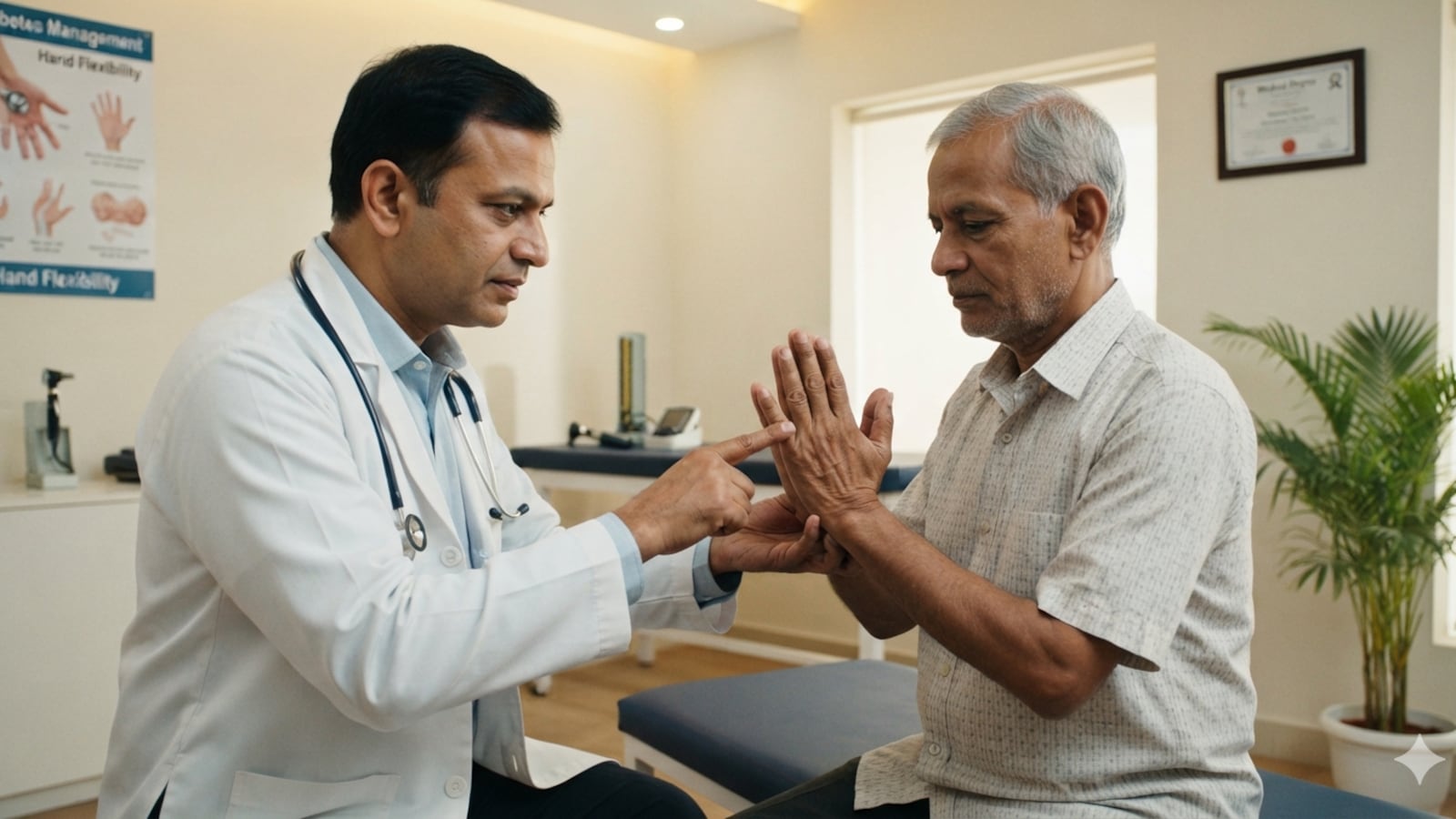
One simple check looks at how well your hands come together.
Press your palms and fingers together like you are praying.
If they lie flat with no gaps, the movement is normal.
If your fingertips touch but your palms cannot flatten, the tissues may be stiff.
This is called diabetic cheiroarthropathy and can happen after blood sugar has been high for a long time.
The test cannot prove that someone has diabetes.
Anyone concerned should speak with a doctor, especially if other symptoms are present.

The prayer sign test checks whether the palms and fingers can lie completely flat together.
A visible gap between the palms or fingers may indicate limited joint mobility, known as diabetic cheiroarthropathy.
Long-term high blood sugar can stiffen collagen and proteins in the skin and tendons.
A positive test does not confirm diabetes but may warrant medical evaluation.
Other possible diabetes symptoms include thirst, frequent urination, fatigue, blurred vision and slow-healing wounds.
- Who
- People with long-standing or poorly controlled Type 1 or Type 2 diabetes may develop this hand stiffness.
- What
- The prayer sign test screens for limited hand-joint mobility that may be associated with diabetes.
- Where
- The limitation is observed in the palms, fingers and small joints of the hands.
- When
- It may occur after blood sugar has been high over a long period.
- Why
- Persistently high blood sugar can cause glycosylation, making collagen and other tissues stiff.
Key facts
- Test
- Press the palms and fingers flat together in a prayer position.
- Normal result
- The palms, fingers and joints touch flatly without gaps.
- Abnormal result
- The fingertips touch, but the palms or fingers cannot flatten together.
- Condition associated with stiffness
- Diabetic cheiroarthropathy, also called limited joint mobility.
- Underlying process
- High blood sugar can cause sugar to attach to collagen and proteins, making tissue waxy and stiff.
- Diagnostic significance
- A positive prayer sign does not definitively establish diabetes.
- Recommended response
- Consult a doctor if the limitation appears, particularly alongside other diabetes symptoms.
Sources
Related news

Nutritionist Shares 8 Exercises That May Help Control Blood Sugar
Skin and Waist Changes May Signal Improving Insulin Sensitivity

Recognizing Ten Common Symptoms of Hyperglycaemia Early

Aegle Touch Holds Diabetes Awareness Conclave in Hyderabad
Expert Says No Established Link Between Agarbatti and Diabetes