

1 week ago
AI Helps Reveal Hidden Heart Risks Between Heartbeats
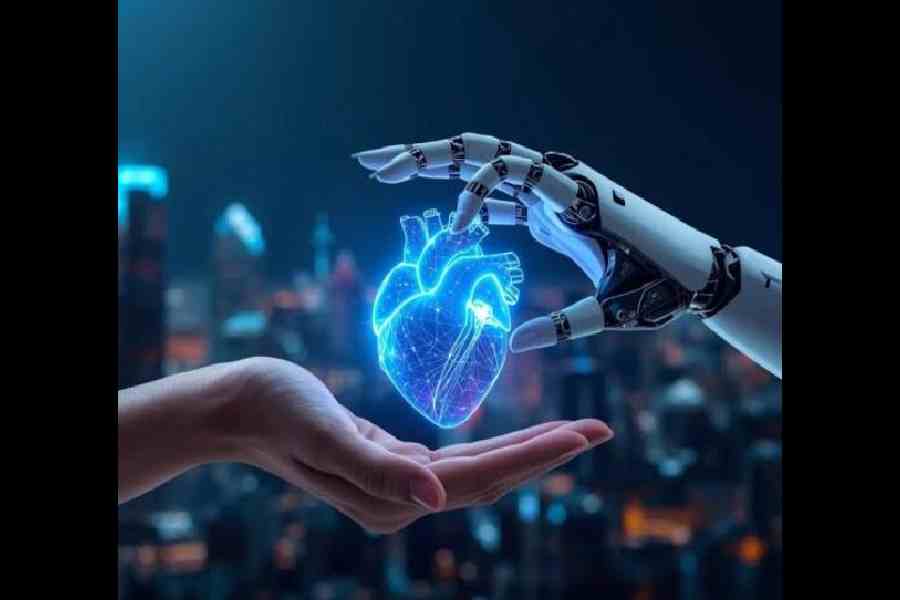
Artificial intelligence is a type of computer technology that can study medical information quickly.
Doctors can use it to look at heart tests, scans, symptoms and family history together.
In one example, AI suggested that a man with mild symptoms might have a serious heart-muscle disease.
This kind of disease can make it harder for the heart to pump blood.
AI can also help predict heart attacks, heart failure and other problems before they become obvious.
Smartwatches may help find unusual heart rhythms.
However, AI can make mistakes when its data is incomplete or unfair.
Doctors still need to check its suggestions and understand each patient.
Privacy, fairness and responsibility must be protected as the technology develops.

AI analysis of symptoms, tests and family history suggested a 42-year-old man might have serious cardiomyopathy.
Artificial intelligence can analyze ECGs, scans, genetic patterns and other data to improve cardiovascular risk prediction.
AI tools may identify risks among people without symptoms and help predict heart failure, heart attacks and disease progression.
Smartwatches and other devices are increasingly being validated for detecting abnormal heart rhythms and monitoring blood pressure.
Concerns include inaccurate or biased results, privacy risks, opaque decisions, physician overreliance and unclear legal responsibility.
- Who
- Doctors, cardiologists, artificial-intelligence systems and patients with cardiovascular conditions; the article also describes a 42-year-old IT executive identified by a changed name.
- What
- The article examines how AI can detect, predict and help manage heart disease, while outlining its limitations and risks.
- Where
- In cardiovascular medicine and healthcare settings, including ECG, echocardiography, CT angiography, MRI and wearable-device monitoring.
- When
- AI is increasingly being used in medicine in the 21st century; an AI-ECG biomarker was developed in 2024.
- Why
- To improve early diagnosis, risk prediction, treatment planning and personalised cardiac care, while addressing bias, privacy, ethics and safety concerns.
AI's Medical Promise
AI's Medical Risks
Diagnosis and prediction
AI's Medical Promise
AI can process large amounts of information and help identify hidden cardiac abnormalities, predict adverse outcomes and support earlier intervention.
AI's Medical Risks
AI may misinterpret subtle abnormalities or miss disease when the underlying data is incomplete, poor-quality or biased.
Role in clinical care
AI's Medical Promise
AI can support faster, more precise decisions and assist with treatment planning, prognosis, discharge decisions and long-term follow-up.
AI's Medical Risks
Excessive dependence on AI could erode physicians' clinical expertise and make healthcare feel less personal.
Fairness and accountability
AI's Medical Promise
AI may uncover genetic and prognostic patterns that are difficult for humans to detect, potentially enabling more individualised care.
AI's Medical Risks
Models trained mainly on one demographic may work less accurately for women, minorities or underserved groups, while responsibility for errors remains unclear.
Key facts
- Medical example
- AI analysis suggested that a 42-year-old man might have serious cardiomyopathy.
- AI-ECG development
- An AI-ECG biomarker developed in 2024 was designed to predict one-year mortality, hospitalisation and rehospitalisation among patients with heart failure.
- Cardiac applications
- AI can analyze ECG signals, echocardiograms, CT angiograms and cardiovascular MRI scans.
- Risk prediction
- Machine-learning models can combine coronary artery calcium scores and fat tissue around the heart to estimate heart-attack and cardiac-death risk.
- Wearable technology
- Smartwatch-enabled heart-rhythm detection and blood-pressure monitoring are increasingly being validated.
- Key limitations
- Potential problems include poor-quality data, algorithmic bias, privacy vulnerabilities, opaque decision-making and diagnostic errors.
- Safeguards discussed
- The article calls for regulatory frameworks, training and ethical safeguards, including measures such as the Artificial Intelligence Act.
Sources
Related news
Can Smartwatches Really Tell If Your Heart Is Healthy?
AI Could Bridge Women's Health Gap, But Better Data Key

Silent AFib Can Raise Stroke Risk Fivefold, Doctors Warn

ECG Redirects Heart Patient From Transplant to Treatable Rhythm

Why Young Adults Should Check Heart Health Before 25
Bengaluru Marathoner Dies of Suspected Cardiac Arrest at 31
Chalkboards, AI Professors, and the Future of Human Teaching

India’s Insolvency Framework Faces New Questions From AI Transactions

AI, Networking Debate Intensifies Over Future of Tech Careers

Bessent Says AI Could Fuel U.S. Startup Boom
Readers Debate AI Content Rights and National Identity
