1 week ago
ECG Redirects Heart Patient From Transplant to Treatable Rhythm

A woman’s heart was becoming too weak to pump blood properly.
Doctors first thought her damaged heart valve might require a transplant.
Her heart was also beating very fast.
A careful look at a simple ECG showed that the fast heartbeat came from an abnormal rhythm called atrial tachycardia.
This rhythm had been making her heart work too hard for too long.
Doctors used a controlled electrical shock to reset her heartbeat.
Her normal rhythm returned, and her heart became stronger over the next few weeks.
About four weeks later, her pumping ability was back in the normal range.
She still needed treatment for her valve, but a transplant was no longer the immediate path.

A 47-year-old woman with rheumatic heart disease had severe mitral regurgitation and an ejection fraction of 20 percent.
Her rapid decline led doctors to consider valve replacement and possible heart transplantation.
An ECG showed that her apparent sinus tachycardia was actually atrial tachycardia.
Doctors used electrical cardioversion to restore her normal heart rhythm.
Her ejection fraction returned to the normal range in about four weeks, making valve replacement more feasible.
- Who
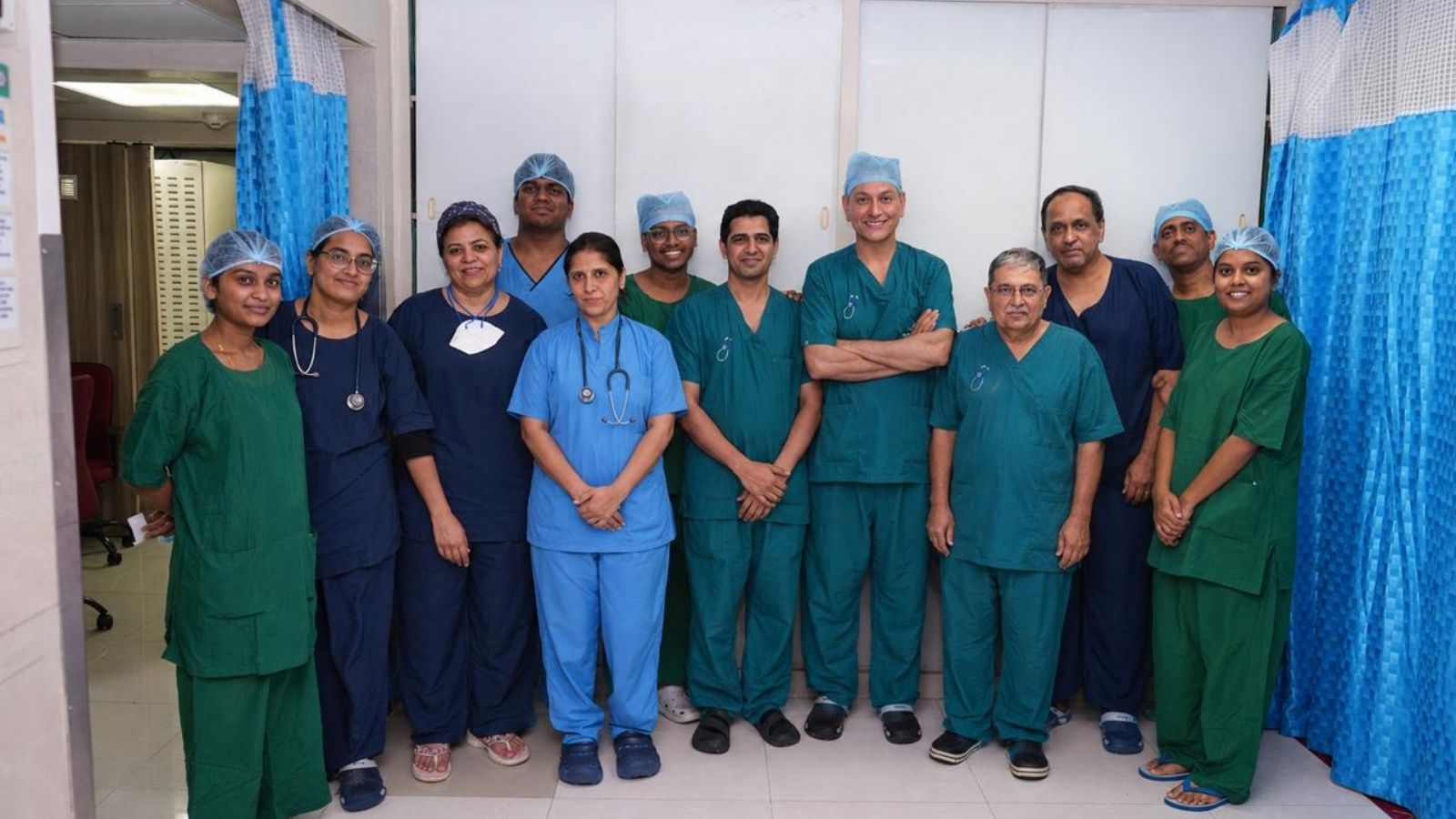
- A 47-year-old woman with rheumatic heart disease was treated by a cardiology team led by Dr Rajeev Menon.
- What
- An ECG identified atrial tachycardia that was contributing to severe heart weakness, allowing doctors to restore her rhythm and improve heart function.
- Where
- The case was described by Dr Rajeev Menon, clinical director of cardiology at AIG Hospitals.
- When
- Her ejection fraction returned to the normal range approximately four weeks after cardioversion.
- Why
- The team questioned whether mitral valve disease alone explained her unusually rapid decline and re-examined the ECG.
Key facts
- Patient
- 47-year-old woman with rheumatic heart disease
- Valve problem
- Severe mitral regurgitation
- Initial ejection fraction
- 20 percent
- Rhythm diagnosis
- Atrial tachycardia, initially mistaken for sinus tachycardia
- Treatment
- Electrical cardioversion under sedation
- Recovery
- Ejection fraction returned to the normal range in approximately four weeks
- Remaining treatment
- The mitral valve disease still required treatment, including valve replacement
Quotes
Dr Rajeev Menon
Clinical director of cardiology at AIG Hospitals, who treated the patient
“Doctor, I just want to get through this and go back home to be with my children. They need me. Please do whatever you think is right.”
 deccanchronicle.com
“Atrial tachycardia can do something similar to an engine being forced to run continuously at excessive speed.”
deccanchronicle.com
Sources
Related news

Heart transplant saves 40-year-old after major attack left heart at 15%
Rare combined heart procedure helps 77-year-old avoid blood thinners

AI Helps Reveal Hidden Heart Risks Between Heartbeats

Mechanical Support Expands Options for High-Risk Cardiac Patients

Bengaluru Marathoner Dies of Suspected Cardiac Arrest at 31

Pawan Kalyan Birthday Draws Wishes From Modi, Film Stars

Gautam Ghattamaneni’s Blunt Toxic Rating Sparks Letterboxd Buzz
Rajamouli Plans Global Push for Mahesh Babu’s Varanasi

Visakhapatnam Set for Trillion-Dollar Hub with New AIG Hospital

Prithviraj Sukumaran Finds Rising Telugu Demand Amid Kerala Slump