1 hr ago
India’s Food Industry Needs Stronger Action Beyond Voluntary Health Pledges
Some food companies tried making products with less sugar, salt or fat.
Many of these products did not sell well enough to continue.
This does not necessarily mean people do not care about health.
People often choose foods based on taste, price, convenience and familiarity.
One company may lose customers if it changes a familiar recipe while competitors do not.
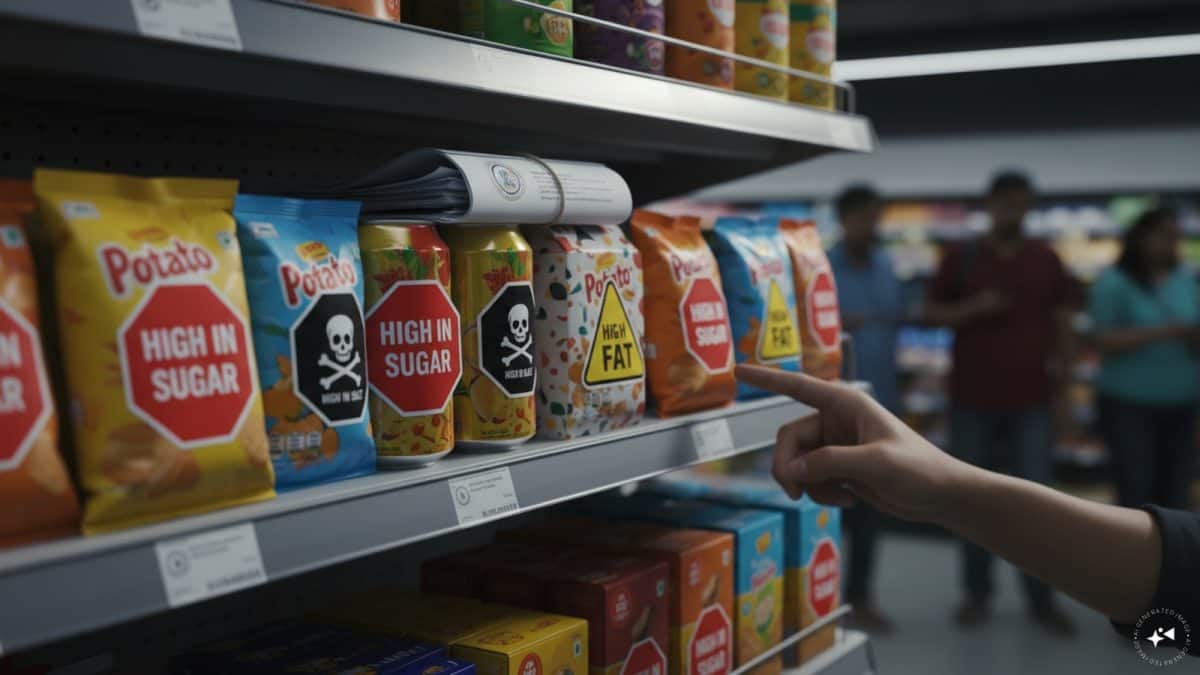
Warning labels on the front of packages could encourage all companies to improve at the same time.
Changing recipes safely will take time because taste, texture, shelf life and prices can be affected.
The article says government, companies, schools and consumers should work together to make healthier food easier to choose.

Mondelez India’s Cadbury Dairy Milk variant with 30% less sugar was discontinued after demand weakened.
Haldiram’s reduced-sodium and reduced-fat products, along with zero-sugar cola alternatives, faced similar challenges.
The 2018 Eat Right India movement encouraged companies to voluntarily reduce salt, sugar and saturated fat.
Front-of-pack warning labels could create common nutrient thresholds and reduce the first-mover risk of reformulation.
The article calls for phased regulation, nutrition education, fiscal incentives and broader healthier-food access.
- Who
- Indian food companies, the Food Safety and Standards Authority of India, government bodies, schools and consumers.
- What
- The article argues that voluntary health pledges need to be supported by front-of-pack warnings and broader reforms.
- Where
- India, including Delhi schools and the country’s food, retail and restaurant markets.
- When
- The Eat Right India movement began in July 2018; the proposed labeling transition would require a phased approach.
- Why
- Voluntary reformulation leaves individual companies bearing commercial risks, while coordinated rules could encourage healthier products across the market.
Public-health and coordinated-regulation case
Food-industry concerns
Front-of-pack warning labels
Public-health and coordinated-regulation case
Common nutrient thresholds could create a level playing field and encourage companies to reformulate without bearing the commercial risk alone.
Food-industry concerns
Companies are concerned about impacts on brands, sales, implementation costs and consumer perceptions.
Speed of reformulation
Public-health and coordinated-regulation case
Warnings and regulation should progressively move the market toward healthier products.
Food-industry concerns
Reducing sugar, salt or fat can affect taste, texture, shelf life and price, while consumers need time to adapt.
Role of voluntary action
Public-health and coordinated-regulation case
The article argues that the 2018 voluntary approach did not provide enough coordination to sustain healthier products.
Food-industry concerns
Companies made what the article describes as sincere reformulation efforts, but products struggled because consumers continued to prioritize taste, familiarity, convenience and price.
Key facts
- Eat Right India launch
- The Food Safety and Standards Authority of India launched the movement in July 2018.
- Voluntary pledge
- Major food companies pledged to reduce salt, sugar and saturated fat.
- Cadbury reformulation
- Mondelez India introduced a Dairy Milk variant containing 30% less sugar, but later discontinued it after demand failed to persist.
- Similar product challenges
- Haldiram’s reduced-sodium or reduced-fat products and major cola companies’ zero-sugar alternatives also encountered market difficulties.
- Proposed policy
- Front-of-pack warning labels would apply common nutrient thresholds to comparable products.
- International example
- Chile, Peru and Argentina used multi-year, phased implementation with progressively tighter thresholds.
- Broader proposals
- The article recommends nutrition education, fiscal incentives, ESG disclosures and eventually healthier-food labeling in restaurants and retail.
Sources
Related news
India’s Front-of-Pack Food Warning Debate Faces Industry Pushback
India Drops Food Warning Labels as Court Reviews Policy
India's Food Warning Labels Challenge Companies and Consumer Habits

India Proposes Red Front-Pack Warnings for High-Nutrient Foods

Nestle Seeks Industry Input in India’s Food Warning Debate
India’s Front-of-Pack Food Warning Labels Face Supreme Court Review
Experts Seek Single-Nutrient Warning Labels for Packaged Foods
Food Inspectors Find Hygiene Gaps, Papaya Seeds In Pepper

FSSAI Scrutiny Drives Compliance Demands for Food Startup Investments

Delhi High Court Rejects Vimal Elaichi Plea Over FDA Notices