58 mins ago
India’s Front-of-Pack Food Warning Labels Face Supreme Court Review
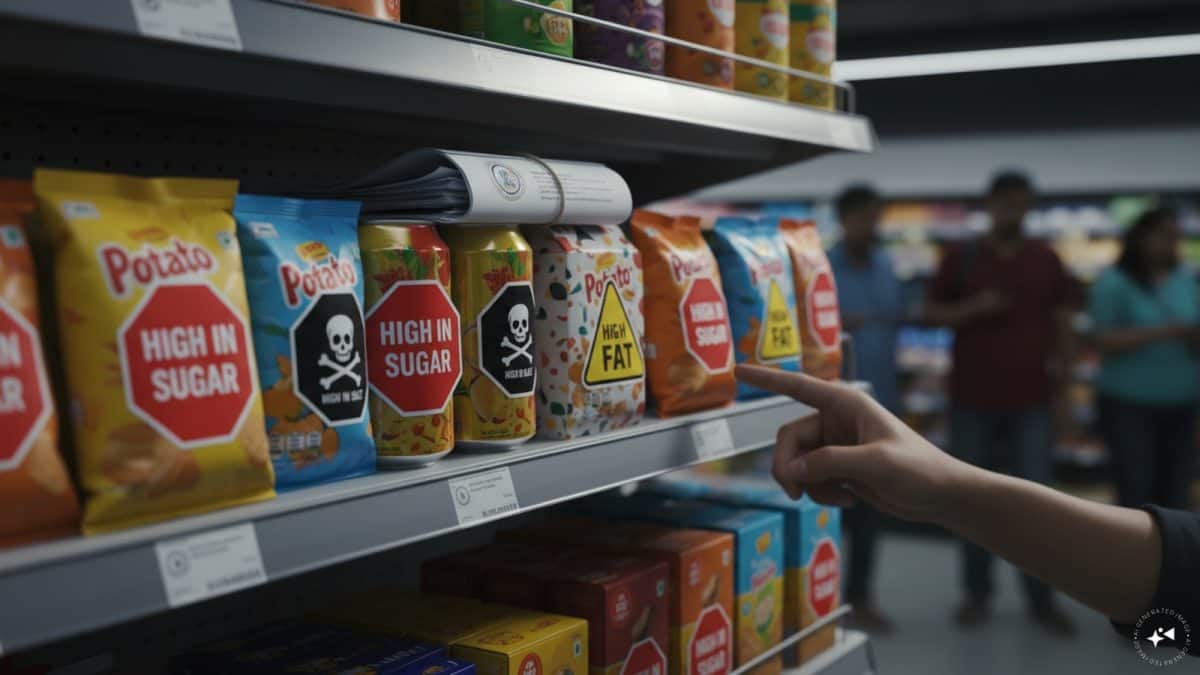
India may soon put warning symbols on packaged foods that are high in sugar, salt or saturated fat.
The Supreme Court will review the issue on September 10, 2026.
The food regulator, FSSAI, has proposed how these warnings should look.
Health advocates say this is a good start but not enough.
They worry that foods high in only one unhealthy nutrient may not receive a warning at first.
They also want clearer labels, larger writing and a firm date for stronger rules.
Food companies say a gradual approach would give them time to change recipes and packaging.
Several large companies say they are ready to follow the rules.
The main question is whether the final labels will be clear and strong enough to help shoppers make healthier choices.

The Supreme Court is scheduled to review India’s front-of-pack labelling case on September 10, 2026.
FSSAI has proposed mandatory visual warnings for packaged foods high in sugar, salt and saturated fat.
The petitioner supports warning labels but objects to the proposed colour, font size, sugar definition and implementation timeline.
Under the first phase, warnings would apply only when at least two nutrients exceed specified levels.
Nestlé, Coca-Cola and PepsiCo have said they support or are prepared to comply with science-based labelling rules.
- Who
- The Supreme Court, FSSAI, the petitioner 3S and Our Health Society, public-health advocates, and packaged-food companies are involved.
- What
- The court will review proposed front-of-pack warning labels for packaged foods high in sugar, salt and saturated fat.
- Where
- India.
- When
- The review is scheduled for September 10, 2026; the latest critical hearing occurred on August 13.
- Why
- The proposals are intended to help consumers identify products containing high levels of nutrients of concern and address concerns about obesity, diabetes, hypertension and other non-communicable diseases.
Public-health advocates and petitioner
Food companies and phased implementation supporters
Scope of the first phase
Public-health advocates and petitioner
Advocates want each nutrient of concern to trigger a warning immediately, arguing that products high in only one nutrient could otherwise appear healthy.
Food companies and phased implementation supporters
Industry representatives support phasing, saying it would give manufacturers time to reformulate products, redesign packaging and adapt implementation systems.
Label design and visibility
Public-health advocates and petitioner
The petitioner and advocates question the proposed colour and font size, arguing that warnings must be prominent, readable and difficult to misinterpret.
Food companies and phased implementation supporters
Companies have generally backed science-based interpretive labelling and clear nutrition information, while emphasizing informed consumer choice and regulatory compliance.
Sugar measurement and timelines
Public-health advocates and petitioner
The petitioner objects to counting only added sugar rather than whole sugar and wants a firm deadline for the second phase.
Food companies and phased implementation supporters
The proposed framework allows a phased rollout, which supporters say could make implementation easier, though the articles do not identify a fixed second-phase deadline.
Key facts
- Court review date
- September 10, 2026
- Latest hearing
- August 13, when the court gave the central government and FSSAI two weeks to finalise a warning-label format
- Regulator
- Food Safety and Standards Authority of India
- Nutrients covered
- Sugar, salt and saturated fat
- First proposed phase
- Warnings would appear when at least two nutrients exceed specified levels
- Second proposed phase
- Warnings would extend to products high in even one covered nutrient
- Industry position
- Nestlé, Coca-Cola and PepsiCo have expressed support for or readiness to comply with proposed rules
Quotes
Dr Arun Gupta
Paediatrician and convenor of Nutrition Advocacy in Public Interest
“PepsiCo India remains committed to complying with all applicable regulatory standards and continuously aligning our packaging and labelling with evolving regulations and consumer expectations. As an industry, we believe it is important to work collaboratively towards a scientifically robust FOPNL framework that empowers consumers to make informed choices, while ensuring full compliance with applicable regulations.”
 firstpost.com
“After years of advocacy, and after the Supreme Court pushed the issue, FSSAI has accepted a front-of-pack warning. That fight is won. The next fight is not whether there will be a label, but whether the label will tell the truth.”
firstpost.com
Philipp Navratil
Nestlé SA Global CEO
“On a macro level, we welcome transparency, and consumers being curious about what they eat and what they consume. I think we have always been pro-transparency, and we are probably the only company that actually does declare the calories on the front-of-the-pack here in India.”
firstpost.com
Sources
Related news

Supreme Court gives FSSAI last chance on warning labels

India Proposes Red Front-Pack Warnings for High-Nutrient Foods
FSSAI Proposes Red Front-Pack Warnings For Unhealthy Foods
India’s Front-of-Pack Food Warning Debate Faces Industry Pushback

India’s Proposed Food Warning Labels Face Health, Industry Backlash
India Drops Food Warning Labels as Court Reviews Policy

Supreme Court Denies Bail, Orders Burglary Trial Within Six Months

Supreme Court Appoints Former Orissa HC Chief Justice BCA Administrator

Supreme Court Sets Aside Tata Steel’s ₹1,007 Crore GST Notice