1 hr ago
Experts Urge India to Require Warnings for Single Nutrients

India is deciding how to warn people about unhealthy packaged foods.
The foods may contain too much added sugar, salt, or saturated fat.
The food safety authority proposed a warning only when a product has too much of at least two of these nutrients.
The National Institute of Nutrition says a warning should appear even when only one nutrient is too high.
It recommends separate red labels saying “HIGH SUGAR,” “HIGH FAT,” or “HIGH SALT.”
These labels could help shoppers understand the problem quickly.
Sixty nutrition experts from several countries supported this stricter approach.
Some food industry representatives have opposed warning labels and supported listing information per serving instead.

India’s National Institute of Nutrition urged warnings when packaged food exceeds the limit for even one nutrient of concern.
The Food Safety and Standards Authority of India proposed warnings only for products high in at least two nutrients.
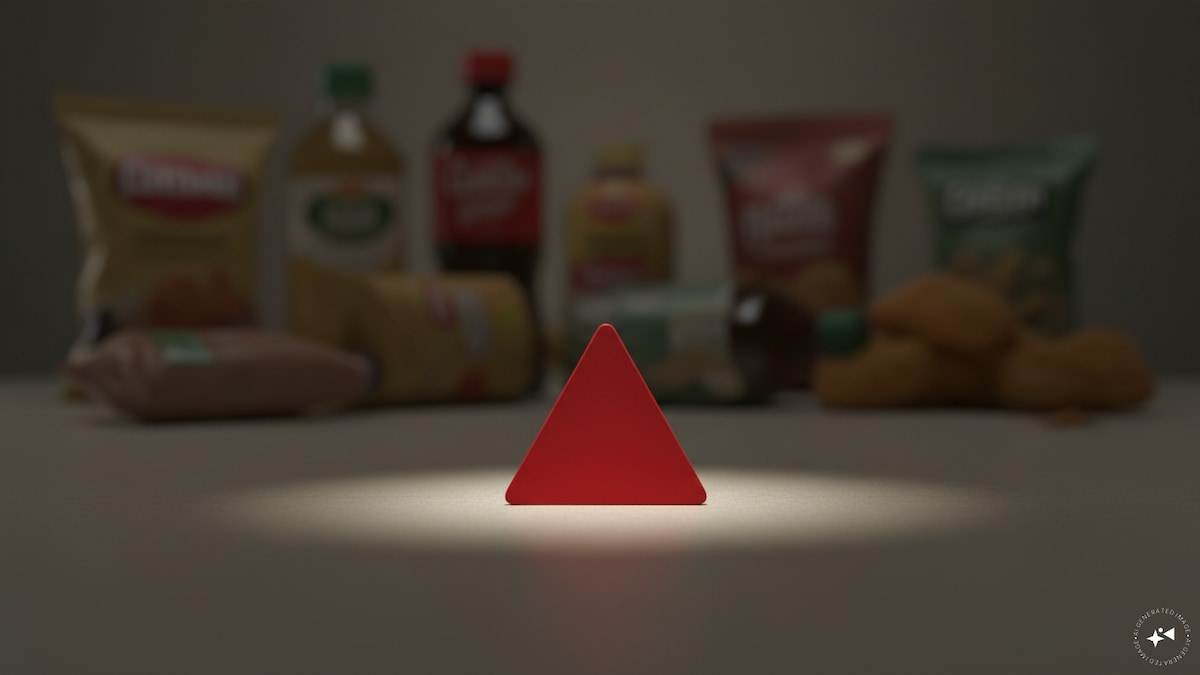
The proposed red hexagonal labels would address added sugar, added saturated fat, and added salt.
NIN recommended separate warnings such as “HIGH SUGAR,” “HIGH FAT,” and “HIGH SALT” for clearer consumer information.
A network of 60 global nutrition scholars backed NIN, while food processors opposed warning labels and favored per-serve labelling.
- Who
- The National Institute of Nutrition, the Food Safety and Standards Authority of India, global nutrition scholars, and food industry representatives.
- What
- They are debating whether packaged foods should receive front-of-pack warnings when they exceed the limit for one or at least two nutrients of concern.
- Where
- India, including the National Institute of Nutrition in Hyderabad and the Food Safety and Standards Authority of India in New Delhi.
- When
- The Food Safety and Standards Authority of India addressed the Supreme Court on August 27; the National Institute of Nutrition sent its note on September 3.
- Why
- The National Institute of Nutrition and its supporters say warnings are needed to clearly identify health risks from excessive added sugar, salt, or saturated fat.
Single-Nutrient Warnings
Two-Nutrient Threshold
When warnings should appear
Single-Nutrient Warnings
The National Institute of Nutrition and 60 global nutrition scholars say products high in one nutrient should not be exempt because each nutrient can independently pose health risks.
Two-Nutrient Threshold
The Food Safety and Standards Authority of India told the Supreme Court it would require warnings only when products are high in at least two nutrients of concern.
How labels should work
Single-Nutrient Warnings
The National Institute of Nutrition favors separate red hexagonal warnings identifying each problematic nutrient, such as “HIGH SUGAR” or “HIGH SALT.”
Two-Nutrient Threshold
The Food Safety and Standards Authority of India’s proposal uses a two-or-more-nutrient requirement; the article does not specify a final label design for that approach.
Industry concerns
Single-Nutrient Warnings
Public health advocates, including Arun Gupta, argue that delaying warnings and requiring two nutrients could prioritize industry economic concerns over consumer health.
Two-Nutrient Threshold
The All India Food Processors Association opposed warning labels and pushed for per-serve labelling.
Key facts
- Nutrients covered
- Added saturated fat, added sugar, and added salt.
- Food Safety Authority proposal
- Warnings for products high in any two or more nutrients of concern.
- National Institute of Nutrition position
- A warning should be required when a product exceeds the threshold for even one nutrient.
- Recommended label format
- Separate prominent red hexagons reading “HIGH SUGAR,” “HIGH FAT,” or “HIGH SALT.”
- Expert support
- A network of 60 global nutrition scholars backed the single-nutrient warning approach.
- Cited health estimate
- A 2024 study estimated that meeting World Health Organization sodium benchmarks could avert 1.7 million cardiovascular events, 700,000 chronic kidney disease cases, and 300,000 deaths in India during the first decade.
Quotes
Network of 60 global nutrition scholars
International nutrition academics who endorsed NIN’s position
“Individual nutrients can independently pose health risks. Therefore, products that are high in only one nutrient of concern should not be exempt from warning requirements.”
 telegraphindia.com
“When more than one threshold is exceeded, the corresponding warnings may be displayed together.”
telegraphindia.com
Arun Gupta
New Delhi-based paediatrician and public health advocate
“The comment from the experts directly refutes the industry intervention filed by the All India Food Processors Association, which was pushing for per-serve labelling and was opposed to warning labels.”
telegraphindia.com
Sources
Related news
FSSAI Open to Single-Phase Food Warning Labels
FSSAI Proposes Red Hexagon Warnings for High-Salt, Sugar, Fat Foods
FSSAI Proposes Red Front-Pack Warnings For Unhealthy Foods

India’s Proposed Food Warning Labels Face Health, Industry Backlash
India Proposes Front-Pack Warnings for High Sugar, Fat, Salt

India Proposes Red Front-Pack Warnings for High-Nutrient Foods

ICMR-NIN Review Finds Diet, Exercise Sustain Weight Loss

Uttarakhand Journalists Visit Hyderabad Development and Heritage Sites

Mancherial Centralized Kitchen Begins Breakfast for 49,104 Students