0 months ago
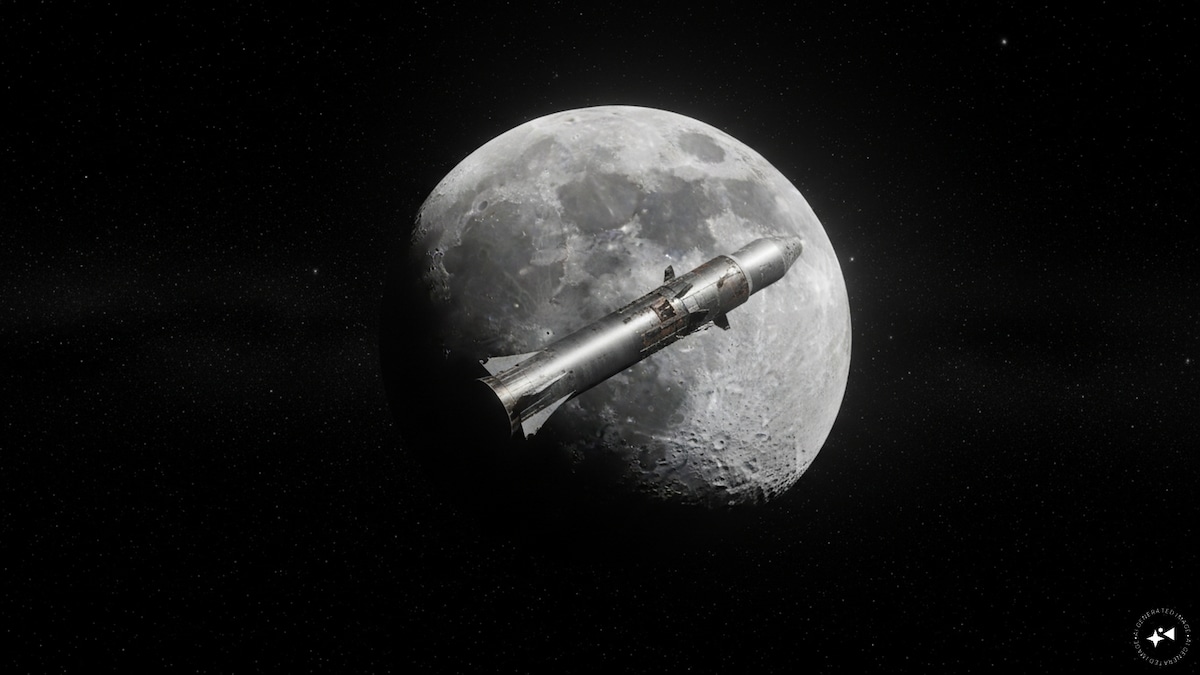
SpaceX Falcon 9 rocket stage believed to crash into Moon

A big piece of a SpaceX rocket flew into space and could not come back home.
It was about the size of a school bus and weighed as much as 4,000 kilograms.
The rocket part helped send robots toward the Moon in January 2025.
Then it ran out of fuel, so nobody could steer it anymore.
The Sun's energy and the pull of gravity slowly pushed it toward the Moon.
On Wednesday morning, scientists expected it to smash into the Moon very fast, about 8,690 kilometers per hour.
It was supposed to hit a spot on the Moon called Einstein Crater.
The crash was an accident, and it is not dangerous to people on Earth.
People probably could not see it with their eyes, but it may have made a big puff of Moon dust.
Scientists think they might learn a little bit about what happens when things hit the Moon.

An uncontrolled SpaceX Falcon 9 rocket second stage was expected to hit the Moon early Wednesday morning at about 2:35 a.m. ET (0635 GMT), travelling at 5,400 mph (8,690 kph).
The 4-metric-ton (4,000 kg), school-bus-size stage was left stranded in space after launching Firefly Aerospace's lunar lander toward the Moon in January 2025; one report says two private robotic lunar landers were aboard.
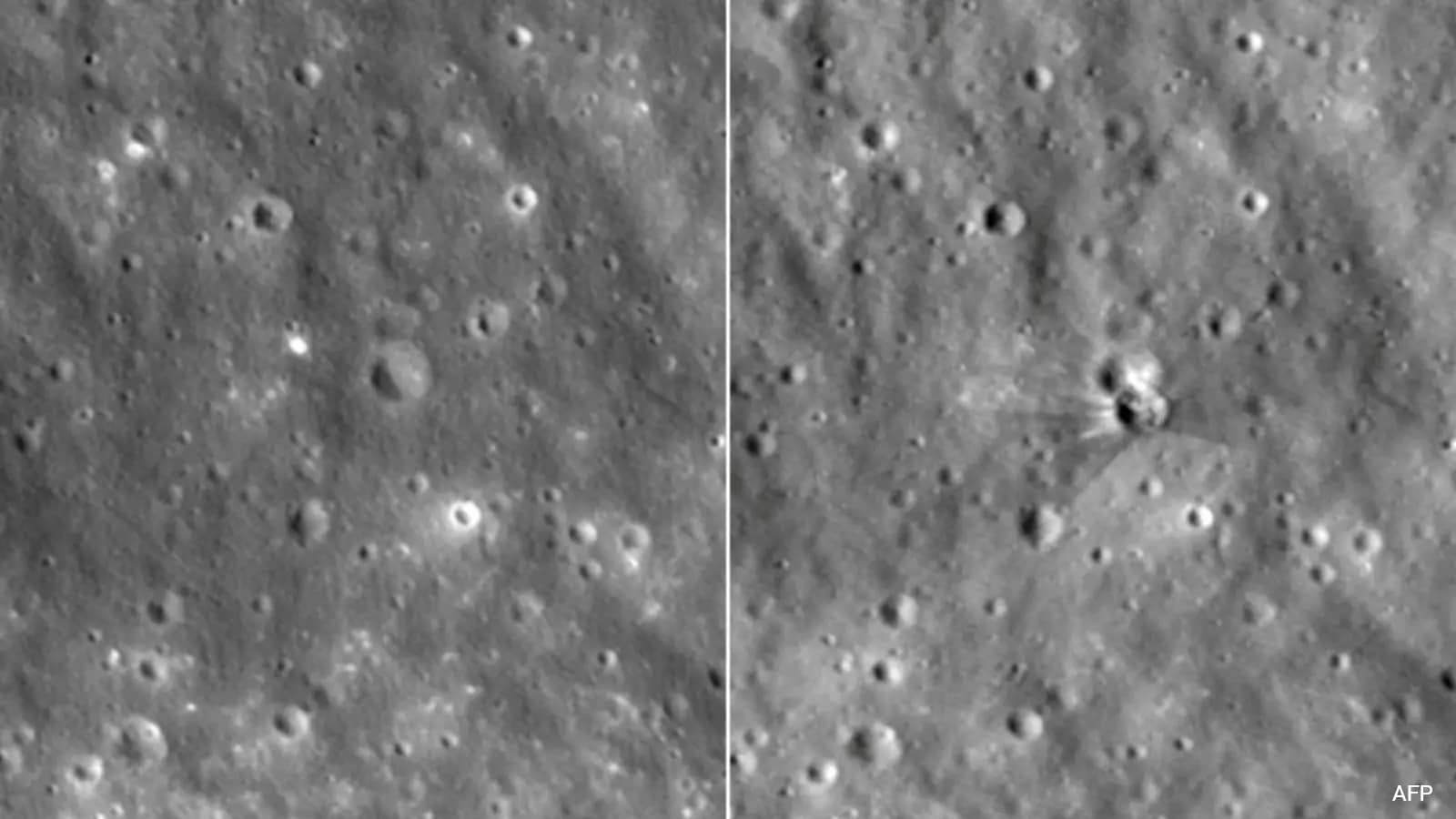
The stage was predicted to blast a crater about 89 feet wide at Einstein Crater on the Moon's western limb, kicking up a lunar dust plume likely too faint to see with the naked eye from Earth.
SpaceX said the impact was unintentional: the fuel-less, uncontrollable stage was pushed onto a lunar trajectory by a mixture of solar activity and gravity forces, and confirmation of the crash was unlikely for at least several hours.
Bill Gray said the crash may be of 'probably minor' scientific interest but 'does highlight a certain carelessness' about space junk disposal; NASA and SpaceX are discussing how to prevent future lunar impacts ahead of the Artemis program.
- Who
- An uncontrolled SpaceX Falcon 9 rocket second stage, tracked by astronomers including Bill Gray; SpaceX director Julianna Scheiman discussed its path.
- What
- The rocket stage unintentionally crashed into the Moon, expected to blast a crater about 89 feet wide at Einstein Crater and kick up a plume of lunar dust.
- Where
- The Moon — the expected impact site was Einstein Crater on the Moon's western limb.
- When
- Early Wednesday morning, August 5, 2026, at about 2:35 a.m. ET (0635 GMT).
- Why
- The spent stage used up its fuel delivering lunar lander(s) in January 2025 and could not be controlled or deorbited; a mixture of solar activity and gravity forces put it on a trajectory ending at the Moon, and SpaceX said the impact was unintentional.
Researchers' View
Critics' View
Scientific value of the crash
Researchers' View
Researchers hope the impact will reveal new insights into lunar impacts and help future Moon missions (per one report).
Critics' View
Bill Gray said the crash 'may be of some — probably minor — scientific interest,' though 'we may learn some things from it.'
Handling of space junk
Researchers' View
SpaceX said the impact was unintentional and 'doesn't present any danger to anyone,' caused by solar activity and gravity acting on a fuel-less stage.
Critics' View
Bill Gray said the crash 'does highlight a certain carelessness about how leftover space hardware (space junk) is disposed of.'
Key facts
- Object
- SpaceX Falcon 9 second stage, roughly school-bus-size
- Weight
- 4 metric tons (4,000 kg)
- Expected impact time
- Wednesday, Aug 5, 2026, about 2:35 a.m. ET (0635 GMT)
- Impact speed
- 5,400 mph (8,690 kph)
- Predicted impact site
- Einstein Crater, Moon's western limb
- Expected crater width
- About 89 feet
- Launch
- January 2025, carrying Firefly Aerospace's lunar lander (two private robotic landers per one report)
- Related lunar crashes
- China's rocket stage (2022); NASA's intentional 2009 impact; Russia's Luna-25 (2023); India's Chandrayaan-2 and Israel's Beresheet (2019)
Quotes
Julianna Scheiman
SpaceX director of NASA science and Dragon programs
“"What has happened is essentially a mixture of solar activity and gravity forces have put it on a path toward the moon."”
 theprint.in
“"This may be of some — probably minor — scientific interest, and we may learn some things from it."”
theprint.in