

2 hrs ago
Bombay High Court Strikes Down Maharashtra Sewer Compensation Policy

The Bombay High Court said people should not have to clean sewers in dangerous conditions.
It criticised the fact that manual scavenging still exists even though India has made major technological progress.
The court said this work is connected to unfair caste-based practices and harms human dignity.
Maharashtra had rules that made private societies and contractors responsible for paying families when workers died during hazardous cleaning.
The judges said government bodies must help families quickly, even if a private employer was involved.
The government can later recover the money from the responsible private party.
The court cancelled the disputed parts of the state’s rules because workers doing the same dangerous work should be treated equally.
Maharashtra must find all eligible deaths within six months and pay each family Rs 30 lakh.

The Bombay High Court struck down provisions in Maharashtra’s 2019 and 2025 resolutions shifting hazardous-cleaning death compensation to private societies and employers.
The court directed the state and local authorities to immediately compensate dependants, with later recovery from responsible private entities or employers.
It ruled that excluding workers at private premises from government compensation violated Article 14’s equality guarantee.
Maharashtra must identify within six months everyone who died during hazardous cleaning under the 2013 Act and pay each family Rs 30 lakh.
The state told the court that 81 deaths had been identified and their families had received Rs 10 lakh each, totaling Rs 8.10 crore.
- Who
- The Bombay High Court, petitioners including Shramik Janata Sangh, the Maharashtra government, and local authorities.
- What
- The court struck down provisions shifting hazardous-cleaning death compensation to private societies and employers and ordered immediate government compensation and rehabilitation.
- Where
- The Bombay High Court in Mumbai, concerning hazardous-cleaning work in Maharashtra.
- When
- The challenged resolutions were issued in 2019 and 2025; the court’s order required identification of eligible deaths within six months.
- Why
- The court found that the policy discriminated between workers based on their employer and failed to ensure immediate relief or effective enforcement of protections against manual scavenging.
Petitioners And Court
Maharashtra’s Policy Framework
Who should pay first
Petitioners And Court
The petitioners and court said the state and local authorities must immediately compensate dependants, regardless of whether the worker was engaged by a public or private entity.
Maharashtra’s Policy Framework
The challenged resolutions placed responsibility for compensation on private societies, contractors or employers in relevant cases.
Treatment of private-premises workers
Petitioners And Court
The court held that excluding workers at private premises treated people performing the same hazardous work differently solely because of their employer.
Maharashtra’s Policy Framework
The policy distinguished cases involving private societies and employers; the articles do not provide the government’s detailed justification for that distinction.
Enforcement of safeguards
Petitioners And Court
The petitioners alleged that authorities failed to enforce laws and safety requirements, and the court said continuing deaths showed inadequate implementation.
Maharashtra’s Policy Framework
The state reported identifying 81 deaths and paying Rs 10 lakh to each family, totaling Rs 8.10 crore.
Key facts
- Disputed policy
- Item 11 of Maharashtra government resolutions dated December 12, 2019, and April 30, 2025, shifted compensation responsibility to private societies, contractors or employers in specified cases.
- Court ruling
- The Bombay High Court struck down the disputed provisions as violating the constitutional right to equality under Article 14.
- Required compensation
- The state must pay Rs 30 lakh to the dependants of each person identified as having died during hazardous cleaning under the 2013 Act.
- Identification deadline
- Maharashtra must identify all eligible deaths within six months.
- Deaths previously identified
- The state reported that 81 deaths linked to manual scavenging had been identified.
- Earlier payments
- Families of the 81 identified victims received Rs 10 lakh each, totaling Rs 8.10 crore.
- Recovery mechanism
- State and local authorities may later recover compensation from the responsible private society, contractor or employer.
Quotes

Bombay High Court division bench
The division bench comprising Justices Bharati Dangre and Manjusha Deshpande.
“In the 21st century, we boast about reaching the other side of the moon, yet the hard reality that stares us in the face is that the social evil of the caste system is still followed in our country, which forces some of our citizens to do work that is below human dignity.”
 theprint.in
 freepressjournal.in
“Manual scavenging is one such practice, which forces a particular class of community to undertake this inhumane practice for generations, despite prohibition imposed on it by various judicial pronouncements of the Supreme Court and statutes prohibiting such practice.”
theprint.in
Sources

Related news
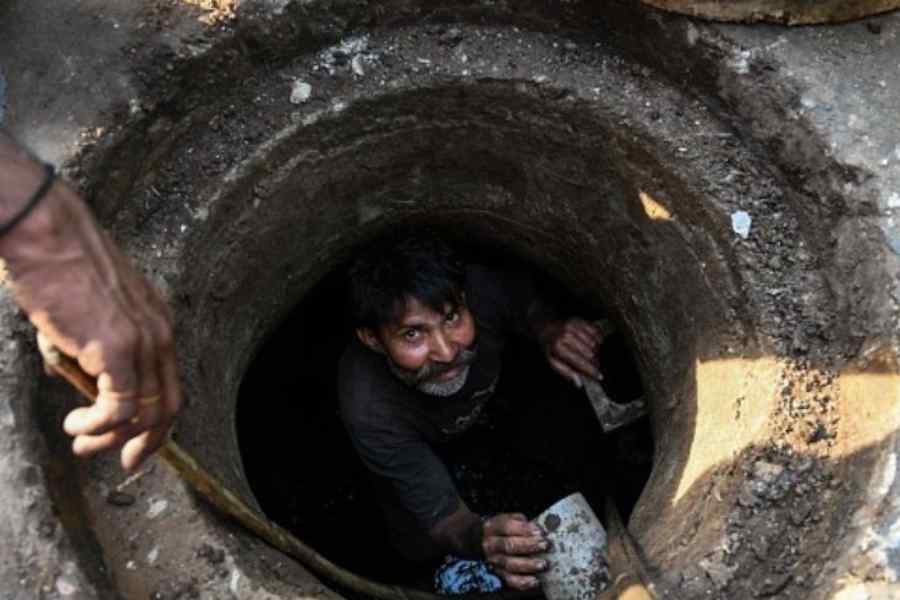
Activists challenge Centre's claim of no manual scavenging deaths

Government Approves Relief in 1,223 Sanitation Worker Death Cases
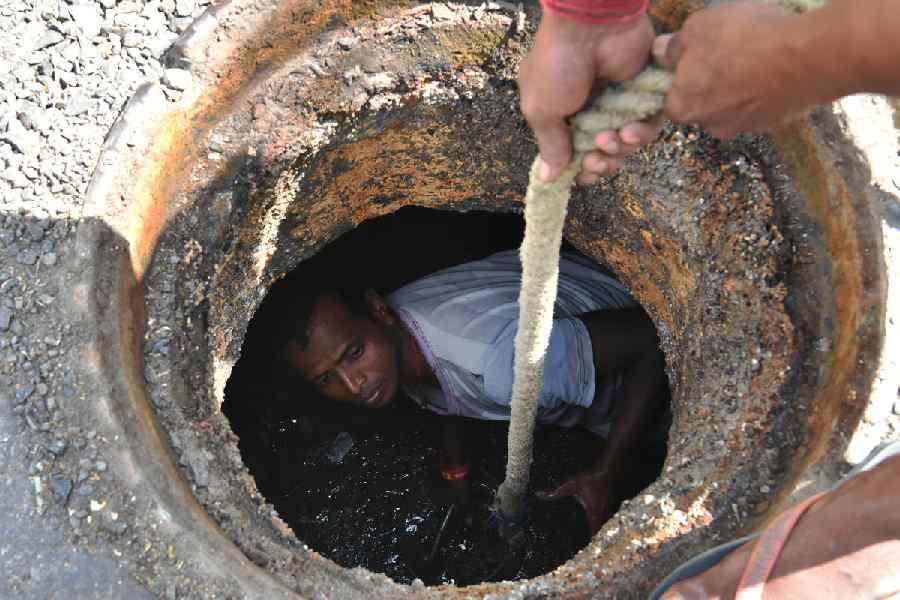
Bihar testimonies challenge India’s claim of zero manual scavengers
Bombay High Court Orders BMC Land Audit For Worker Housing

NCSK to Celebrate 32nd Foundation Day on August 23

Rights Panel Orders Ex Parte Case Over Mumbai Child Labour

Young Champions Shine at Maharashtra State Squash Open

Taapsee Pannu Returns to Action With Kanika Dhillon’s Gandhari

Maharashtra Woman, Two Children Die After Fort Jump
Officials Flag Off Daily CSMT–Sawantwadi Road Express Train
