

13 hrs ago
Bihar testimonies challenge India’s claim of zero manual scavengers
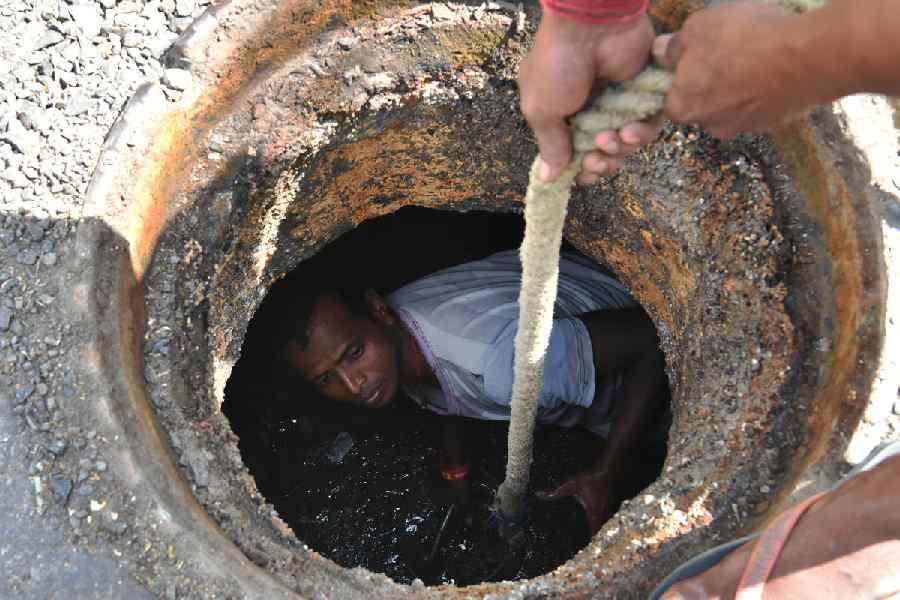
Some people in India still say they clean human waste by hand.
Savita Devi, from Bihar, says she cleans dry toilets and is treated badly.
She says her children are also treated unfairly at school.
A government minister recently said there were no manual scavengers in India.
Activists and workers say that claim is not true.
They say dry toilets still exist in many districts.
Indian law bans manual scavenging and promises help to identified workers.
That help can include money, housing, job training and loans.
The campaign wants the government to identify workers and help them move to safer jobs.

Savita Devi says she cleans dry latrines in Chhapra and faces social stigma.
Her children reportedly experience untouchability at school and may drop out.
A minister recently told Parliament that India had no manual scavengers or related deaths.
Activist Bezwada Wilson says dry latrines remain in 63 districts and the government narrows the legal definition.
Manual scavengers are legally entitled to cash aid, housing, training, stipends and concessional loans.
- Who
- Manual scavengers including Savita Devi, Mushi and Pushpa, along with Safai Karmachari Andolan activists, former judges and government minister Ramdas Athawale.
- What
- Testimonies from workers challenged the government’s claim that India has no manual scavengers or reported deaths from the work.
- Where
- The campaign launch included testimonies from several states; workers discussed experiences in Chhapra, Sitapur and Delhi.
- When
- The testimonies were given at the launch of a year-long campaign; the minister’s statement was made last month, according to the report.
- Why
- Activists say manual scavengers remain unidentified and need legal protection, rehabilitation and alternatives to handling human waste.
Government position
Workers and activists’ position
Whether manual scavenging still exists
Government position
Ramdas Athawale told Parliament that there were no manual scavengers in the country.
Workers and activists’ position
Workers gave testimonies describing ongoing manual scavenging, while Bezwada Wilson said dry latrines remained in 63 districts.
Who qualifies under the law
Government position
Activist Bezwada Wilson said the government counts mainly people cleaning dry latrines and refuses to recognize broader forms of manual handling of human waste.
Workers and activists’ position
Wilson argued that the law covers people manually handling human excreta from dry latrines, septic tanks and railway tracks.
Support and rehabilitation
Government position
The law provides an official rehabilitation package for identified manual scavengers, including cash aid, housing support, training, stipends and loans.
Workers and activists’ position
Workers and activists said identification and delivery of support remain inadequate; Pushpa reported waiting since 2005 for compensation and rehabilitation after her husband’s death.
Key facts
- Campaign
- India@80: End Manual Scavenging, a year-long campaign organized by Safai Karmachari Andolan.
- Government claim
- Minister of State for Social Justice Ramdas Athawale told Parliament that no manual scavengers or deaths due to manual scavenging had been reported.
- Activist estimate
- Bezwada Wilson said dry latrines still existed in 63 districts.
- Legal ban
- Manual scavenging was banned in 1993, and the 2013 law expanded the ban to manual cleaning of septic tanks, open drains, sewers and railway tracks.
- Court direction
- The Supreme Court directed the government in 2014 to enforce the laws strictly.
- Rehabilitation package
- Identified workers may receive one-time cash aid, a residential plot, house-construction assistance, livelihood training, a ₹3,000 monthly training stipend and concessional loans.
- Reported testimony
- Pushpa said her husband died cleaning a Delhi sewer in 2005 and that she had received neither compensation nor rehabilitation.
Quotes
Savita Devi
A manual scavenger from Chhapra, Bihar, and mother of three
“I do manual scavenging in Chhapra. People don’t touch me. My children also face untouchability in school. During midday meals, food is dropped onto their plates, not served. They do not want to go to school because of this,””
 telegraphindia.com
“My husband died in 2005 and left behind small children. For the last 20 years, I have been fighting with the government for compensation and rehabilitation. But I have got nothing,””
telegraphindia.com

Bezwada Wilson
Magsaysay award-winning sanitation activist
“The government is not sincere about identifying manual scavengers.”
telegraphindia.com
Sources
Related news
Activists challenge Centre's claim of no manual scavenging deaths

Call to Ban Manual Scavenging

NCSK to Celebrate 32nd Foundation Day on August 23
Karnataka Doctor, Nurse Suspended Over Patients Cleaning Cesspit

Government Approves Relief in 1,223 Sanitation Worker Death Cases

Khadse Calls for Cordial Maharashtra Politics and Social Harmony
BJP Walks Caste Tightrope Between Reservation Protesters and Allies

Editorial Urges Political Opposition to Defend Reform and Humanity

Indian Leaders Urge Rescue, Relief Amid Devastating Nepal Floods
