

3 weeks ago
Activists challenge Centre's claim of no manual scavenging deaths
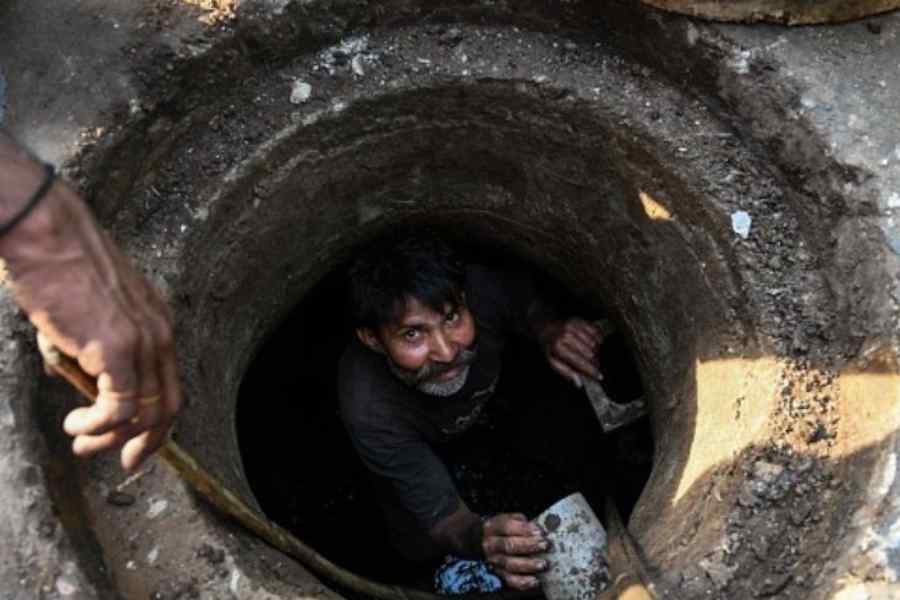
In India, some people clean sewers, septic tanks, and old bathrooms by hand.
This dangerous work is called manual scavenging.
The government recently said that no one in India does this job anymore.
It also said that nobody has died from manual scavenging in the last five years.
But the government did say that more than 300 sanitation workers died while cleaning sewers and septic tanks.
Activists say the government's definition of manual scavenging is too narrow.
They believe workers who clean sewers and railway tracks should also be counted.
Activists say many workers die every month doing this dangerous cleaning.
They want the government to admit these are manual scavenging deaths and to help the workers.
The two sides disagree about how to define the job and how many deaths have really happened.

The Centre told the Lok Sabha that no deaths due to manual scavenging were reported in the last five years, while confirming over 300 sanitation workers died.
Minister of state Ramdas Athawale said a 2024-25 national survey under the 2013 Act found no manual scavengers in the country.
Surveys conducted in 2013 and 2018 had identified 58,098 manual scavengers in India.
Activist Bezwada Wilson said the government's definition of manual scavenging is too narrow and hides the truth.
Safai Karmachari Andolan data records 593 deaths in sewers and septic tanks from January 2021 till date, with 5-10 workers dying every month.
- Who
- Union minister Ramdas Athawale and the Centre, opposed by activists such as Bezwada Wilson of Safai Karmachari Andolan
- What
- Activists contest the government's claim that no deaths occurred due to manual scavenging in the last five years
- Where
- India
- When
- Earlier this week, in a written reply in the Lok Sabha; the data covers the last five years
- Why
- The dispute stems from the narrow legal definition of manual scavenging, which activists say excludes sewer, septic tank, and railway track cleaners
Activists
Government (Centre)
Definition of manual scavenging
Activists
The government's criteria are very narrow; all those who clean septic tanks, railway tracks, dry latrines, and open defecation are manual scavengers, and tweaking the definition cannot hide the truth.
Government (Centre)
The legal definition covers only manual handling of human excreta from insanitary latrines, open drains, or notified spaces, and a 2024-25 survey under the Act found no manual scavengers.
Deaths from manual scavenging
Activists
Workers are dying from manual scavenging work; 5-10 workers die every month, and SKA data records 593 deaths in sewers and septic tanks from January 2021.
Government (Centre)
No death has been reported due to manual scavenging; over 300 sanitation workers died during hazardous cleaning of sewers and septic tanks due to non-observance of safety precautions.
Survey findings
Activists
Surveys in 2013 and 2018 identified 58,098 manual scavengers, so the workforce's existence is documented and the latest zero figure is questionable.
Government (Centre)
The nationwide survey conducted in 2024-25 found no manual scavengers, and one-time cash assistance of ₹40,000 each has been provided to all identified manual scavengers.
Key facts
- Deaths from hazardous sewer/septic cleaning (NCSK report)
- 332
- Deaths recorded by SKA since January 2021
- 593
- Manual scavengers found in 2024-25 survey
- None (0)
- Manual scavengers identified in 2013 and 2018 surveys
- 58,098
- One-time cash assistance per identified manual scavenger
- ₹40,000
- Manual scavengers provided skill training
- 11,869
- Monthly stipend during training period
- ₹3,000
- Estimated worker deaths per month (SKA)
- 5-10
Quotes

Ramdas Athawale
Minister of State for Social Justice, Indian Parliament
“The criteria followed by the government to identify manual scavengers is very narrow. All those who clean septic tanks, railway tracks, dry latrines and open defecation are manual scavengers. Tweaking of definition cannot hide truth.”
 telegraphindia.com
“No death has been reported due to manual scavenging, while confirming that over 300 sanitation workers had died during the period.”
telegraphindia.com
Sources
Related news

Government Approves Relief in 1,223 Sanitation Worker Death Cases
Bihar testimonies challenge India’s claim of zero manual scavengers

NCSK to Celebrate 32nd Foundation Day on August 23

Call to Ban Manual Scavenging

Odisha Plans AI, Cameras and Drones to Protect Sanitation Workers
Khadse Calls for Cordial Maharashtra Politics and Social Harmony

BJP Walks Caste Tightrope Between Reservation Protesters and Allies

Editorial Urges Political Opposition to Defend Reform and Humanity

Indian Leaders Urge Rescue, Relief Amid Devastating Nepal Floods
