

2 hrs ago
Uneven Final Monsoon Rainfall May Shape Kharif Crops, Prices
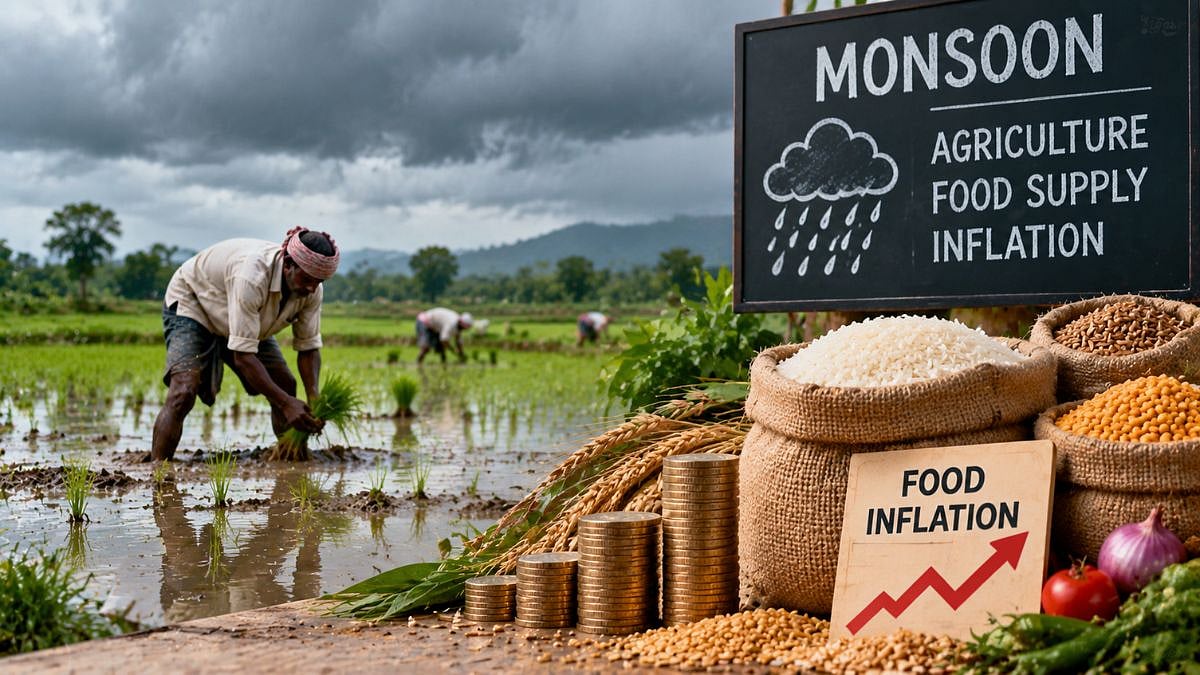
India’s monsoon rains have been weaker than usual this year.
Rainfall from June 1 to September 4 was 13% below the long-term average.
Rain was also spread unevenly across different parts of the country.
This has reduced the amount of land planted with several crops.
Farmers planted fewer rice, oilseed, coarse cereal, cotton and sugarcane crops.
However, more land was planted with tur, urad, jute and mesta.
Water stored in reservoirs was also lower than it was last year.
The report says the remaining rain could influence how much farmers grow and how much some foods cost.

Southwest monsoon rainfall reached 629.7 millimetres from June 1 to September 4, 13% below its long-period average.
Only 49% of the country received normal to excess rainfall, while 16 states remained deficient.
Lower rainfall has reduced kharif sowing, particularly for rice, oilseeds, coarse cereals, cotton and sugarcane.
Pulse acreage increased for tur by 1.6% and urad by 12%, while jute and mesta acreage rose by 1.7%.
The Bank of Baroda report said rainfall distribution during the monsoon’s final phase could affect crop acreage and near-term food inflation.
- Who
- Farmers, food consumers and the Bank of Baroda report are central to the assessment; the India Meteorological Department is cited regarding El Niño conditions.
- What
- Below-normal and uneven monsoon rainfall may affect final kharif acreage and near-term food inflation.
- Where
- Across India, with deficits reported in the Southern Peninsula, East and North Eastern India, North Western India and the central region.
- When
- The assessment was published on September 5, 2026, covering rainfall from June 1 to September 4 and the remaining monsoon season.
- Why
- The distribution of rainfall is important for crop sowing, reservoir levels, agricultural output and food prices.
Key facts
- Cumulative rainfall
- 629.7 millimetres from June 1 to September 4
- Rainfall versus average
- 13% below the long-period average
- Rainfall versus last year
- Below the 791.8 millimetres recorded during the same period last year
- Geographic coverage
- 49% of the country received normal to excess rainfall; 16 states were deficient
- Reservoir storage
- All-India reservoirs were at 70% of total capacity, compared with 86% last year
- Higher-acreage crops
- Tur rose 1.6%, urad 12%, and jute and mesta 1.7%
- Reported climate condition
- Moderate El Nino conditions were cited as prevailing and projected to strengthen during the remaining season
Quotes
Bank of Baroda report
A report by Bank of Baroda assessing monsoon conditions and their agricultural implications
“Moderate El Nino conditions are currently prevailing as per the IMD and are projected to strengthen in the remaining period of the season.”
 freepressjournal.in
Sources
Related news
India's Kharif Sowing Deficit Narrows, Uneven Rains Threaten Yields
Improved Sowing May Cushion Kharif Output Despite Monsoon Deficit
Government Sees Limited El Niño Impact on Kharif Crops

Kharif sowing lags last year's coverage despite monsoon revival
Improved Indian Monsoon Eases Risks to Kharif Crop

Below-normal September rains threaten crops, inflation and rural demand

Very Strong El Niño May Reshape India’s Weather Outlook
El Niño-Linked Drought Slashes Nilgiris Tea Production, Farmers Seek Aid

WMO Warns El Niño Is Reaching Unprecedented Strength

Sydney Heatwave Raises Extreme Bushfire Risk During Spring
