3 days ago
UPSC Key Covers Central Asia, Food Labels, Awards and Ecology
This UPSC current-affairs roundup discusses several important issues in India and abroad.
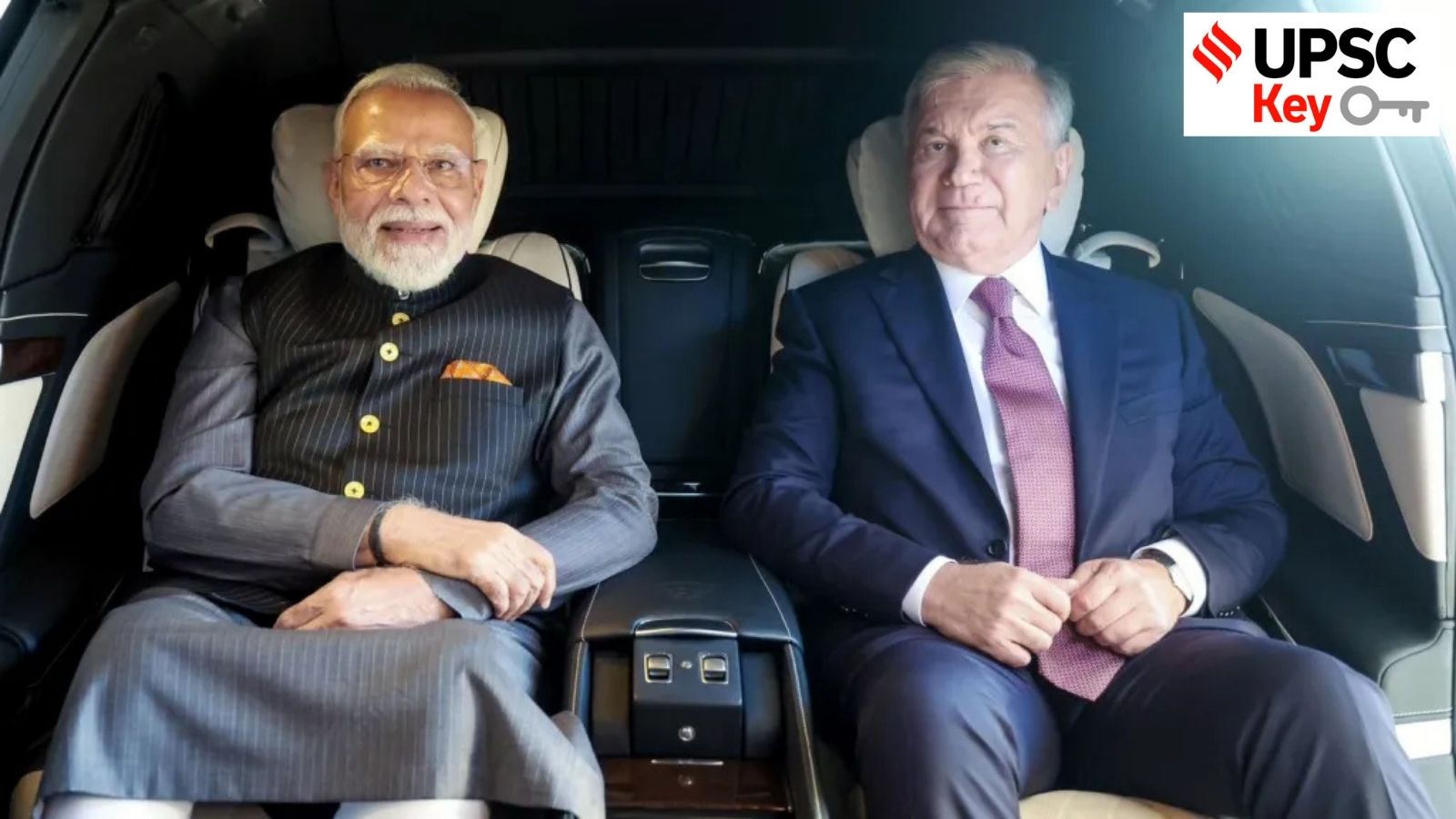
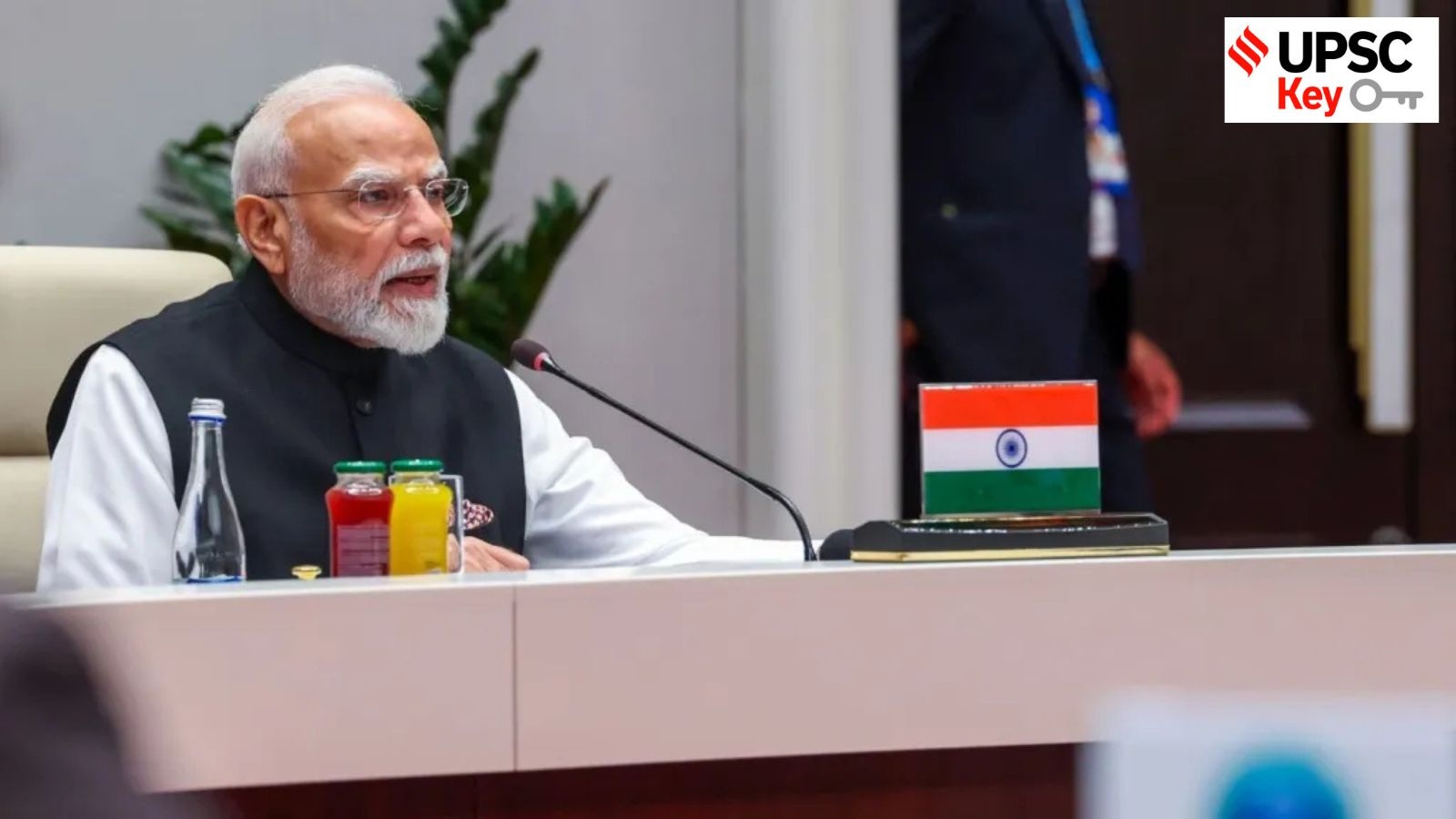
Prime Minister Narendra Modi visited Uzbekistan to improve cooperation between India and Central Asia.
India is interested in Central Asia because of security, energy, minerals and transport links.
India’s food regulator has proposed a red warning label on some packaged foods to show when they contain too much salt, sugar or fat.
Experts support clearer warnings but worry that the proposal may cover too few unhealthy products and use text that is too small.
A new national award named after Sardar Vallabhbhai Patel may be given for the first time this year to people who strengthen national unity.
The roundup also explains that banks may recover less money when troubled companies are resolved under the insolvency law.
Finally, it describes the Western Ghats as an important home for wildlife and a source of water for many rivers.
The articles also mention Nepal’s request for earlier electricity imports and pressure on Indian yarn prices linked to restrictions on Chinese cotton.

Prime Minister Narendra Modi’s visit to Uzbekistan focused on expanding cooperation in trade, health, energy, defence, culture and tourism.
The Sardar Patel National Unity Award, instituted in 2019, is expected to be awarded for the first time on October 31, with two or three recipients possibly selected.
The Food Safety and Standards Authority of India proposed a red hexagonal front-of-pack warning for packaged foods high in salt, added sugar or added fat.
The Insolvency and Bankruptcy Code’s treatment of creditor losses, known as haircuts, remains contested between the government’s resolution-first approach and banks’ recovery concerns.
The Western Ghats were highlighted as a major biodiversity, water and climate-regulating system facing pressure from industrial and market-driven activity.
- Who
- The subjects include Prime Minister Narendra Modi, the governments of India and Uzbekistan, the Food Safety and Standards Authority of India, the Ministry of Home Affairs, banks and insolvency authorities, and conservation experts.
- What
- The roundup covers Modi’s Central Asia visit, the proposed Sardar Patel National Unity Award, front-of-pack food warnings, insolvency-related haircuts, Western Ghats conservation, and other national and international developments.
- Where
- The main locations are Uzbekistan and Kyrgyzstan, India, the Western Ghats, Nepal, and China’s Uyghur region.
- When
- The developments are presented for August 30, 2026; Modi’s Uzbekistan visit is followed by the Shanghai Cooperation Organisation summit on August 31–September 1, while the unity award is expected on October 31.
- Why
- The issues are significant because they concern India’s Central Asia strategy, national integration, public health, creditor recovery, environmental protection, regional electricity needs and global trade pressures.
Policy Rationale
Critical Concerns
Front-of-pack food warnings
Policy Rationale
The Food Safety and Standards Authority of India says a simple, prominent warning would help consumers identify packaged foods high in nutrients of concern and would give industry time to reformulate products through a two-phase approach.
Critical Concerns
Nutrition experts argue that requiring warnings initially for products high in at least two nutrients could exclude unhealthy products high in only one, while the proposed font may be too small and the focus on added sugars and fats may overlook naturally occurring sugars and fats.
Insolvency haircuts
Policy Rationale
The government maintains that the Insolvency and Bankruptcy Code primarily aims at resolving financially stressed companies rather than maximising immediate recovery, since prolonged distress can reduce asset values.
Critical Concerns
Banks say large haircuts raise concerns about valuation, incomplete accounting of assets and opacity in the resolution process, and they have called for assets to be properly valued under established standards.
Western Ghats development
Policy Rationale
The opinion article argues that ecological integrity must be prioritised because the Western Ghats support biodiversity, rivers, climate regulation, soil stability and downstream communities.
Critical Concerns
The article criticises development approaches framed only as 'sustainable development', arguing that industrial and market pressures can encourage excessive extraction from the region.
Key facts
- India–Uzbekistan trade
- Bilateral trade in 2025–26 was close to US$1 billion.
- Central Asia policy
- India began its focused engagement with Kazakhstan, the Kyrgyz Republic, Uzbekistan, Tajikistan and Turkmenistan through the Connect Central Asia policy in 2012.
- Unity award
- The Sardar Patel National Unity Award was instituted by the Ministry of Home Affairs in September 2019.
- Food-label proposal
- The proposed red hexagonal label would identify products high in fat, sugar, salt or, where applicable, highly sweetened beverages.
- IBC haircut
- Under banking usage, a haircut is a reduction in the value of an asset used as collateral to protect a lender from potential losses; the term is not defined in the IBC.
- Western Ghats
- The mountain chain is about 1,600 kilometres long, spans six Indian states and contains several globally threatened species.
- Nepal electricity request
- Nepal sought earlier approval to import electricity from India after flash floods damaged its power-generation capacity.
Quotes
FSSAI compliance affidavit
Official compliance affidavit filed by FSSAI before the Supreme Court.
“The proposal is intended to provide a simple, prominent and easily comprehensible warning to consumers regarding food products which are high in specified nutrients of concern”
 indianexpress.com
2019 Sardar Patel National Unity Award notification
The government notification defining the award’s eligibility criterion.
“should have made outstanding efforts and notable contribution to promote and further the cause of national unity and integrity in a manner that may serve as an inspiration to others, and reinforce the value of a strong and united India”
indianexpress.com
Dr Arun Gupta
Convener of Nutrition Advocacy in Public Interest (NAPi)-India.
“In principle, FSSAI has agreed to the warning labels, but they have put in a whole lot of conditions that make it ineffective. Take for example the two or more nutrient thresholds in the phase I of implementation. Many unhealthy products would not need to add the warning label because they are high in just one nutrient.”
indianexpress.com
Sources
Related news
UPSC Weekly Current Affairs: Environment, Diplomacy, Defence and Economy
UPSC Key: Gene Therapy, Tribunals, Nuclear Rules and Trade
UPSC Weekly Quiz Covers Glaciers, Defence, Geography and Heritage
UPSC Key: Tribunals bill, alcohol policy, Mecca Agreement and more
UPSC Current Affairs: India’s Diplomacy, Economy, Law and Policy
Goyal Defends India’s 7.8% GDP Growth Amid Data Debate

Manipur Census Deferment Welcomed as Step Toward Public Aspirations
UPSC Key Covers SCO, Electoral Rolls, Economy, Defence and Climate

West Bengal CM Crushes Nearly 2 Lakh Seized Syrup Bottles

Modi Highlights India’s Growing Avocado Market and Farmer Gains