2 weeks ago
Assam's Golaghat district hit by drought followed by devastating floods

Farmers in a part of India called Assam were waiting for rain to plant their rice.
The rain did not come for a long time, and their fields became dry and cracked.
Then, suddenly, very heavy rain fell and rivers overflowed.
Water covered people's homes and farms.
Many people lost their homes, and more than 100 people lost their lives.
Some farmers had never seen drought and flood happen so close together.
Scientists studied the heavy rain and said it was not unusual.
They think things like building too many houses and damaging rivers made the floods worse.
The government said the floods came from heavy rain in a nearby area called Nagaland.
Some local people think a dam in Nagaland released too much water.

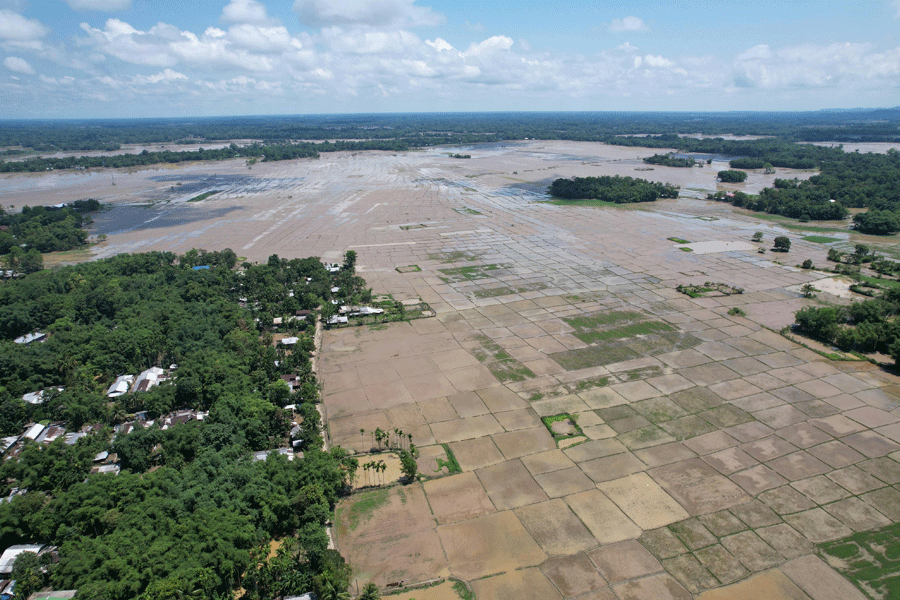
Golaghat district in Assam faced drought-like conditions before heavy rain on July 19 caused the Gelabil river to swell, submerging homes and farmlands.
Between July 16 and 22, Golaghat received 147% more rain than usual, making it one of the four worst-hit flood districts in Assam.
Over 100 people have died and around seven lakh people have been displaced across Assam in the devastating floods.
For the first time since 1998, farmer Babul Bora's family could not sow paddy, experiencing drought and flood in the same season.
World Weather Attribution scientists found no discernible role of climate change, while the Assam government blamed exceptional rainfall in Nagaland and residents blamed the Doyang dam.
- Who
- Farmers and residents of Golaghat district in Assam, including cultivators Babul Bora and Dipok Gogoi
- What
- A drought-like spell was followed within days by severe flooding that submerged homes and farmlands and halted paddy cultivation
- Where
- Golaghat district in eastern Assam, India, particularly villages along the Gelabil river
- When
- Drought-like conditions recorded as of July 14; floods struck on July 19
- Why
- Heavy rainfall swelled rivers; the Assam government cited exceptional rainfall in Nagaland hill catchments, while local residents cited releases from the Doyang Hydropower project
Government and attribution scientists
Local residents and climate researchers
Cause of the floods
Government and attribution scientists
The Assam government said an 'extreme hydrometeorological' event over Nagaland hill catchments, not local rainfall or drainage congestion, caused the flooding.
Local residents and climate researchers
Local residents said the Gelabil river rose because of water released from Nagaland's Doyang Hydropower project, a claim confirmed by dam authorities.
Role of climate change
Government and attribution scientists
World Weather Attribution scientists, including Mariam Zachariah of Imperial College London, found the heavy rainfall was a routine event with no discernible role of climate change, pointing instead to unplanned urbanisation and riverbank erosion.
Local residents and climate researchers
Researchers such as Surbhi Vyas of IIT Guwahati and Akshay Deoras of the University of Reading said linking flood-drought risk to climate change requires dedicated long-term analysis, and the nature and impact of these extremes may be changing.
Key facts
- District
- Golaghat, eastern Assam, India
- Flood date
- July 19, after drought-like conditions recorded as of July 14
- Excess rainfall (July 16-22)
- 147% above normal in Golaghat
- Statewide impact
- Over 100 deaths; around 7 lakh people displaced
- Drought-affected villages (Sarupatha circle)
- 57 villages; over 12,000 farmers
- Assam monsoon rainfall deficit
- 38% below normal as of August 13
- Golaghat rainfall deficit (Aug 6-12)
- 45% below normal
- Flood risk factor
- Proximity to the Brahmaputra river, per the 2024 District Level Climate Risk Assessment
Quotes
Gunandra Bharali
Retired government teacher, Pachim Brahmaputra panchayat
““A district can experience a prolonged dry spell, with soils drying out and water availability coming under pressure, and then receive a very large amount of rainfall within a short period, leading to flash flooding.””
 scroll.in
““The project has been wreaking havoc for the last three years.””
scroll.in
Sources
Related news
Why Assam floods every monsoon, what is different this year

Assam Floods Kill At Least 100 Amid Monsoon Deluge
Assam Floods: Death Toll Reaches 100, Affecting 10 Districts
Assam's July Floods: More Than Just the Brahmaputra
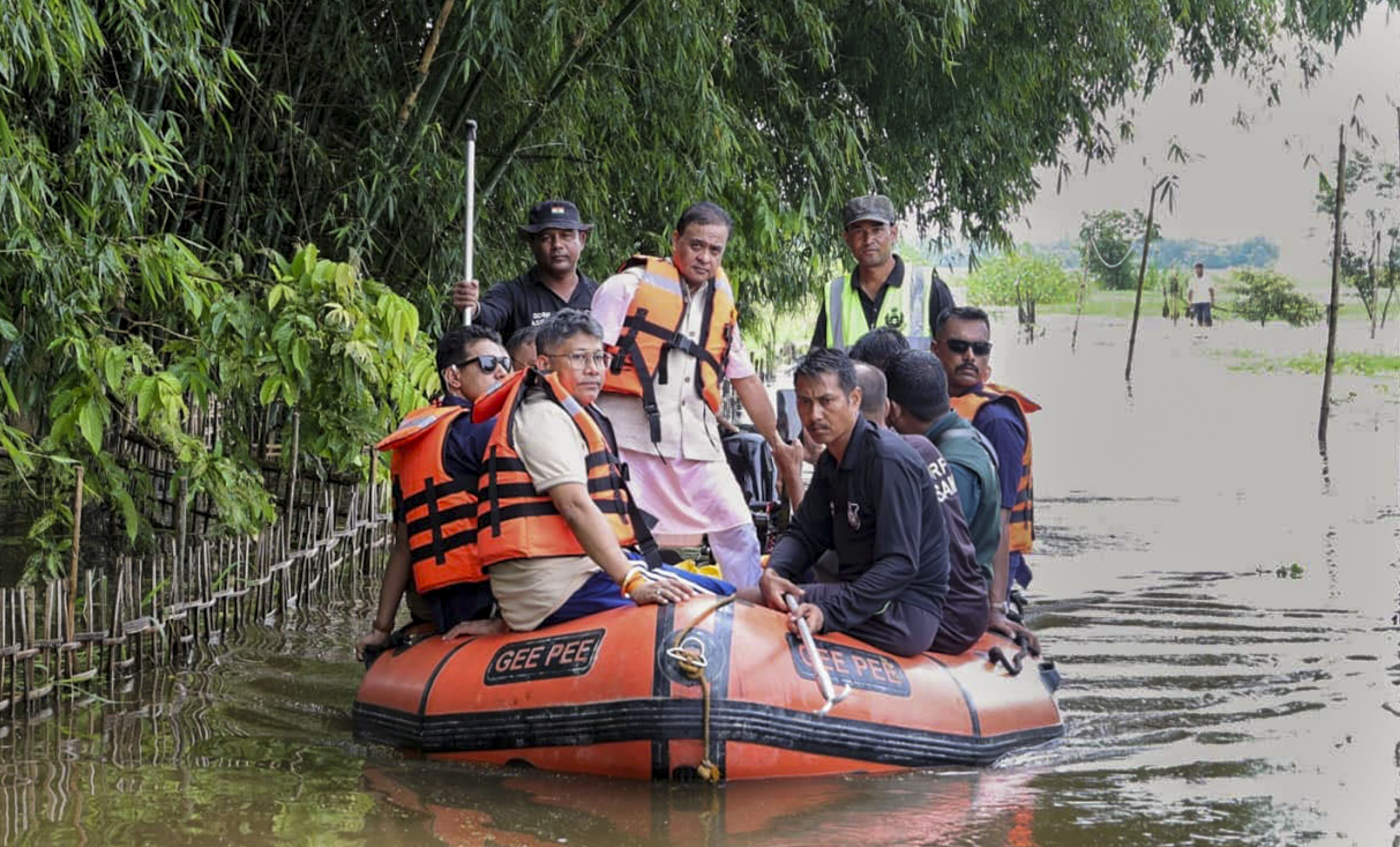
Assam Flood Death Toll Reaches 95, 1.6 Lakh Affected

Assam Proposes Scholarships for 100 IIT Guwahati Students

Humanoid Robots Near Borders Raise Questions About Human Control
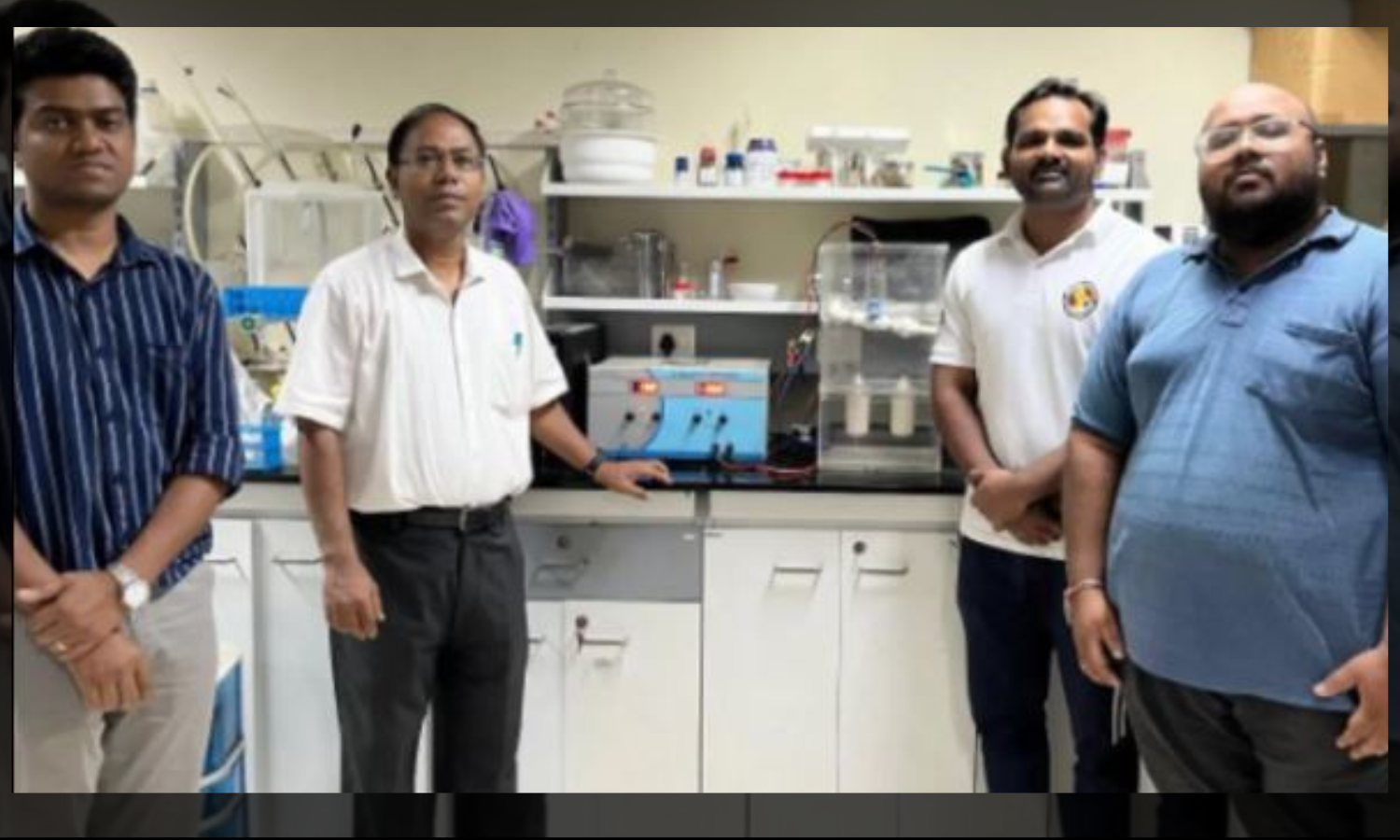
IIT Guwahati Develops Low-Cost Reactor for Arsenic, Fluoride Removal

India’s Smart Cancer Drug RK-251 Targets Tumor Cells

Indian Researchers Develop AI and Targeted Cancer Treatment Tools