2 weeks ago
India’s Floating Solar Push Faces Land, Cost And Ecological Questions
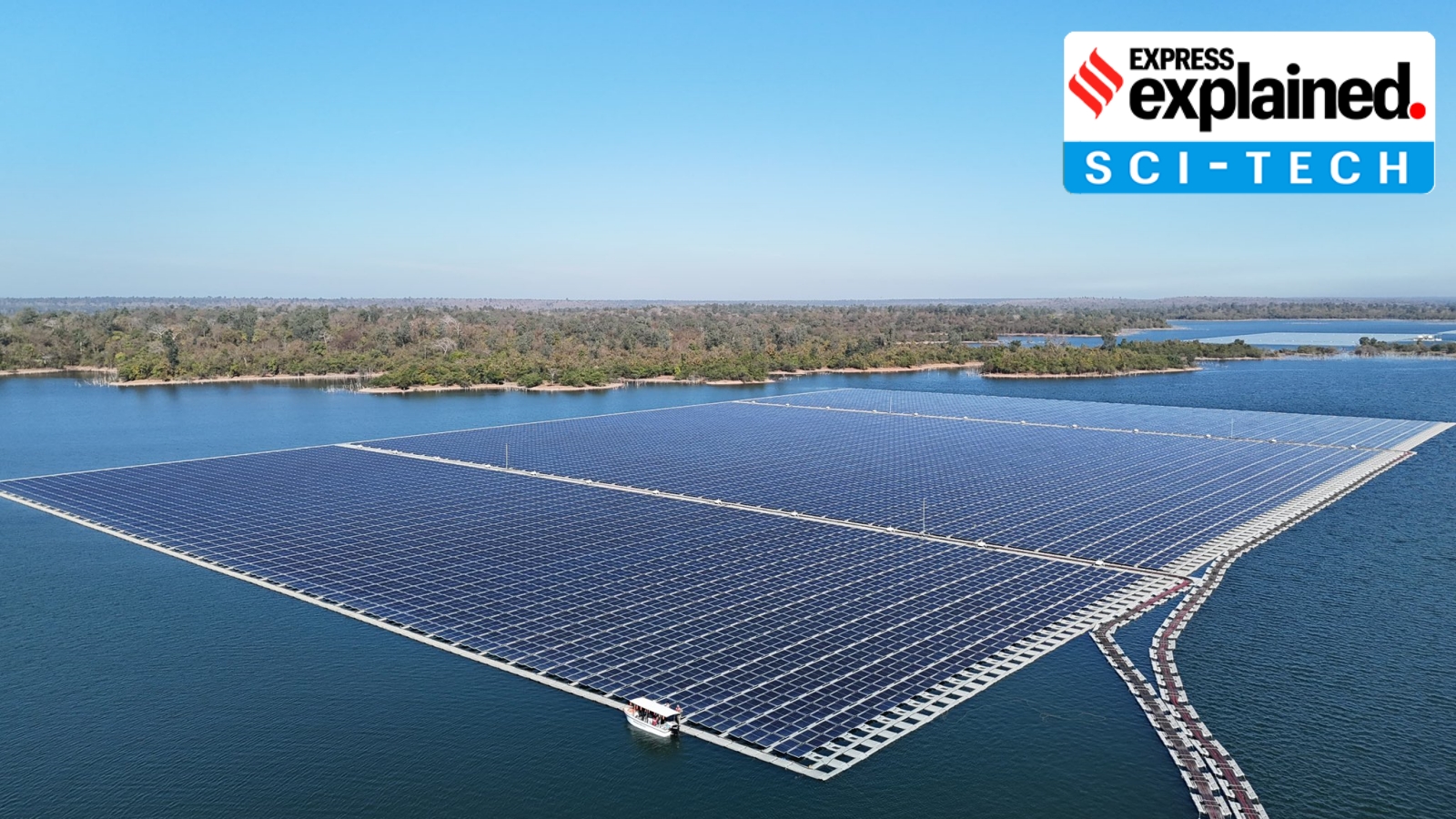
Floating solar means putting solar panels on platforms that float on reservoirs or lakes.
The panels make electricity without using land needed for farms, cities, or nature.
Water can also help keep the panels cool and slow evaporation.
India has some large floating solar projects, but the total amount is still small compared with its possible potential.
A new government scheme aims to build 5,000 megawatts of these projects.
It will also support batteries or other storage to help keep the electricity grid steady.
However, floating solar can cost more than solar panels installed on land.
Projects must also protect fish, birds, water quality, and other parts of the environment.

India’s installed solar capacity rose from 3 GW in 2016 to over 160 GW in 2026, increasing pressure to find land for new projects.
The Pradhan Mantri Surya Sarovar Yojana targets 5,000 MW of floating solar and includes at least 10,000 MWh of energy storage.
Floating solar can conserve land, reduce water evaporation, and improve panel efficiency by keeping modules cooler.
India has about 700 MW of installed floating solar, compared with an estimated potential of 102 GW using 20% of reservoir areas.
The scheme’s success will depend on careful site selection, environmental safeguards, affordable financing, and coordination among multiple institutions.
- Who
- The Government of India, renewable-energy developers, state agencies, and other coordinating institutions are involved.
- What
- India has approved the Pradhan Mantri Surya Sarovar Yojana to promote 5,000 MW of floating solar projects and associated energy storage.
- Where
- The projects are intended for suitable reservoirs, lakes, industrial ponds, and other inland water bodies across India.
- When
- The scheme has a five-year implementation period, with financial support available until 2032-33; the article notes major existing projects were commissioned in 2022.
- Why
- The initiative aims to expand renewable energy while reducing pressure on land, supporting grid stability, and encouraging wider deployment of floating solar.
Arguments For Expansion
Concerns And Conditions
Land and water use
Arguments For Expansion
Floating solar can expand renewable generation without requiring additional land and may reduce evaporation from covered parts of reservoirs.
Concerns And Conditions
Projects must account for reservoir characteristics and should avoid ecologically sensitive areas, biodiversity zones, bird habitats, fisheries, and possible effects on aquatic life or water quality.
Project economics
Arguments For Expansion
Government financial assistance could improve project economics, support domestic manufacturing, and create employment across the value chain.
Concerns And Conditions
Floating solar is generally more expensive than ground-mounted solar, while storage raises capital costs further; developers still need affordable finance and long-term power-purchase agreements.
Deployment speed
Arguments For Expansion
India’s existing large projects demonstrate technical feasibility, and the national scheme could move floating solar beyond a few state-led and public-sector projects.
Concerns And Conditions
Extreme winds, waves, changing water levels, complex approvals, and the need to coordinate multiple agencies could delay or undermine implementation.
Key facts
- Scheme target
- 5,000 MW of floating solar projects
- Scheme outlay
- Rs 5,070 crore
- Storage requirement
- At least two hours of storage, totaling 10,000 MWh
- Current floating-solar capacity
- About 700 MW in India
- Estimated potential
- 102 GW, based on using 20% of reservoir areas
- Project support
- Central financial assistance of Rs 1 crore per MW after commissioning
- Preparatory support
- Up to Rs 0.5 crore per eligible project for feasibility and preparatory activities
- Major operating examples
- The 100 MW Ramagundam project in Telangana and the 92 MW Kayamkulam project in Kerala were commissioned in 2022
Sources
Related news

Telangana Considers Floating Solar Projects Amid Rising Power Demand
India Adds Record 27 GW Solar Capacity in H1 2026
India to Host Global Agrivoltaics Conference in 2026
India Bets on Battery Storage to Reduce Solar Curtailments
India’s Power Demand Surges as Data Centres Expand Grid Needs
India’s River-Linking Ambitions Face Engineering and Ecological Challenges

Madhya Pradesh Teachers Seek Written Clarity Over TET Requirement

Bhopal civic body cuts daily spot-fine target to ₹3,000
Sagar Hooch Tragedy: Properties Razed, Judicial Probe Ordered

Delhi Collapse Highlights India’s Continuing Building Safety Risks

ED Attaches 17 Properties Worth Rs 6.52 Crore