6 days ago
India’s Power Demand Surges as Data Centres Expand Grid Needs
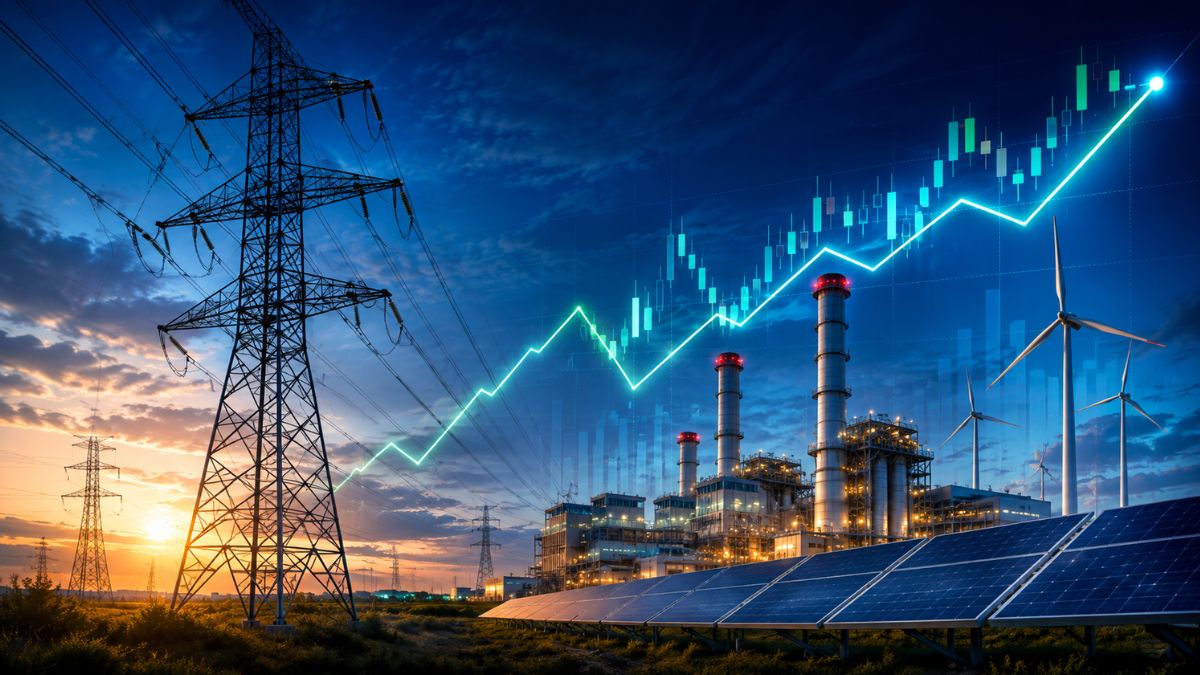
India is using more electricity than it did last year.
A major reason is that data centres need a lot of power to operate.
The government says data centres may need 26.3 gigawatts of extra electricity across 11 states.
Power companies are trying to build more renewable energy and storage systems to meet this demand.
Rajasthan is making it easier to obtain land for large renewable projects.
Andhra Pradesh wants to use reservoirs for pumped-storage projects that can save and release electricity.
Kerala is testing batteries that could provide backup power to 200 homes with rooftop solar.
Rajasthan is also reconsidering a large thermal power project that had previously been cancelled.
Reliance Industries has proposed a very large coal-gasification project in Andhra Pradesh.

Average daily electricity demand rose 14% year over year to 5,523 million units, while peak solar demand reached a record 258 GW.
The Ministry of Power estimates data centres will require an additional 26.3 GW across 11 states; grid applications cover about 17 GW.
Rajasthan is easing land allotments for large renewable parks and green hydrogen projects but has also re-floated a 3,200 MW thermal power tender.
Andhra Pradesh is planning pumped-storage projects at 130 reservoirs, while Kerala is piloting four-hour battery backup for 200 rooftop-solar households.
Reliance Industries proposed a Rs 2.73 lakh crore underground coal-gasification project in Andhra Pradesh, as solar open-access capacity reached 36 GW.
- Who
- India’s Ministry of Power, state governments, utilities, data-centre developers and Reliance Industries are involved.
- What
- Electricity demand is rising while states plan renewable, storage and thermal-power projects to expand and stabilize supply.
- Where
- Across India, including Rajasthan, Andhra Pradesh, Kerala and 11 states expected to receive data-centre capacity.
- When
- The developments were reported during the week covered by the JM Financial report; Andhra Pradesh set targets for 2026 and 2029.
- Why
- Electricity use is increasing, especially from data centres and industry, while states seek lower power-purchase costs and more reliable renewable-energy integration.
Renewables and storage
Thermal and coal-based expansion
How to meet rising demand
Renewables and storage
State plans emphasize solar, wind, pumped storage and batteries to increase renewable supply and manage intermittency.
Thermal and coal-based expansion
Rajasthan has re-floated a 3,200 MW thermal-power tender, and Reliance Industries has proposed an integrated underground coal-gasification complex.
Need for large thermal generation
Renewables and storage
Regulators and climate activists previously questioned whether Rajasthan’s thermal project was needed, contributing to its cancellation in June.
Thermal and coal-based expansion
Rajasthan’s decision to re-float the tender indicates that the state is again considering large thermal capacity as electricity demand grows.
Cost and system reliability
Renewables and storage
Andhra Pradesh is targeting average power-purchase costs of Rs 4.6 per unit in 2026 and Rs 4 per unit by 2029 through solar, wind and pumped storage.
Thermal and coal-based expansion
The reported increase in demand and non-solar deficit highlights the need for dependable capacity alongside renewable additions.
Key facts
- Daily energy demand
- 5,523 million units on average during the week, up 14% from a year earlier.
- Peak demand
- Peak solar demand reached 258 GW, while peak non-solar demand reached 248 GW.
- Data-centre requirement
- The Ministry of Power estimates 26.3 GW of additional demand across 11 states.
- Grid applications
- Applications have been filed for about 17 GW of the projected data-centre demand; requests for 9.3 GW remain outstanding.
- Rajasthan thermal tender
- A 3,200 MW greenfield thermal-power tender was re-floated after being scrapped in June.
- Storage initiatives
- Andhra Pradesh is considering pumped storage at 130 reservoirs, and Kerala is testing four-hour battery backup for 200 households.
- Solar open access
- Installed capacity increased by 3 GW during April-June to reach 36 GW.
Sources
Related news

India’s Power Sector Faces Rising Demand and Nuclear Constraints

India’s Data Centre Capacity Set to Triple by 2030

India’s Data Centre Capacity Could Triple by 2030
Data Centre Power Boom Sparks Rs 3,000 Crore Relief Plea

India Leads Asia-Pacific Data Centre Growth Outside China
India's Data Centre Boom Reshapes Real Estate Amid AI Demand
Army Awards $2.2 Billion for Small Nuclear Reactors