1 week ago
Space Economy’s Commercial Boom Raises Stakes Over Who Captures Value
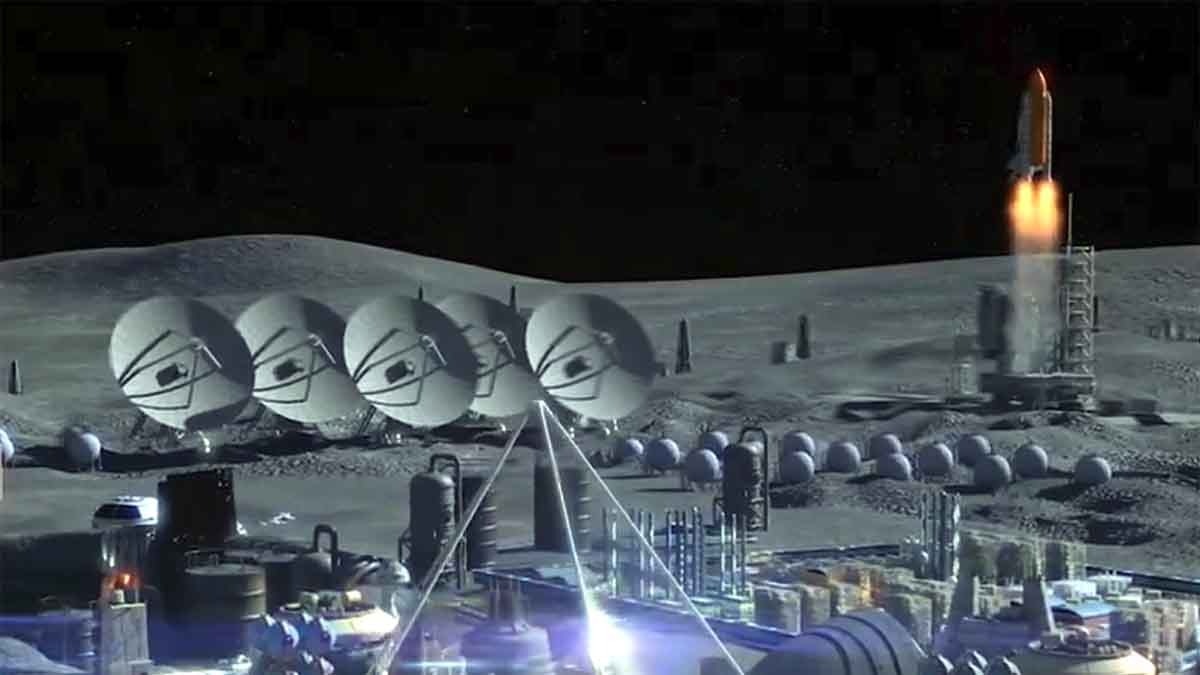
The space industry is becoming more like a regular business sector.
It includes rockets and satellites, but also services such as internet connections, maps, timing and Earth-imaging data.
Launching objects into orbit is much cheaper than it used to be.
This makes it possible for more companies to build satellites and offer new services.
Investors are putting large amounts of money into space companies.
Future businesses might build factories, computers or larger structures in orbit.
The Moon could eventually support transportation, communications, energy and tourism businesses.
Space development also creates risks involving debris, crowded orbits and difficult technical problems.
The United States, China and India are competing to gain economic and strategic benefits from this growth.

Goldman Sachs projects the global space economy could reach $1.8 trillion by 2035.
Launch costs have fallen from $65,400 to about $1,500 per kilogram since 1981.
More than $55 billion entered the space ecosystem in 2025, followed by $36 billion in Q1 2026.
Emerging opportunities include orbital manufacturing, in-space servicing, lunar activity and space-based computing.
India has more than 400 space startups and aims to increase its 3% global share fivefold.
- Who
- Space companies, investors, the United States, China and India are the main actors discussed.
- What
- The commercial space economy is expanding across launch services, satellites, data, communications and potential orbital and lunar industries.
- Where
- The activity spans low Earth orbit, lunar space and Earth-based markets, with India highlighted as an emerging participant.
- When
- The report projects the global space economy through 2035; investment figures include 2025 and the first quarter of 2026.
- Why
- Falling launch costs, smaller satellites and growing demand for space-derived connectivity, data and timing services are opening new markets.
Key facts
- Projected global space economy by 2035
- $1.8 trillion
- Space investment in 2025
- More than $55 billion
- Space investment in Q1 2026
- $36 billion
- Aerospace IPOs since the start of 2025
- $89 billion
- Current launch cost to low Earth orbit
- About $1,500 per kilogram, compared with $65,400 in 1981
- Economic value generated by GPS since 1980
- $1.4 trillion
- India’s current space economy
- About $8.4 billion, or 3% of the global market
Sources
Related news
Space Industry Chokepoints Shift Power Toward Launch, Infrastructure and Data
India’s Space Economy Targets $45 Billion by 2030

India's Space Economy May Reach $44 Billion By 2033

India’s Space Economy Projected to Reach $40–45 Billion

AI Could Fuel a New Space Race by 2030
Strategic funding may propel India's space economy to $100 billion

India’s 7.8% Growth Broad-Based, but Jobs Remain Challenge
India Pursues Global Mineral Pacts to Secure Supply Chains

Nepal Plans New Landslide Warning System Along China Border

RBI Governor Meets US Fed Chief Kevin Warsh at G20

Tencent-Backed Enflame IPO Draws Massive Investor Demand