1 hr ago
Falling Urea Prices Offer India Relief From Subsidy Pressure
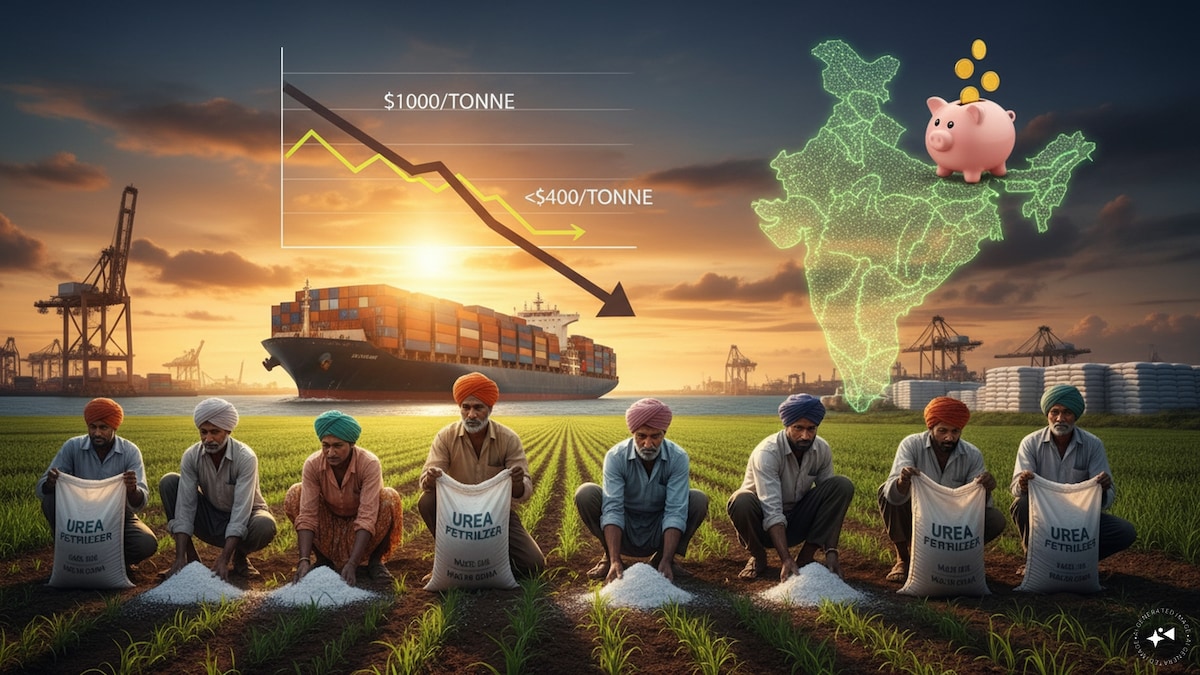
Urea is a fertiliser that farmers use to help crops grow.
In India, farmers pay a controlled price for it, and the government pays much of the remaining cost.
Urea became very expensive earlier in the year, reaching more than $900 per tonne.
Now India has bought a large shipment for about $390 per tonne.
This could help reduce the government’s fertiliser subsidy bill.
More urea is becoming available partly because China has allowed more exports.
India also imported more urea and produced more domestically during April-June 2026.
However, prices could rise again if China restricts exports or global disruptions return.
The government’s savings will depend on whether the lower prices continue.

India secured 17 lakh tonnes of imported urea at $390.25-$393.65 per tonne, down from more than $900 in April.
The FY27 fertiliser subsidy allocation is ₹1.71 lakh crore, while earlier projections suggested the bill could reach ₹2.41 lakh crore.
China is expected to supply at least 1.2 million tonnes for India’s latest tender after easing export restrictions.
India imported 25.08 lakh tonnes of urea during April-June 2026, while domestic production rose to 71.53 lakh tonnes.
Lower prices could reduce subsidy pressure, but renewed Chinese export curbs or geopolitical disruptions could reverse the improvement.
- Who
- The Government of India, Indian fertiliser companies, farmers, and international urea suppliers, including China.
- What
- India secured 17 lakh tonnes of imported urea at about $390-$394 per tonne, potentially easing pressure on fertiliser subsidies.
- Where
- The urea was imported for India, with the earlier tender covering the west and east coasts.
- When
- The latest tender was reported after urea prices fell sharply from April levels; relevant import and production figures cover April-June 2026.
- Why
- Global urea prices fell as supply disruptions eased and China loosened export restrictions, increasing available supply.
Potential Fiscal Relief
Continuing Subsidy Risks
Impact of lower prices
Potential Fiscal Relief
If urea prices remain near $390 per tonne, the government may pay substantially less subsidy on imported urea than it would have at April’s prices.
Continuing Subsidy Risks
One inexpensive tender does not remove the pressure created by earlier high prices, and the overall subsidy bill could still exceed its budget allocation.
Role of Chinese exports
Potential Fiscal Relief
China’s expected supply of at least 1.2 million tonnes for India’s tender could increase global availability and help keep prices lower.
Continuing Subsidy Risks
If China tightens export restrictions to protect domestic supplies, a major source of global supply could disappear and prices could rise again.
Supply outlook
Potential Fiscal Relief
Higher imports and domestic production, along with reports of no urea shortage for the kharif or coming rabi season, suggest improved availability.
Continuing Subsidy Risks
Geopolitical or energy-market disruptions could again affect supply and raise import costs, making subsidy requirements harder to predict.
Key facts
- Latest import tender
- 17 lakh tonnes of urea at a landed cost of $390.25-$393.65 per tonne
- Earlier April price
- India’s first FY27 tender was finalised at $935 per tonne for the west coast and $959 per tonne for the east coast
- FY27 budget allocation
- ₹1.71 lakh crore for the Department of Fertilisers
- Earlier FY27 projection
- The fertiliser subsidy bill was reported as potentially reaching ₹2.41 lakh crore, up to ₹70,000 crore above the allocation
- India’s 2025-26 urea consumption
- 39.66 million tonnes, including about 10.35 million tonnes of imports
- April-June 2026 imports
- 25.08 lakh tonnes, compared with 8.38 lakh tonnes during the same period a year earlier
- Domestic production
- 71.53 lakh tonnes during April-June 2026, up from 67.88 lakh tonnes a year earlier
Sources
Related news

Urea import prices fall 60% from April peak

India's Fertiliser Subsidy Budget Rapidly Depleted by Global Price Surge
India's Fertiliser Subsidy Spending Reaches 56% of Budget Estimate

India's urea import prices fall 12% as fertilizer supply eases

India locks in fresh urea imports of 1.7 million tonnes

State Urges Centre to Rationalize Fertilizer Prices Amid Urea Overuse
India’s 7.8% Growth Broad-Based, but Jobs Remain Challenge
India Pursues Global Mineral Pacts to Secure Supply Chains

Nepal Plans New Landslide Warning System Along China Border

RBI Governor Meets US Fed Chief Kevin Warsh at G20