

3 weeks ago
Strategic funding may propel India's space economy to $100 billion
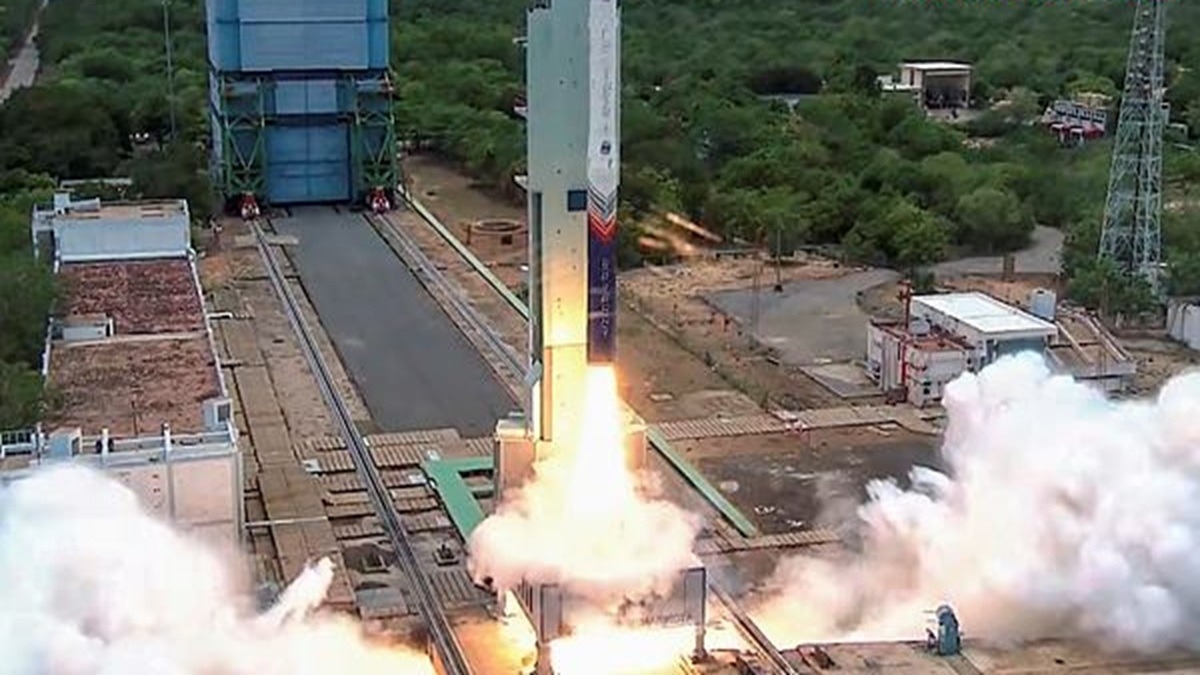
India wants its space industry to grow very big, so the government is helping private companies explore space.
It has announced Rs 1,500 crore in new funding for space startups.
India hopes its space economy will grow from $8.4 billion to $100 billion by 2040.
A company called Skyroot Aerospace recently launched its own rocket, Vikram-1, into space.
This was very exciting because it was the first private rocket launch from India.
Until then, only private companies in the United States and China had launched rockets into orbit.
The government has also created a big fund to help about 40 space startups over the next five years.
These companies will build rocket engines, AI tools and satellite parts with the money.
Some people say bigger companies still need more money and customers to grow, but India is moving fast.

India's space economy is projected to grow from $8.4 billion to $44 billion by 2033 and $100 billion by 2040, driven largely by private participation.
The government announced Rs 1,500 crore in support for space startups, including a Rs 1,000 crore Antariksh Venture Capital Fund and a Rs 500 crore Technology Adoption Fund through IN-SPACe.
Skyroot Aerospace's Vikram-1 reached a 450-km low Earth orbit on July 18, deploying four payloads and making India the third country after the US and China to achieve a privately developed orbital launch.
The private spacetech ecosystem raised a record $871 million across 241 funding rounds through July 2026, and 53 private entities have been authorised under space sector reforms, Union Minister Jitendra Singh told Parliament.
Skyroot became India's first space-tech unicorn in May 2026 after a $60 million round led by Sherpalo Ventures and Singapore's GIC, but growth-stage funding remains thin and the Antariksh fund has so far selected just three of its planned 40 startups.
- Who
- The Indian government's Department of Space and IN-SPACe, Union Minister Jitendra Singh, and private companies including Skyroot Aerospace, AgniKul Cosmos and Digantara, which are supported by ISRO infrastructure.
- What
- The government announced Rs 1,500 crore in venture capital and technology adoption funding to boost private space startups, whose efforts recently delivered India's first private orbital launch.
- Where
- India, where space sector reforms and IN-SPACe schemes are supporting private launch and satellite companies.
- When
- Throughout 2025 and 2026, with the latest funding announcements and the July 18, 2026 launch of Vikram-1.
- Why
- To grow India's space economy from $8.4 billion to $100 billion by 2040 and position the country as a global launch market.
Optimistic View
Cautious View
India's $100 billion space economy goal
Optimistic View
Record private funding of $871 million, Skyroot's successful orbital launch and first spacetech unicorn, plus Rs 1,500 crore in government support, make the $100 billion by 2040 projection achievable.
Cautious View
Growth-stage funding is thin and concentrated among a few frontrunners; the Antariksh fund has selected only 3 of a planned 40 startups, and supply chains, testing infrastructure and anchor customers are still maturing.
Key facts
- Current space economy size
- $8.4 billion
- Projected space economy by 2033
- $44 billion
- Projected space economy by 2040
- $100 billion
- Government support announced
- Rs 1,500 crore (Rs 1,000 crore venture fund + Rs 500 crore technology fund)
- Antariksh Venture Capital Fund
- Rs 1,000 crore, targeting about 40 startups over five years, managed by SIDBI Venture Capital Limited
- Technology Adoption Fund
- Rs 500 crore, covering up to 60% of project costs (max Rs 25 crore per project)
- Private spacetech funding through July 2026
- $871 million across 241 rounds
- Vikram-1 orbital launch
- July 18, 2026 — 450-km low Earth orbit with four payloads
Quotes
Union Minister Jitendra Singh
Minister of State for the Department of Space
“"The Fund’s primary investment objective is to provide much‑needed equity capital to emerging space‑tech start‑ups at various stages of development and support the scaling of operations and the commercialization of new technologies…"”
 financialexpress.com
“"Government reforms have opened the space sector to private participation through IN‑SPACe and NSIL, enabling commercialisation of launch services, technology transfers, and enhanced global market participation."”
financialexpress.com
Sources
Related news

India’s Space Economy Projected to Reach $40–45 Billion
India registers 440 space startups as private investment surges
India’s Space Economy Targets $45 Billion by 2030

India's Space Economy May Reach $44 Billion By 2033

India's space sector sees 440 startups; 18 win IN-SPACe authorisations
Modi Urges 20 Space Startups to Build Global Hub

Indian Startups Surge in IPO Listings, Tech Focus

InMobi Plans $1 Billion IPO

InMobi's Naveen Tewari Inspired by Mukesh Ambani

IIT Kanpur Concludes Phase 1 Placements 2025-26
