

6 days ago
China’s Humanoid Robot Boom Races Ahead of Real-World Readiness
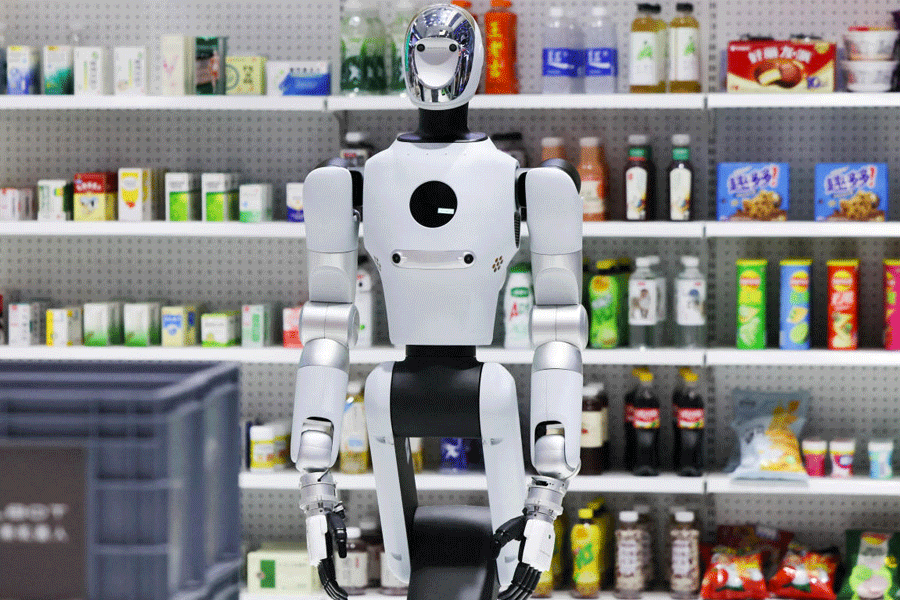
China is building many robots that look and move somewhat like people.
The robots can sort items, package noodles, make coffee and pick medicine from shelves.
However, they are still slow and often make mistakes.
They have trouble when a task changes even a little from what they practiced.
The Chinese government is spending money and buying robots to help the industry grow.
This has created many companies, even though businesses do not yet need enough robots to support them all.
Supporters think making lots of robots will create useful data and improve the technology.
Critics say regular industrial robot arms are cheaper and more reliable for many factory jobs.
Experts expect some companies to disappear or merge before humanoid robots become widely useful.

Chinese manufacturers accounted for about 95% of the roughly 20,000 humanoid robots shipped globally last year.
Government funding and purchases are rapidly expanding China’s humanoid-robot industry, despite limited commercial demand.
Robots remain slow and error-prone, often struggling when tasks, objects, lighting or equipment differ from training conditions.
Training centers are collecting physical-action data, but one Liuzhou facility has no clear path to profitability.
Analysts expect falling prices, industry consolidation and possible bankruptcies as companies compete for a still-developing market.
- Who
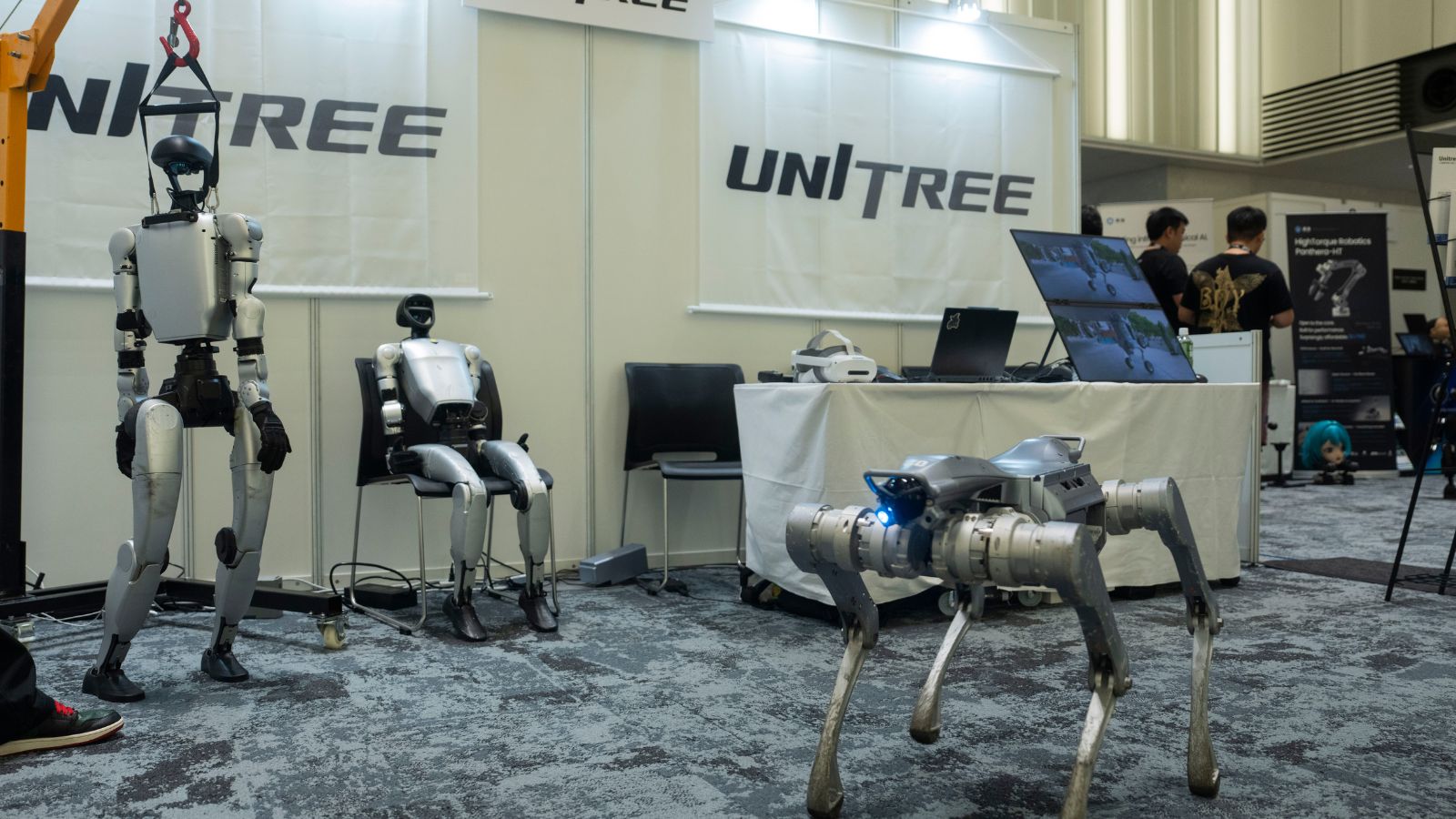
- Chinese humanoid-robot manufacturers, government agencies, investors, researchers and industry customers, including UBTech, Unitree Robotics and Galbot.
- What
- China is rapidly expanding humanoid-robot production and training while the machines remain limited in speed, reliability, intelligence and profitability.
- Where
- China, particularly training facilities in Liuzhou and robotics centers, factories and companies in Beijing, Shenzhen and other cities.
- When
- The reporting draws on developments through August 2026, including procurement and industry activity during 2026.
- Why
- China wants to develop embodied artificial intelligence, address an aging and shrinking workforce, strengthen strategic manufacturing capabilities and compete with foreign companies.
Expansion Case
Skeptic Case
Mass production and subsidies
Expansion Case
Supporters argue that government funding, large-scale manufacturing and intense competition will lower costs, expand supply chains and generate the data needed to improve embodied artificial intelligence.
Skeptic Case
Critics say state purchases and subsidies are artificially creating demand, while overcapacity, falling prices and unclear business models expose investors and local governments to a market correction.
Workplace usefulness
Expansion Case
Proponents point to potential uses in dangerous, repetitive and structured work, as well as pharmacies, homes and care facilities where human-like machines could navigate familiar environments.
Skeptic Case
Researchers and industry executives say humanoids are still too slow, unreliable and poor at adapting to changed conditions; conventional robotic arms are already cheaper, faster and more reliable for many factory tasks.
China’s global advantage
Expansion Case
Some analysts believe China’s supply-chain dominance will persist even after consolidation and could leave the country with globally competitive survivors and cheaper hardware.
Skeptic Case
Others warn that the industry may be a bubble, with consolidation, bankruptcies and wasted investment likely because commercial demand and the technology’s capabilities remain immature.
Key facts
- Global shipments
- About 20,000 humanoid robots were shipped worldwide last year, according to BofA Global Research.
- China’s share
- Chinese manufacturers accounted for about 95% of global humanoid-robot shipments last year.
- Expected production
- China expects to build more than 100,000 humanoid robots in 2026, according to a Ministry of Industry and Information Technology official.
- Government spending
- Chinese national, provincial and local governments spent at least $230 million on humanoids and related items in the first half of 2026.
- Industry size
- China has more than 150 humanoid-robot companies, according to the National Development and Reform Commission.
- Training gap
- The sector has roughly 500,000 hours of high-quality training data but may need 100 million hours for true physical intelligence, according to analyst estimates.
- Current performance
- A staffer at the Liuzhou training center said the robots complete simple tasks at about 20% of human speed or output.
Quotes
Tang Wenbin
Co-founder and CEO of AI robotics venture Yuanli Lingji
“Every single one of these companies knows that the ultimate commercial goal is still a long way off. That is why they are desperately trying to grab as much capital as possible right now – to buy themselves enough time to survive the bubble's pop.”
 telegraphindia.com
“The robots' IQ is too low. A lot of what we see is dancing disguised as working.”
telegraphindia.com
Sources
Related news
China Pushes Humanoid Robots From Spectacle Toward Industrial Workforce
China’s Humanoid Robot Boom Shows Progress, But Reliability Remains Uncertain

Unitree’s Humanoid Robot Boom Faces Long Road to Usefulness

China’s Humanoid Robot Industry Chases a ChatGPT Moment
China’s Humanoid Robot Makers Pursue Practical Commercial Uses
Unitree Robotics raises about $900 million in Shanghai IPO

Tesla Expands Ahmedabad Network With Body Shop, Model Y Drives

Ather Energy Stock Surges 130%, Outpacing Tesla and BYD

Pakistan’s Remote-Controlled Driverless Car Crashes Into Police Van

SpaceX Plans Texas Foundry to Ease AI Power Bottleneck

Musk Warns Climate Action Alone May Not Save Humanity
