

1 day ago
China Pushes Humanoid Robots From Spectacle Toward Industrial Workforce
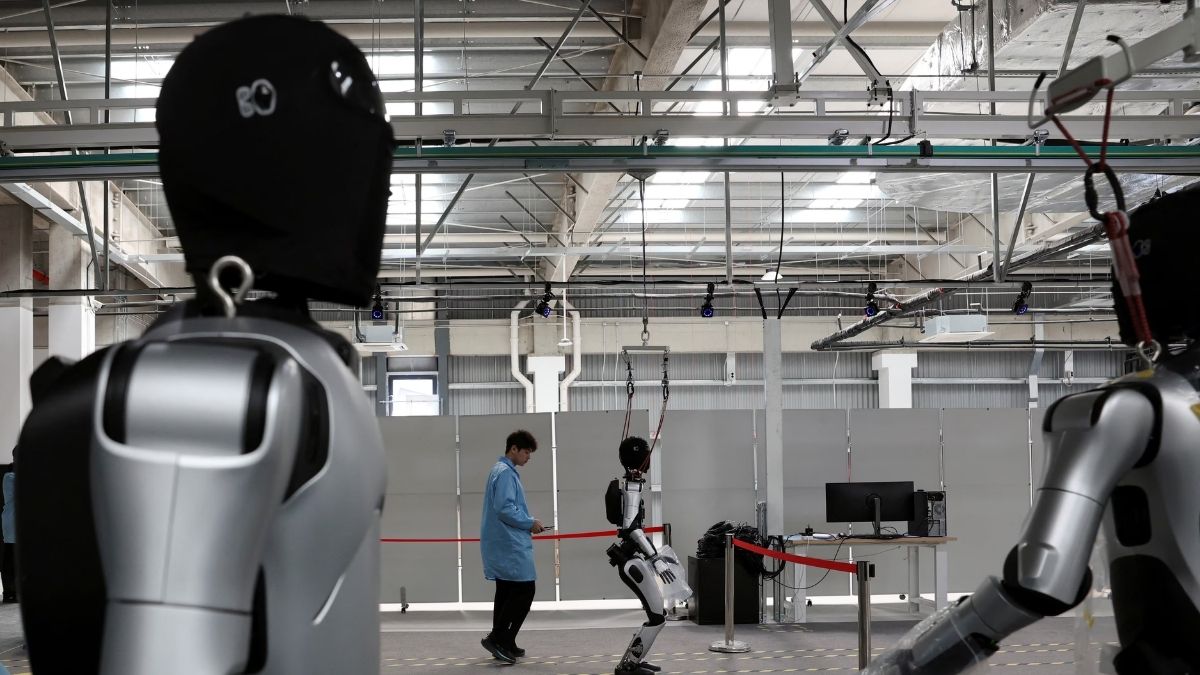
China is building robots that look and move like people.
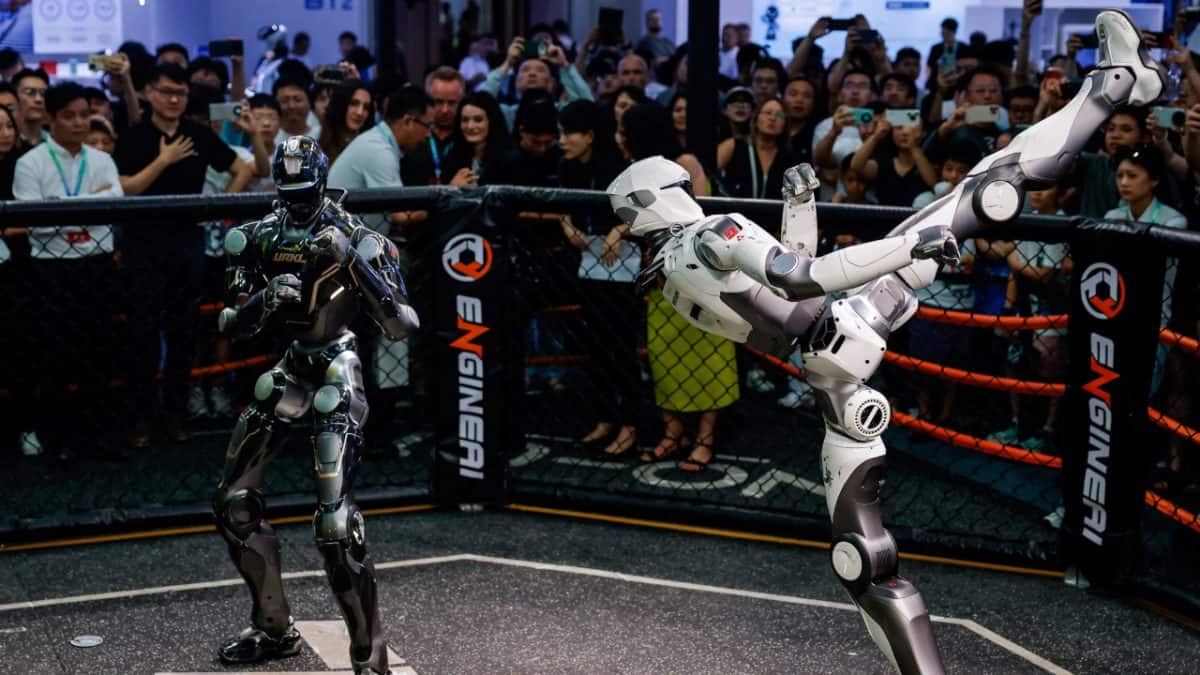
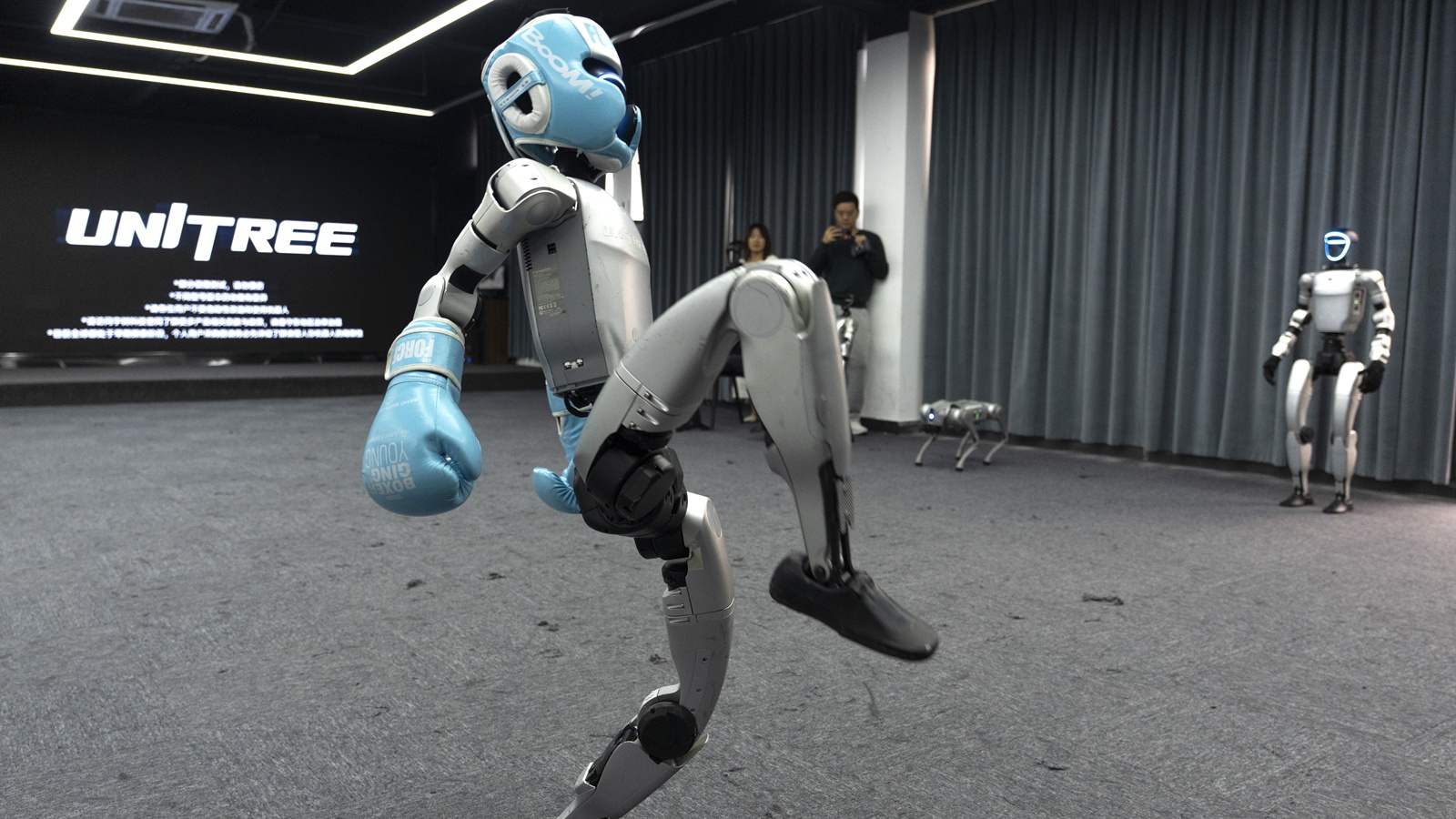
Some can run, dance, box and play football.
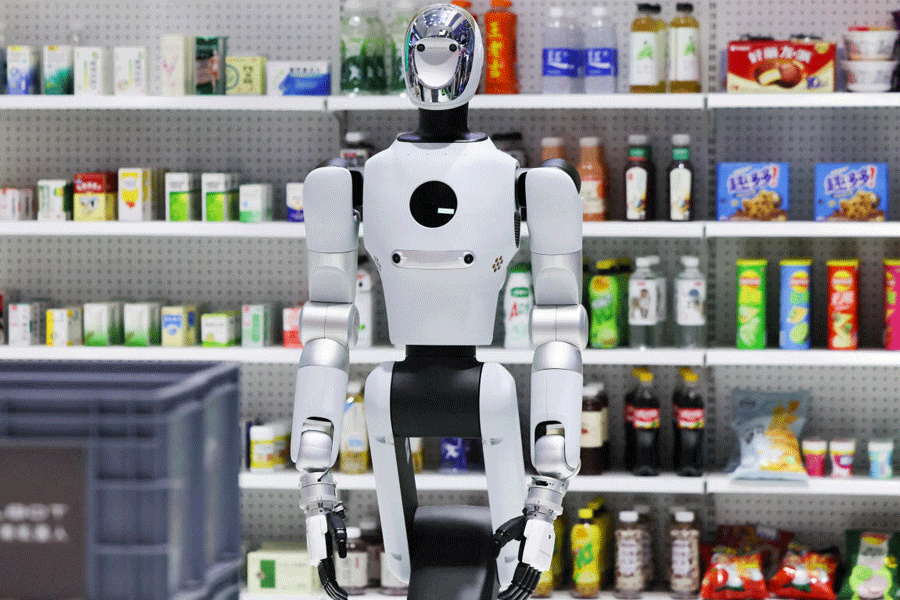
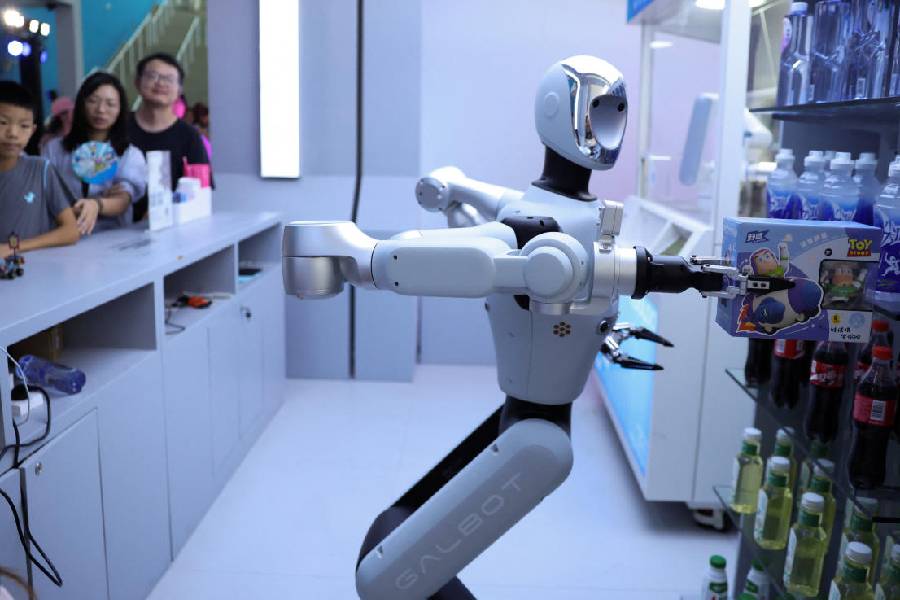
The country now wants them to do useful jobs in factories, warehouses and pharmacies.
At a Beijing competition, robots also practiced sorting, packaging and tightening screws.
One robot called Tiangong Ultra reportedly ran 100 metres faster than the human world record.
However, performing one impressive trick does not mean a robot can work reliably for eight hours.
Robots still make mistakes and often work much more slowly than people.
Chinese companies and governments are spending heavily to improve their hardware and collect training data.
Experts disagree about whether this will create a major industry or a costly bubble.

More than 2,000 robots competed at Beijing’s second World Humanoid Robot Games, including tests for workplace tasks.
Tiangong Ultra’s reported 100-metre time improved from 8.86 seconds to 8.64 seconds, faster than Usain Bolt’s 9.58-second record.
China has more than 150 humanoid-robot companies, while government spending on humanoids and related equipment surged in early 2026.
AGIBOT, UBTECH and Galbot are testing robots in factories, training centers and pharmacies, but performance remains limited.
China’s manufacturing scale gives it an advantage, although analysts warn production may outpace sustainable commercial demand.
- Who
- Chinese robotics companies, government agencies, universities and research institutions are developing and testing humanoid robots.
- What
- China is trying to turn humanoid robots from demonstration machines into commercially useful industrial workers.
- Where
- The effort spans China, including Beijing, Liuzhou, Nanchang, Shenzhen and pharmacies, factories and training centers across the country.
- When
- The second World Humanoid Robot Games took place in August; spending and industry figures cited cover 2025 and the first half of 2026.
- Why
- China aims to build a commercially viable humanoid workforce, strengthen its manufacturing ecosystem and collect the physical-world data needed for embodied artificial intelligence.
Industrial Promise
Skeptical View
China’s manufacturing strategy
Industrial Promise
Supporters argue that large-scale production, government investment and intense competition can reduce costs and create the hardware, software and data ecosystem needed for useful humanoids.
Skeptical View
Critics warn that production capacity could grow faster than real demand, especially because government entities can act as both financiers and customers.
Demonstrations versus workplace performance
Industrial Promise
Robot competitions and factory trials show rapid gains in speed, physical ability and selected task performance.
Skeptical View
Researchers and industry executives caution that demonstrations do not prove robots can handle unpredictable workplaces, work full shifts or match human speed and adaptability.
Humanoids versus conventional automation
Industrial Promise
Humanoids could eventually work in varied environments and handle tasks after receiving simple voice or text instructions.
Skeptical View
Conventional industrial robots remain more efficient for many factory operations, while humanoids are still costly, error-prone and weak at manipulating small objects.
Key facts
- Chinese humanoid companies
- China has more than 150 humanoid-robot companies, according to the National Development and Reform Commission.
- World Robot Games
- The second games featured more than 2,000 robots from 666 teams across 16 countries; 641 Chinese teams brought 1,975 robots.
- Reported speed record
- Tiangong Ultra was reported to run 100 metres in 8.86 seconds by Reuters and later 8.64 seconds by People’s Daily.
- Government spending
- National, provincial and local governments spent at least $230 million on humanoids and related equipment in the first half of 2026, compared with $62 million a year earlier.
- Factory trial
- AGIBOT reported that its robots completed more than 64 hours and 64,828 production-line tasks at a Longcheer Technology factory, with a 99.99% task success rate.
- Training-data gap
- The industry has roughly 500,000 hours of high-quality training data, while one estimate puts the requirement for physical intelligence at about 100 million hours.
- Industrial comparison
- Indian factories installed about 9,100 industrial robots in 2024, compared with 295,000 in China.
Quotes
Tang Wenbin
Co-founder and CEO of AI robotics company Yuanli Lingji
“A lot of what we see is dancing disguised as working”
 financialexpress.com
Sources
Related news
China’s Humanoid Robot Boom Races Ahead of Real-World Readiness
China’s Humanoid Robot Boom Shows Progress, But Reliability Remains Uncertain
China’s Humanoid Robot Makers Pursue Practical Commercial Uses

World Humanoid Robot Games Showcase Robots Surpassing Human Sprint Records
Chinese Humanoid Robots Face Real-World Tests After Speed Records

Chinese Humanoid Robots Break Human Records at Beijing Games
Nepal Tunnel Survivor Alleges Chinese Supervisor Fled During Flood

Business Updates: Ramco Cements, HPCL, and More

Indian Markets Open Higher on Friday, Tracking Global Gains

Italy to Curb Chinese Influence in Key Strategic Sectors
