

3 weeks ago
Gulf oil spill fast becoming worst in years, agencies warn

A big ship called the Caroline Bezengi was carrying lots of oil from Russia to India.
In June, the ship got stuck near an island in Oman.
Oil started leaking out of the ship into the sea.
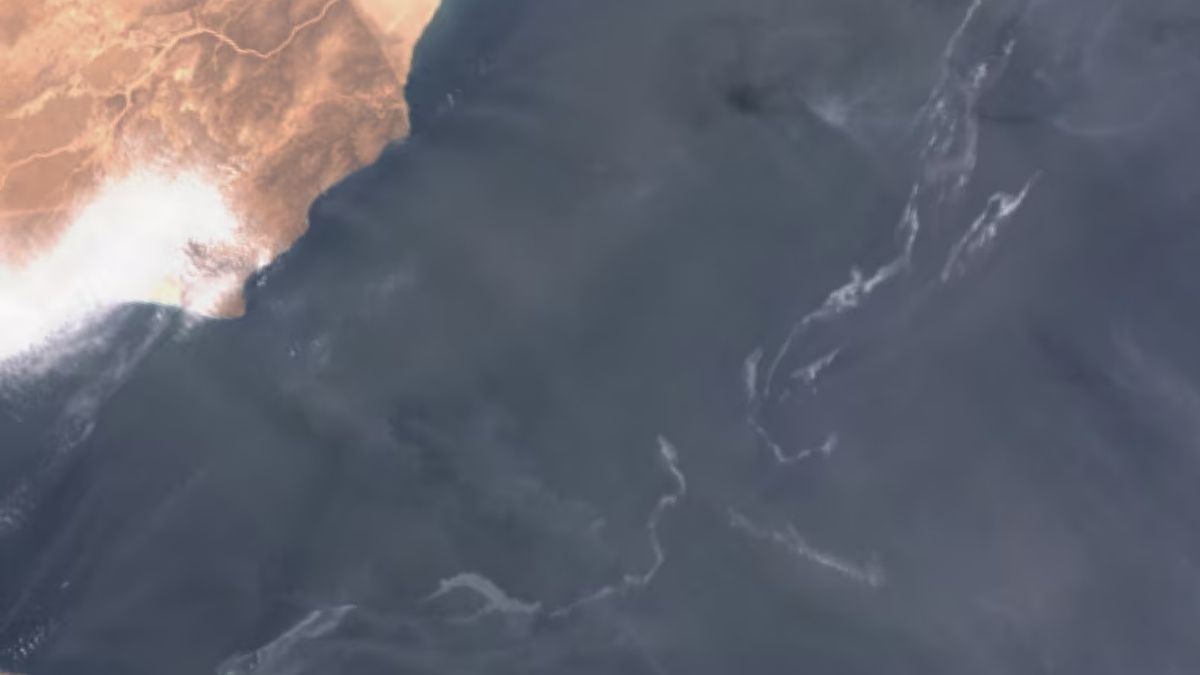
The oil slick is spreading very fast and is now huge.
Some oil has even reached the mainland.
The leak is dangerous for a nature reserve where turtles, whales and coral reefs live.
People are trying to stop the oil with floating barriers called booms, but the ship is old and stormy seas are making it hard.
There is also a money problem, because nobody wants to pay for the cleanup.
Scientists worry this could become one of the worst oil spills in many years.

The Caroline Bezengi, carrying about 800,000 barrels of Russian crude and under international sanctions, ran aground on June 30 at an Omani island in a marine nature reserve.
The U.N.'s International Maritime Organization said oil has begun reaching the Omani mainland, and satellite imagery reviewed by John Amos, CEO of the nonprofit SkyTruth, shows the slick covers more than 2,000 square km.
According to Greenpeace, the affected area grew from about 45 square km in late July to roughly 600 square km by August 4-5.
The incident is being treated as an 'act of war', the tanker lacks recognized Western insurance, and the IOPC Funds will not cover clean-up costs.
Wildlife including endangered turtles, humpback whales and coral reefs is at risk, and specialists warn the spill could rival the 1989 Exxon Valdez disaster.
- Who
- The Caroline Bezengi, a 25-year-old tanker carrying Russian crude under international sanctions, plus international agencies (IMO, IOPC Funds), environmental groups (Greenpeace, SkyTruth) and Omani authorities.
- What
- A rapidly spreading oil spill that agencies warn is becoming one of the world's worst in years, threatening marine wildlife.
- Where
- Grounded at Al-Qibliyyah Island in Oman's Hallaniyat Islands nature reserve, with oil drifting toward and reaching the Omani mainland.
- When
- The tanker ran aground on June 30; the spill was first detected in early July and was still spreading as of August 12.
- Why
- The vessel ran aground and is breaking up under wind and waves, while war-related shipping rules, lack of insurance and monsoon conditions have hampered the response.
Official response and insurers
Environmental agencies and specialists
Size of the oil slick
Official response and insurers
Oman reported on Monday that the slick covers almost 400 square km.
Environmental agencies and specialists
Greenpeace and oil spill specialists put it at up to several times that size, at over 2,000 square km.
Cause and compensation
Official response and insurers
The incident is being treated as an 'act of war', so the IOPC Funds will not be involved in clean-up costs.
Environmental agencies and specialists
Environmental groups and specialists warn the lack of an adequate response could lead to a disaster rivaling the Exxon Valdez spill.
Adequacy of containment
Official response and insurers
Oman said it used booms to try to stem the spread of the oil.
Environmental agencies and specialists
Specialists say booms are insufficient and the vessel must be stabilised and remaining crude transferred to another tanker.
Key facts
- Vessel
- Caroline Bezengi, 25-year-old tanker
- Cargo
- About 800,000 barrels of Russian crude oil
- Grounding date
- June 30
- Location
- Al-Qibliyyah Island, Oman (Hallaniyat Islands nature reserve)
- Slick size (independent estimate)
- More than 2,000 square km
- Slick size (Oman's estimate)
- Almost 400 square km
- Voyage
- Sailed from Novorossiysk (Black Sea) in April, through the Suez Canal in late May, past Yemen
- Compensation status
- IOPC Funds will not pay; incident treated as an 'act of war'
Quotes

John Amos
Oil‑spill specialist and CEO of SkyTruth
“The slick now covers an area of more than 2,000 square km, and the tanker will continue to break up under the steady onslaught of wind and waves, potentially releasing 40 to 50 million gallons of oil”
 theprint.in
“The longer we wait, the more damaged and decrepit that tanker gets, the more complicated and dangerous the salvage operation will be”
theprint.in
IMO spokesperson
Representative of the U.N. International Maritime Organization
“Oil spill contingency planning is in place”
theprint.in
Sources
Related news
Caroline Bezengi Oil Spill Reaches Oman Coast, Threatening Marine Life
Oman Oil Spill From Sanctioned Russian Crude Tanker Spreads Widely
Oman responds to stranded Russian crude tanker off Dhofar
Iran Seizes Cargo Vessel in Strait of Hormuz Over Pollution
Iran Calls for Environmental Safeguards, Strait of Hormuz Reopening Conditions
Saudi Tanker Hit in Hormuz, Killing Two Filipino Sailors

Indian Seafarers Face Risks Sailing Through Strait of Hormuz
US Launches Strikes on Iran After Attacks on Bases

Bessent Predicts Pipelines Will Bypass Strait of Hormuz
Qatar Urges United States and Iran to Resume Talks

Iran Signals Ceasefire Return If US Honors Commitments
