2 weeks ago
Caroline Bezengi Oil Spill Reaches Oman Coast, Threatening Marine Life
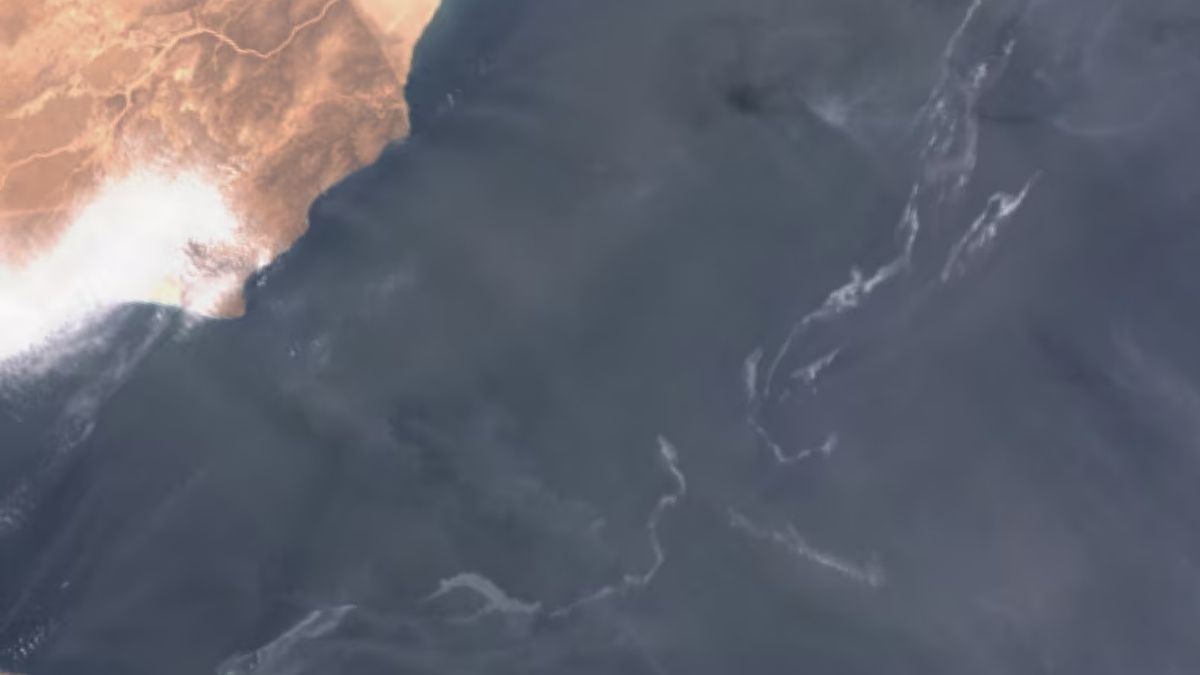
A very big ship, called the Caroline Bezengi, was carrying a huge amount of oil across the ocean.
The ship got hurt and had a big problem near Yemen, and later it ran into the ground near a country called Oman.
Because the ship was damaged, oil started leaking into the sea.
The oil made a giant slippery stain that is bigger than 2,000 square kilometres — bigger than many cities!
Now the oil has floated all the way to Oman's beaches.
This is a problem because oil is dangerous for ocean animals like turtles, whales, birds and fish.
It can also make the sand dirty and hurt people who catch fish or welcome tourists.
The weather, with big monsoon winds and waves, is making it very hard for people to clean up.
If the old ship breaks apart, a lot more oil could spill out, making the mess even bigger.

A massive oil slick, estimated at over 2,000 square kilometres, has reached Oman's coastline from the grounded tanker Caroline Bezengi.
Oman's Environment Authority says up to 40 kilometres of coast near Ras Madrakah could be affected, with Masirah Island's southern beaches also at risk.
The vessel carried around 800,000 barrels of sanctioned Russian crude and is believed to be part of Russia's 'shadow fleet.'
Experts warn that if the aging tanker breaks apart it could release an estimated 40-50 million gallons of crude into the Arabian Sea.
Monsoon conditions have hampered cleanup, and the spill threatens the Hallaniyat Archipelago marine reserve, home to rare sea turtles, Arabian Sea humpback whales and Socotra cormorants.
- Who
- The tanker Caroline Bezengi, carrying sanctioned Russian crude as part of Russia's shadow fleet; Omani authorities are responding, and experts such as John Amos and Christopher D'Elia have assessed the spill.
- What
- A large oil spill estimated to cover more than 2,000 square kilometres reached Oman's coastline and threatens marine habitats, including the Hallaniyat Archipelago marine reserve.
- Where
- Oman's coast near Ras Madrakah and the southern beaches of Masirah Island, in the Arabian Sea; the vessel grounded about 41 kilometres from Sharbithat.
- When
- Omani authorities confirmed this week that pollution reached Ras Madrakah beaches, weeks after the tanker ran aground on June 30 following a suspected explosion near Yemen on June 8.
- Why
- The damaged tanker leaked oil after running aground, and a potential breakup could release an estimated 40-50 million gallons of crude, threatening wildlife, habitats and coastal livelihoods.
Key facts
- Tanker
- Caroline Bezengi (about 25 years old, Cameroonian flag, lacking normal insurance coverage)
- Cargo
- An estimated 800,000 barrels of sanctioned Russian crude
- Slick size
- Over 2,000 square kilometres
- Potential additional release
- An estimated 40-50 million gallons of crude if the tanker breaks apart
- Affected coastline
- Up to 40 km near Ras Madrakah; a 10-20 km stretch of Masirah Island at risk
- Grounding
- Ran aground on June 30, about 41 km (22 nautical miles) from Sharbithat, Oman
- Ownership
- Rentoor Shipmanagement (owner) and Villar Shipmanagement (operator), both based in China
- Route
- From Russia through the Suez Canal and Red Sea, carrying oil destined for India
Quotes
Christopher D’Elia
Oil‑spill specialist and professor emeritus at Louisiana State University
“"These illegal tankers don’t comply with the ‘polluter pays’ principle."”
 financialexpress.com
“"This spill raises a lot of issues."”
financialexpress.com

Esmaeil Baghaei
Iranian Foreign Ministry spokesman
“"The source appeared to be a ‘foreign bulk carrier’."”
financialexpress.com
Sources
Related news

Oman Oil Spill From Sanctioned Russian Crude Tanker Spreads Widely
Gulf oil spill fast becoming worst in years, agencies warn
Oman responds to stranded Russian crude tanker off Dhofar

Iran Calls for Environmental Safeguards, Strait of Hormuz Reopening Conditions
Iran Seizes Cargo Vessel in Strait of Hormuz Over Pollution

Tanker Fire After Unknown Projectile Strike Near Saudi Arabia

US-Iran Strikes Escalate as Tehran Warns of New Strategy

Trump Warns of Fresh Iran Strike After Heavy Attack

Trump Says US Could Attack Iran Again at Will

U.S. Treasury Yields Ease as Jobs Data Misses Expectations

Iran Seizes Fuel-Smuggling Vessel in Gulf, Arrests 11 Crew