3 weeks ago
Iran Says Hormuz Deal Close, Reopening Depends on US Conditions

The Strait of Hormuz is a narrow waterway between Iran and Oman.
Before the war, it carried about a fifth of the world's oil and gas, like a busy highway for ships.
There has been a war between the United States and Iran, and ships in the strait have been attacked.
Now Iran says it is 'very close' to an agreement with Oman on a new shipping route.
But Iran says the agreement alone will not be enough to reopen the waterway.
Iran wants the United States to accept its conditions first, including paying compensation and lifting sanctions.
The United States says it will lift its blockade of Iranian ports once the deal is announced.
Iran also wants to keep US and Israeli ships out of the strait and charge some countries to pass.
The two sides still disagree about who controls the strait and how ships should use it.
Until they agree, shipping through the strait remains risky.

Iranian Foreign Minister Abbas Araqchi said Tehran and Oman are "very close" to agreement on a new shipping route through the Strait of Hormuz, but reopening the waterway depends on other conditions, including US compensation to Iran.
A US official said Washington expects a deal soon to restore commercial shipping, and will lift the blockade of Iranian ports once the deal is announced.
Iran reportedly seeks to bar US and Israeli vessels from the strait and demand compensation from countries it considers hostile, while Washington insists shipping stay open without restrictions or transit charges.
Iran's national security official Mohammad Baqer Zolqadr added demands including lifting sanctions and freeing Iranian assets, while Revolutionary Guards spokesperson Hossein Mohebbi said reopening depends on the US accepting Iran's conditions, according to Tasnim news agency.
The UAE said Iran attacked a carrier affiliated with its state oil company, Abu Dhabi National Oil Company (ADNOC) reported 15 of its vessels struck since the conflict began, killing one crew member and wounding 20, and Iranian strikes have been coupled with Houthi attacks on ships near the Red Sea and Gulf of Aden.
- Who
- Iran (Foreign Minister Abbas Araqchi, President Masoud Pezeshkian, national security official Mohammad Baqer Zolqadr, and the Revolutionary Guards), Oman, the United States (President Donald Trump and an unnamed US official), and the United Arab Emirates.
- What
- A proposed Iran-Oman agreement on a new shipping route through the Strait of Hormuz, under which Iran reportedly seeks to bar US and Israeli vessels and demand compensation, while the US insists on unrestricted commercial passage.
- Where
- The Strait of Hormuz, the strategic waterway between Iran and Oman that carried a fifth of the world's oil and gas shipments before the war.
- When
- Announced on Saturday, August 8 (per Reuters); the conflict began with US and Israeli attacks on Iran on February 28.
- Why
- To restore commercial shipping disrupted by attacks and tolls that sent energy prices surging and fueled inflation, and to help reach a wider agreement to end the conflict.
Iran's Position
US Position
Control of the Strait
Iran's Position
Iran wants control over ships entering the Gulf through the strait and reportedly seeks to bar US and Israeli vessels.
US Position
The US insists shipping must remain open and officials have said they would never agree to Iran controlling access to the energy trade route.
Transit Charges and Compensation
Iran's Position
Iran has charged tolls on oil tankers and demands compensation from countries it considers hostile, plus US compensation to Iran for reopening.
US Position
Washington maintains there should be no restrictions or transit charges on shipping through the strait.
Conditions for Reopening
Iran's Position
Tehran's demands include US compensation, lifting sanctions, freeing Iranian assets, and stopping threats; the Guards say the strait reopens whenever Washington accepts these conditions.
US Position
The US plans to lift its blockade once a deal is announced, with actions tied to Iran's implementation of its commitments.
Key facts
- Proposed Deal
- Iran-Oman agreement on a new shipping route through the Strait of Hormuz
- Iran's Demands
- US compensation; bar US and Israeli vessels; lift blockade and sanctions; free Iranian assets
- US Position
- Open commercial shipping without restrictions or transit charges; lift blockade of Iranian ports once deal is announced
- Negotiation Status
- Iran says "very close"; US official expects a deal soon; Oman calls talks "positive and constructive"
- Conflict Background
- War began with US and Israeli attacks on Iran on February 28
- Shipping Importance
- Strait carried a fifth of the world's oil and gas shipments before the war
- ADNOC Losses
- 15 vessels struck since conflict began; one crew member killed, 20 wounded
- US Blockade Enforcement
- More than 30 ships allowed through for humanitarian aid; 53 turned away (US Central Command)
Quotes

Hossein Mohebbi
Spokesperson for Iran's Revolutionary Guards
“There is progress between Oman and Iran on the strait, and we expect a deal soon. Once the deal is announced to restore commercial shipping without impediments, the United States will lift the blockade of Iranian ports.”
 NDTV
NDTV
 theprint.in
theprint.in
theprint.in
“Iran and Oman were “very close” to agreement on a new shipping route through the Strait of Hormuz but that reopening the strait depended on other conditions, including U.S. compensation to Iran.”
NDTV
theprint.in
theprint.in
Sources
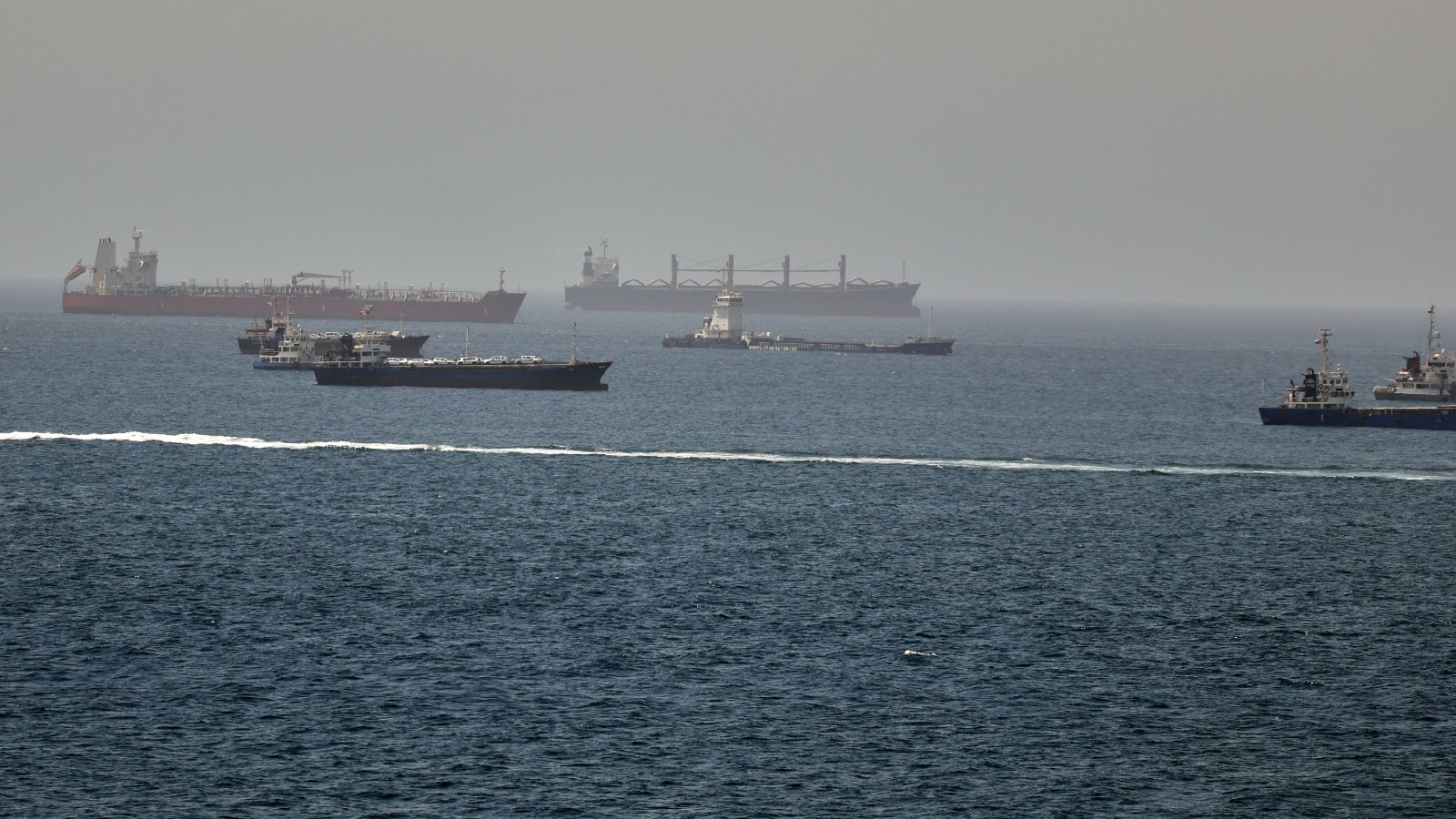
Iran Claims Hormuz Deal Close, But Adds Caveat For Opening Strait
Iran says deal on Strait of Hormuz is close but not enough to open the waterway
Iran says deal on Strait of Hormuz is close but will not open the waterway by itself
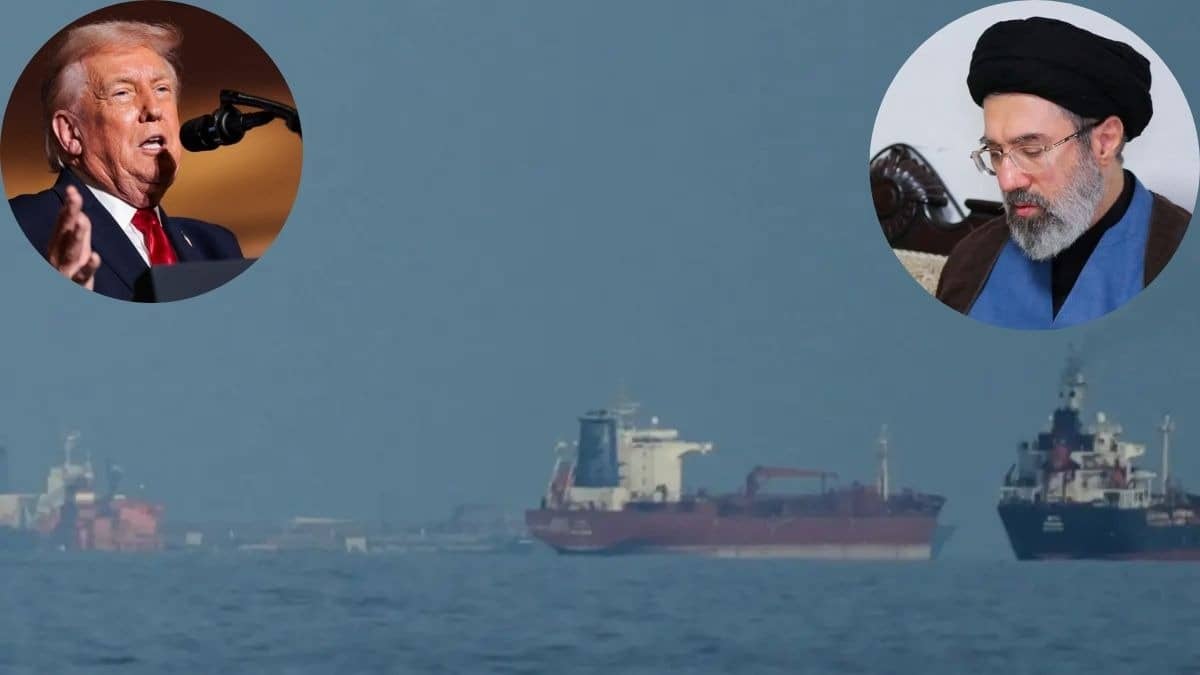
Iran Seeks Ban on US, Israeli Shipping Vessels in Strait of Hormuz Deal With Oman
Related news
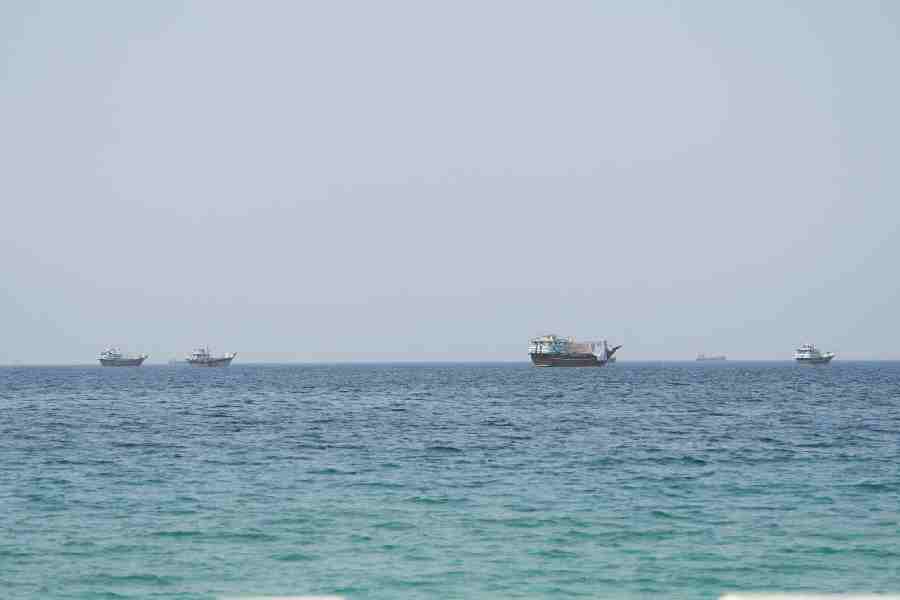
UAE accuses Iran of missile attack on Hormuz vessel

Iran-Oman Hormuz Deal in Final Stage; Trump Says Announcement Near
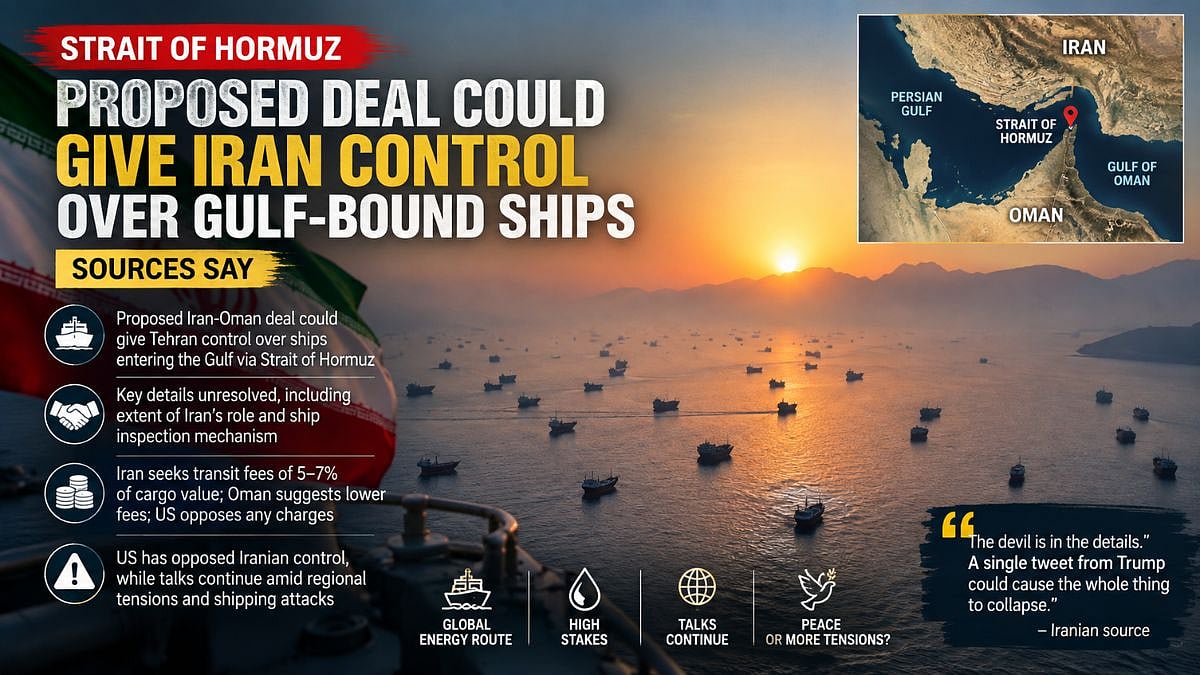
Iran Nears Control of Hormuz Shipping Under Proposed Oman Deal
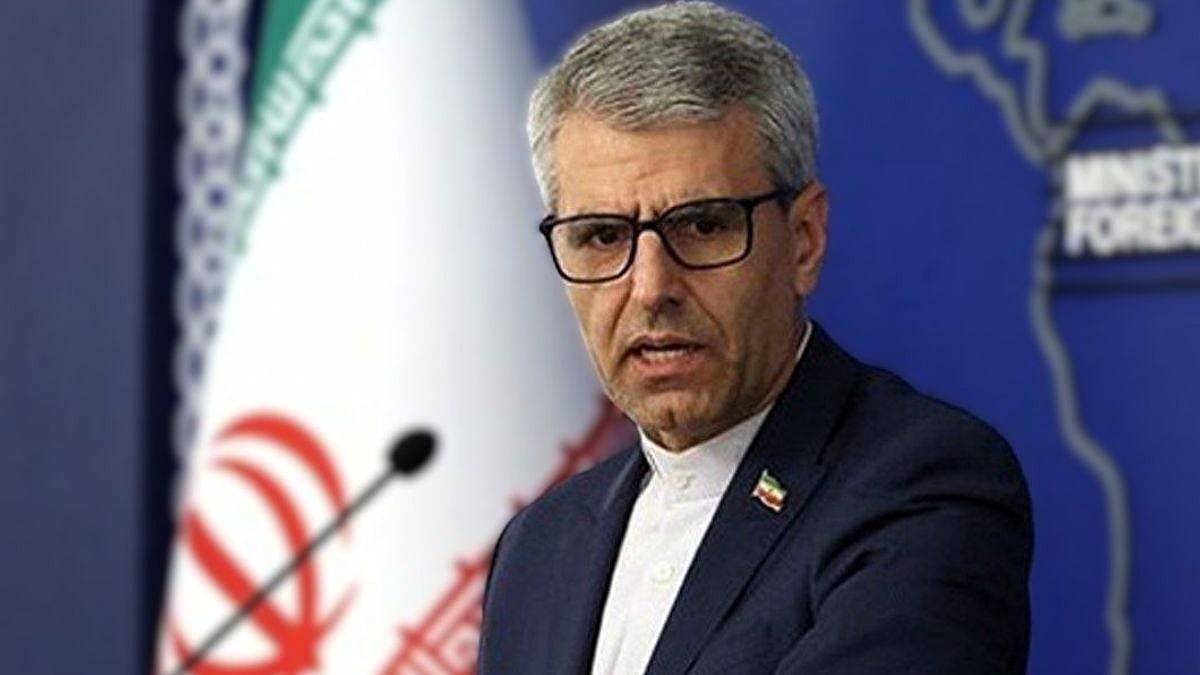
Iran, Oman Finalise Hormuz Transit Deal Amid US Threats
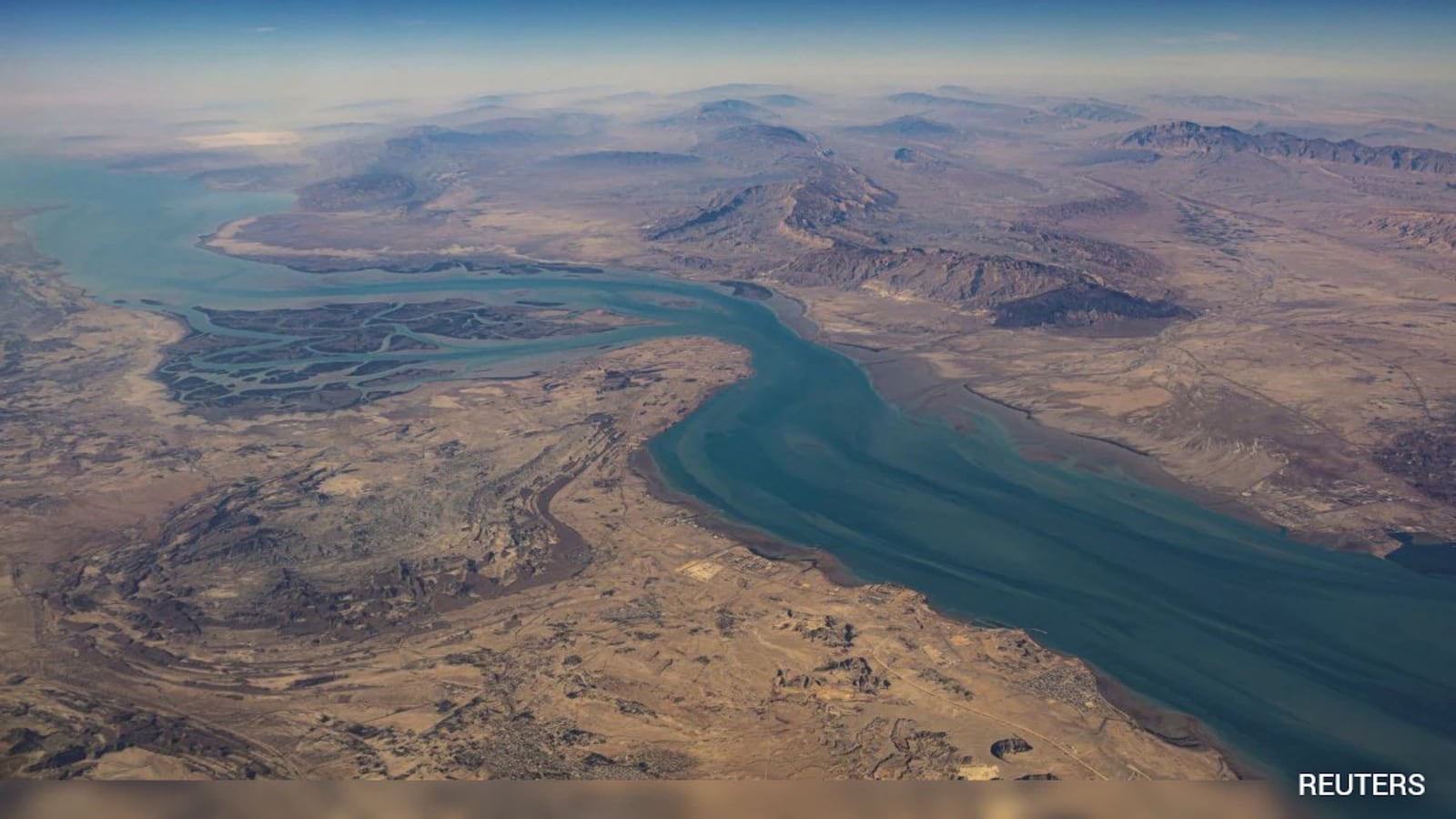
Iran and Oman Report Progress Toward Strait of Hormuz Accord
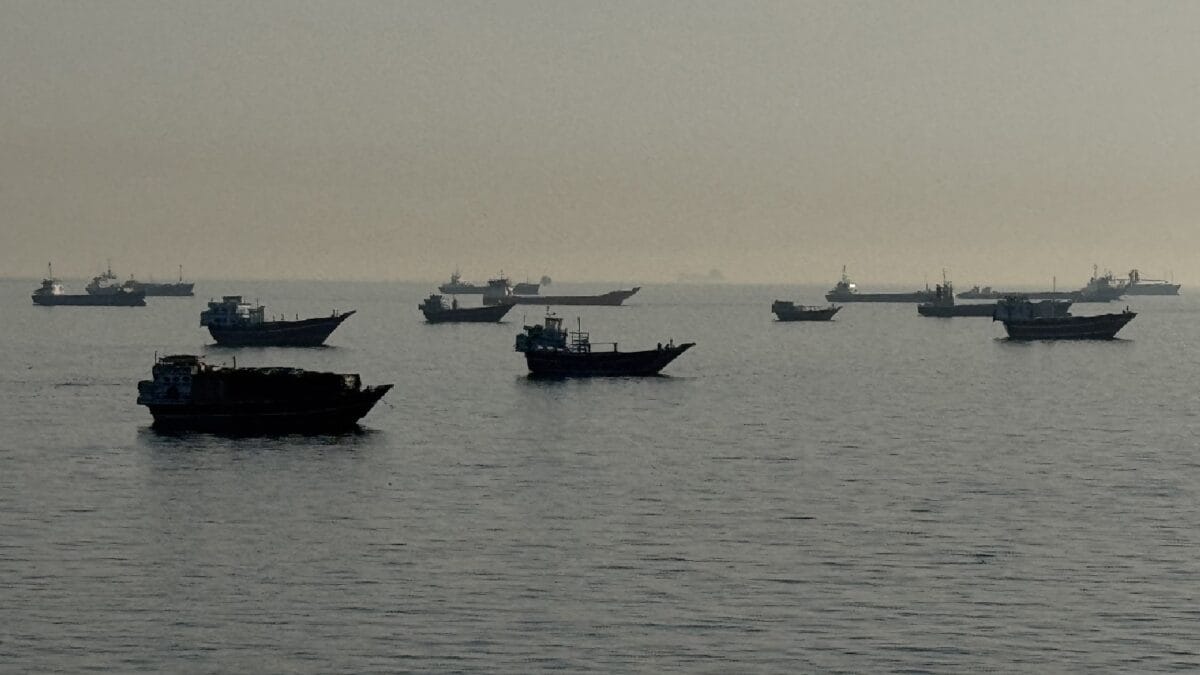
Iran-Oman strike landmark deal to secure Strait of Hormuz
Saudi Arabia Says Iranian Tanker Attack Killed Two Sailors
U.S.-Iran Exchange Escalates Across Middle East, Markets Slide
Trump Aides Seek Quiet Iran War Before Midterm Elections
US Warns Middle East Travelers Amid Escalating Iran-Linked Tensions

Indian Stocks Slide as Oil, Conflict and Yields Rise