1 hr ago
Delhi University Inaugurates India's First Carbon Garden Against Pollution
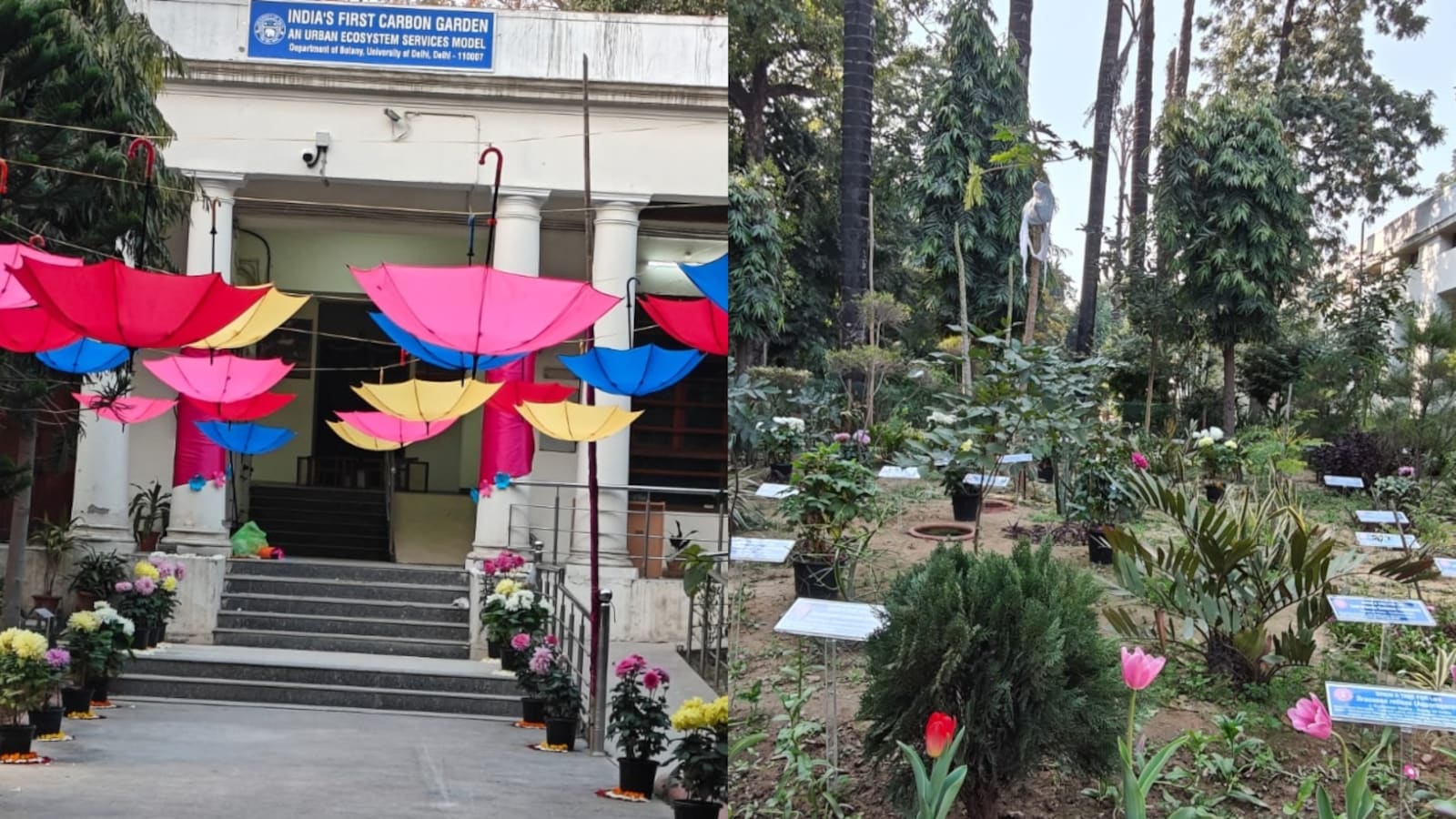
The University of Delhi has opened a small garden to help the environment.
It is called a Carbon Garden.
The garden is about 2,000 square feet and has around 50 kinds of plants.
It also contains tiny living things such as algae, fungi and bacteria.
These plants and microorganisms may help take in carbon dioxide and some pollutants.
They can also help improve soil and provide space for different forms of life.
Vice-Chancellor Yogesh Singh said Delhi needs more sustainable environmental solutions.
He asked other university departments and colleges to consider creating similar gardens.

The University of Delhi inaugurated a Carbon Garden at its Department of Botany on Thursday.
The garden covers about 2,000 square feet and contains around 50 plant species.
It includes herbs, shrubs, trees, algae, fungi, bacteria and Spirulina as part of a mini biodiversity park.
The university says plants and microorganisms can absorb carbon dioxide and some pollutants while improving soil quality.
Vice-Chancellor Yogesh Singh urged similar gardens across the university and warned Delhi could become the “pollution capital” without timely action.
- Who
- The University of Delhi and Vice-Chancellor Yogesh Singh.
- What
- The university inaugurated a Carbon Garden designed to address air and soil pollution and support biodiversity.
- Where
- At the Department of Botany, University of Delhi, in Delhi.
- When
- The garden was inaugurated on Thursday; the articles do not specify a date.
- Why
- To use plants and microorganisms to absorb carbon dioxide and some pollutants, improve soil quality and promote biodiversity.
Key facts
- Claimed distinction
- The University of Delhi describes it as India's first Carbon Garden.
- Location
- In front of the Department of Botany at the University of Delhi.
- Size
- About 2,000 square feet.
- Plant diversity
- Around 50 species, including herbs, shrubs and trees.
- Other life forms
- Algae, fungi, bacteria, Spirulina and microorganisms found on tree bark.
- Environmental aims
- Absorb carbon dioxide and some pollutants, improve soil quality and support biodiversity.
- Expansion proposal
- Vice-Chancellor Yogesh Singh called for similar gardens across university departments and colleges.
Sources
Related news

Retired Delhi Commissioner Grows 1,000 Plants at Home
IWSA Opens Learning Garden Museum To Promote Urban Biodiversity

CISF Plants Trees to Revive Yamuna Bank in Delhi

Delhi Government Partners With Private Sector for Urban Makeover

India Must Become AI Creator, Delhi CM Tells VIT Graduates

Karnataka plans three Lalbagh-style gardens including defence land park

AMD, Delhi University Partner to Train Students in AI

AICTE Launches ₹245-Crore Fellowship for Innovation-Focused PhD Research

Delhi University Placement Drive 2026 Draws 500 Students, 75 Employers
Delhi University placement drive draws 500 participants, 75-plus recruiters