

2 weeks ago
India urged to boost shipping capacity, naval protection: GTRI

Ships carry things like clothes, rice, spices and machines from one country to another.
Many of India's trade ships travel through a water path called the Red Sea to reach Europe.
Since November 2023, some people called Houthis have been attacking commercial cargo ships there.
Because it is dangerous, many ships now take a much longer route around Africa.
This makes trips take about two extra weeks and costs a lot more money.
The problem has now lasted 1,000 days, which is almost three years.
A smart research group called GTRI says India should get ready for this to continue.
They suggest India needs more ships, better protection from its navy, and other trade routes.
Small Indian businesses are hurt the most because they cannot afford the higher costs.
GTRI believes the shipping problem could last into 2027.

Economic think tank GTRI said the Red Sea shipping crisis completed 1,000 days on August 15 without a durable solution.
GTRI warned that military action can intercept missiles but cannot restore commercial confidence in the region.
Yemen-based Houthi forces have attacked commercial cargo ships since November 2023, forcing major shipping lines to reroute India-Europe traffic around the Cape of Good Hope.
Suez Canal traffic is 60-70% below pre-crisis levels, freight rates are 25-40% above normal, and the two-route system could continue into 2027.
GTRI founder Ajay Srivastava said India must treat maritime insecurity as a persistent trade risk and strengthen shipping capacity, trade finance, naval protection and alternative corridors.
- Who
- GTRI (Global Trade Research Initiative), founded by Ajay Srivastava, released the analysis; Yemen-based Houthi forces carried out the attacks on ships.
- What
- The Red Sea shipping crisis reached 1,000 days, and GTRI urged India to strengthen domestic shipping capacity, trade finance, naval protection and alternative transport corridors.
- Where
- The Red Sea, Bab el-Mandeb Strait and Suez Canal route connecting India, the Middle East, North Africa and Europe; ships now reroute around the Cape of Good Hope.
- When
- The crisis began in November 2023 and reached its 1,000th day on August 15; GTRI's statement was reported on August 16, 2026.
- Why
- Houthi forces attacked commercial cargo ships in support of Palestinians amid the Israel-Hamas war, and the wider US-Israel-Iran conflict added to uncertainty.
Key facts
- Think tank
- Global Trade Research Initiative (GTRI)
- Crisis milestone
- 1,000 days on August 15, 2026
- Crisis began
- November 2023, with Houthi attacks on cargo ships
- Suez Canal traffic
- 60-70% below pre-crisis levels
- Freight rates
- 25-40% above normal; 200-400% higher at worst on some India-Europe and India-US routes
- Global capacity absorbed
- 5-7% of container capacity diverted around Africa
- India's trade exposure
- About 50% of exports and 30% of imports via the affected corridor
- Added journey time
- 10-14 days on many voyages; two-route system could continue into 2027
Quotes

Ajay Srivastava
Founder of the GTRI think tank
“At the worst points of the crisis, freight rates on some India–Europe and India–US routes increased by 200-400 per cent. Longer voyages raised fuel, freight, insurance and inventory costs. They also delayed payments and blocked exporters' working capital for additional weeks.”
 thehindubusinessline.com
“As shipping chokepoints are growing, India must treat maritime insecurity as a continuing trade risk and strengthen domestic shipping capacity, trade finance, naval protection and alternative transport corridors.”
thehindubusinessline.com
Sources
Related news

Red Sea crisis enters 1,000th day, shipping detours squeeze trade
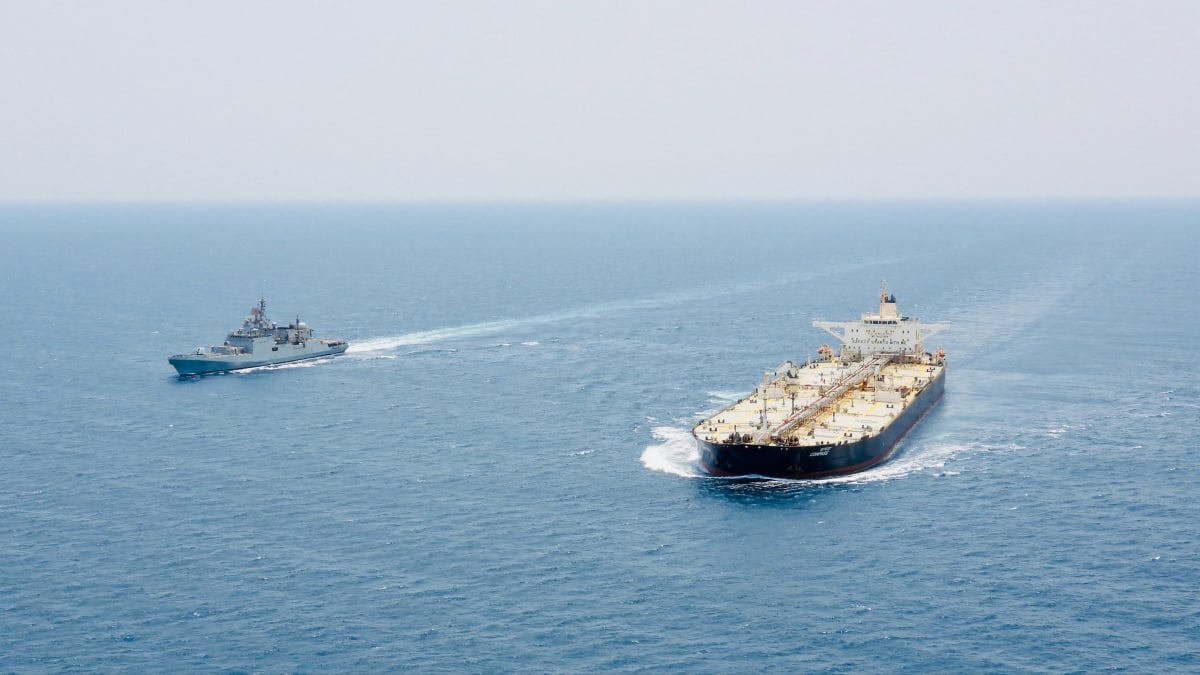
Navy Warships Escort Oil Tankers Through Bab-el-Mandeb Amid Red Sea Threats
Hormuz crisis drives up costs, delays Indian exporter shipments
Why aircraft carriers matter more than ever for India's navy

West Asia War Raises Costs and Complicates India’s Logistics

Mega container ships return to Suez, aiding Indian exporters

Ikea cuts European prices as cost pressures weaken demand

Europe's Bond Selloff Deepens as Middle East Tensions Lift Oil

China’s Rapid Car Development Faces Growing Safety Scrutiny

CNG Prices Rise Rs 2 per Kilogram in Pune

China Challenges US Leadership in Escalating Global AI Contest
