2 weeks ago
U.S. military funding propelled China's Unitree robot dogs

Smart grown-ups in America used Army money to build robot dogs that can run, jump, and even do backflips.
They shared their ideas openly so other scientists could learn from them.
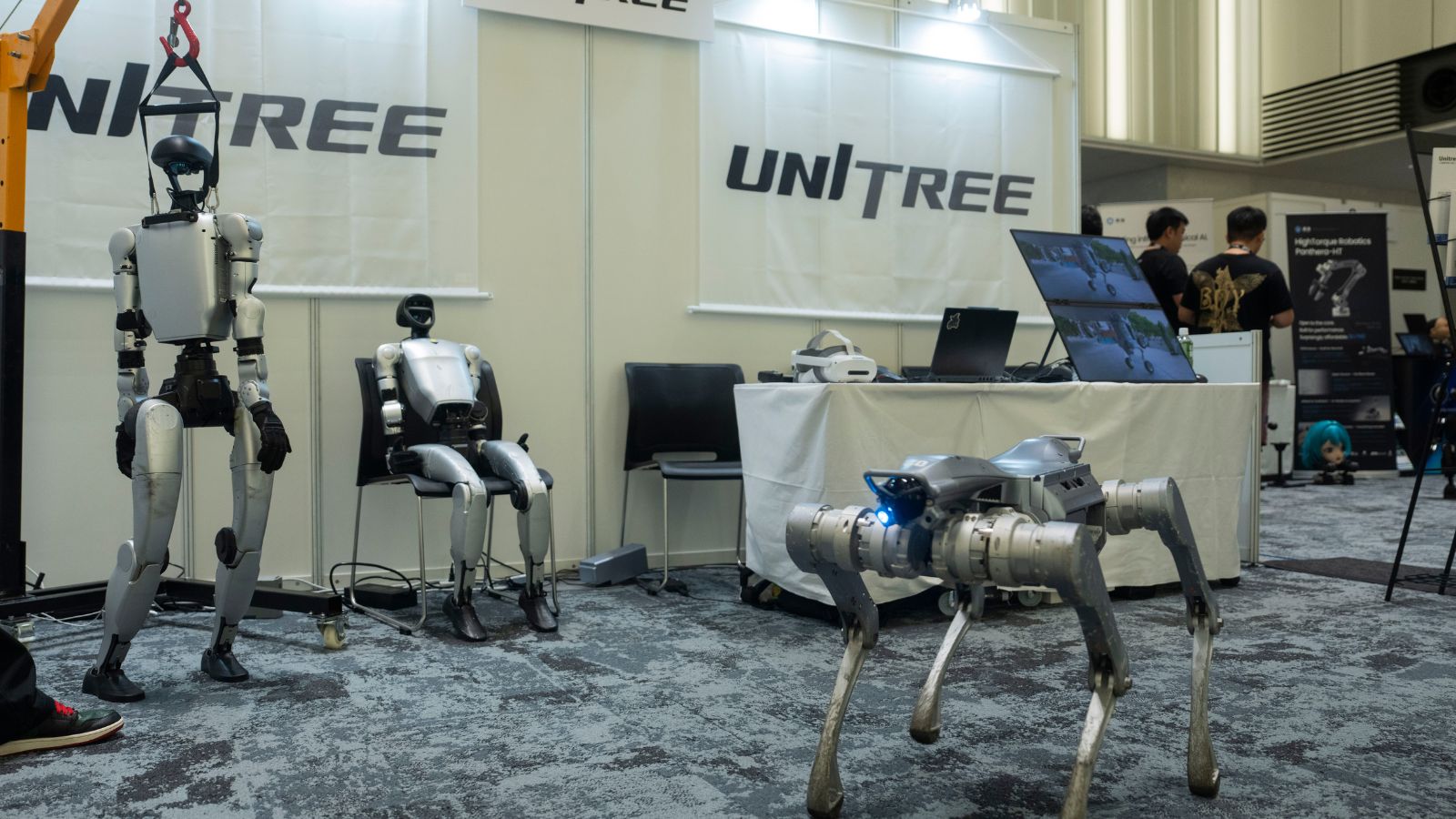
A company in China called Unitree used those ideas to make its own robot dogs, which looked almost exactly the same.
Unitree's robots were cheaper, and people around the world bought lots of them.
Now Unitree is one of the biggest robot-makers in the world, and people are lining up to buy shares in the company.
Some American leaders are upset about this, so they stopped the U.S. military from using Unitree's robots.
American scientists say sharing the research was good, but the U.S. should have gotten better at making robots quickly and cheaply.
Both the American and Chinese militaries have tried out robot dogs.
Unitree says its robots are for everyday use, not for fighting.

Reuters found that Unitree Robotics based its popular Go-series robot dogs on U.S. Army-funded research, with the Go2's dimensions almost identical to MIT's Mini Cheetah.
Unitree's $1,600 Go2, launched in 2023, helped the company dominate the global quadruped market; it sold more than 18,000 quadrupeds and 5,500 humanoids last year and is valued at about $9 billion ahead of its Shanghai IPO.
The Pentagon added Unitree to its list of Chinese military companies in June, and the FCC banned imports of future foreign humanoid and quadruped robots in July.
U.S. researchers said publishing the Army-funded work openly was correct, but America failed to commercialize it at scale; Elon Musk said China is 'incredibly good' at scaling production.
Chinese state television has shown armed Unitree robots with PLA troops, though Unitree says its robots are for civilian use and signed a 2022 pledge not to weaponize robots.
- Who
- Unitree Robotics and its founder Wang Xingxing; U.S. researchers Ben Katz and Gavin Kenneally; the U.S. Army Research Laboratory; and U.S. regulators including the Pentagon and the FCC.
- What
- Unitree's best-selling robot dogs were built on designs from U.S. Army-funded research at MIT and the University of Pennsylvania, and the company now dominates the global market as U.S. officials restrict its use.
- Where
- United States (Washington) and China — Unitree is based in Hangzhou, with its IPO planned in Shanghai.
- When
- Reported Aug 18, 2026, ahead of Unitree's Shanghai stock market debut on Wednesday.
- Why
- Openly published, U.S.-funded robotics breakthroughs were quickly scaled into mass-produced products by Unitree, exposing the U.S. struggle to commercialize research against China's state-backed industrial strategy.
Support for U.S. restrictions
Criticism of U.S. restrictions
Import ban on Chinese robots
Support for U.S. restrictions
U.S. regulators (FCC, Pentagon) say restricting Unitree protects national security, limits the U.S. military's use of Chinese technology, and prepares America to lead in next-generation technologies.
Criticism of U.S. restrictions
China's Washington embassy calls the FCC ban an abuse of administrative power and 'market distortion and unilateral bullying,' and China has threatened retaliation.
Root cause of U.S. losing ground
Support for U.S. restrictions
Most U.S. experts support the ban but say trade restrictions alone won't build an industry; the U.S. needs capital, supply chains, and manufacturing scale to commercialize its research.
Criticism of U.S. restrictions
China says its companies make new technologies affordable and accessible internationally, crediting its coordinated national strategy, which began with Xi Jinping's 2015 ten-year industrial plan.
Military use of robot dogs
Support for U.S. restrictions
Chinese state television shows armed Unitree robots accompanying PLA troops, and the Pentagon classified Unitree as part of China's defense industrial base.
Criticism of U.S. restrictions
Unitree says its products are for civilian use and signed a 2022 pledge, along with U.S. companies, not to weaponize robots.
Key facts
- Company
- Unitree Robotics, based in Hangzhou, China
- Founder
- Wang Xingxing, who cited MIT research in his 2016 Shanghai University master's thesis
- Key Product
- Go2 quadruped robot, launched in 2023 at $1,600
- Sales
- More than 5,500 humanoids and 18,000 quadrupeds sold last year
- IPO
- Shanghai stock market debut expected Wednesday; company valued at about $9 billion
- U.S. Actions
- Pentagon listed Unitree as a Chinese military company (June); FCC banned imports of future foreign humanoid and quadruped robots (July)
- Research Program
- Robotics Collaborative Technology Alliance (2010-2020), funded by the U.S. Army; partners included MIT, UPenn, Boston Dynamics, NASA's Jet Propulsion Laboratory and General Dynamics Land Systems
- Ghost Robotics
- Shipped about 1,000 units; South Korea's LIG Defense & Aerospace bought a 60% stake for $240 million in 2024
Quotes
Gavin Kenneally
Former University of Pennsylvania researcher and founder of Ghost Robotics
“"This isn’t just a competition between U.S. and Chinese robotics companies."”
 theprint.in
“"basically, the first Unitree robot that had any kind of scale."”
theprint.in
Sources
Related news
Unitree Robotics raises about $900 million in Shanghai IPO
Unitree set to become first mainland-listed humanoid robot maker
America's bid to build humanoid robots clashes with China's dominance

Unitree Robotics IPO Surge Highlights Humanoid Robot Frenzy

China’s Humanoid Robot Boom Races Ahead of Real-World Readiness

China’s Humanoid Robot Industry Chases a ChatGPT Moment