

1 week ago
India household spending rises before state elections, study finds
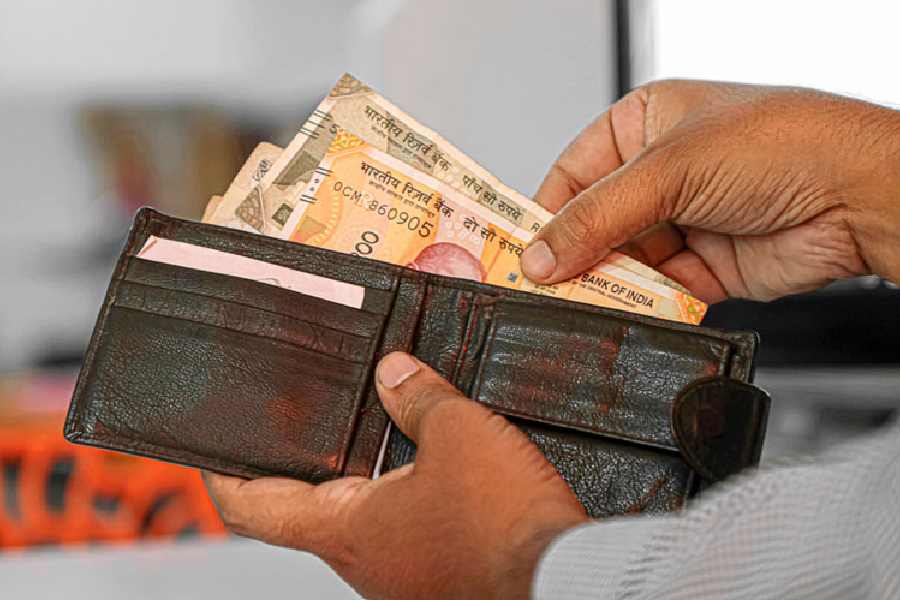
Researchers studied what families spent before elections in Indian states.
They found that spending usually went up as voting day got closer.
The biggest increase happened during the last four months before an election.
An average family spent about ₹360 to ₹400 more each month during that period.
Families spent more on items such as food, clothes, fuel, appliances and some intoxicants.
Government payments increased earlier, but not enough to explain all the extra spending.
The researchers said some election-related resources may have reached households without appearing fully in income records.
Another expert said cash is often handed out just before voting, while festival-related distributions could explain some earlier spending.
The study shows a temporary spending increase, not necessarily a lasting improvement in family incomes or living standards.

Household consumption rose as state elections approached, increasing 4.4% during the final four months before polling.
Researchers analysed spending data from about 180,000 households across 500 districts and 40 state elections held between 2014 and 2022.
The average household spent roughly ₹360 to ₹400 more per month during the final four months before an election.
Spending increased on food, clothing, cosmetics, power and fuel, appliances, cigarettes and liquor.
The increase was largest in districts with more closely contested previous elections, although the study could not prove that cash transfers caused it.
- Who
- Economists Sakshi Satija and Ronit Mukherji studied household spending, with comments from political scientist Sarthak Bagchi.
- What
- A study found that household spending rises before Indian state elections, especially in closely contested districts.
- Where
- The analysis covered about 500 districts across India.
- When
- The study covered elections from 2014 to 2022 and found the largest increase in the final four months before polling.
- Why
- The researchers said additional election-related resources may reach households without being fully reflected in reported income or recorded government transfers.
Researchers’ interpretation
Alternative interpretation
What may explain higher spending
Researchers’ interpretation
The researchers said the pattern is consistent with additional election-related resources reaching households, including resources not fully captured in reported income or government transfers.
Alternative interpretation
Sarthak Bagchi said the final-four-month increase was unlikely to be explained solely by informal cash transfers; he suggested festival-related distributions before elections could also contribute.
Timing of cash distribution
Researchers’ interpretation
Higher spending on cigarettes and liquor was consistent with reports of informal cash distribution, although the researchers cautioned that their data could not prove causation.
Alternative interpretation
Bagchi said cash transfers generally occur one or two days before polling, when their perceived recall value is highest, rather than months before voting.
Where resources may be targeted
Researchers’ interpretation
The larger spending increase in closely contested districts was consistent with election-related resources being directed toward electorally pivotal areas.
Alternative interpretation
The articles provide no direct contrary claim about the district pattern, but the study’s findings do not establish that transfers caused the spending increase.
Key facts
- Study coverage
- 40 state elections between 2014 and 2022
- Households surveyed
- Around 180,000 households
- Geographic coverage
- About 500 districts
- Spending increase, 12–9 months before polls
- 2.9%
- Spending increase, 8–5 months before polls
- 3.2%
- Spending increase, final four months
- 4.4%
- Estimated extra monthly spending
- Approximately ₹360 to ₹400 for an average household in the sample
Quotes
Sakshi Satija
Study lead and economist at the Centre for Effective Governance of Indian States
“A higher increase in household spending in competitive areas is consistent with the possibility that election-related resources are being targeted towards electorally pivotal districts where they could make the biggest electoral difference.”
 telegraphindia.com
“We see a short-lived but meaningful increase in household spending prior to state elections. And this effect is stronger in the more competitive districts.”
telegraphindia.com
Sources
Related news

Do direct cash transfers for women improve household welfare?
Congress spent Rs 136 crore in five state Assembly polls

India's 2026 Household Budgets Shift as Groceries Fall, Rents Rise
Government Considers Diary-Based Spending Data for Affluent Households

Akhilesh's Rs 40,000 promise heats up UP women's vote battle

India’s Spending Patterns Reveal Inclusive Growth and Persistent Inequality
Maharashtra Flags 1.22 Crore Voters for SIR Notices

Mizoram CEO Meets Church Members Rejecting Voter Enrollment
Karnataka Electoral Roll Revision Generates 43.81 Lakh Notices
Rajasthan Civic Poll Withdrawals Trigger Political Storm Across State

Former Election Commissioner Calls Electoral Roll Revision Unfair Despite Legality
