

3 weeks ago
Punjab's paddy area hits all-time high of 32.76 lakh hectares
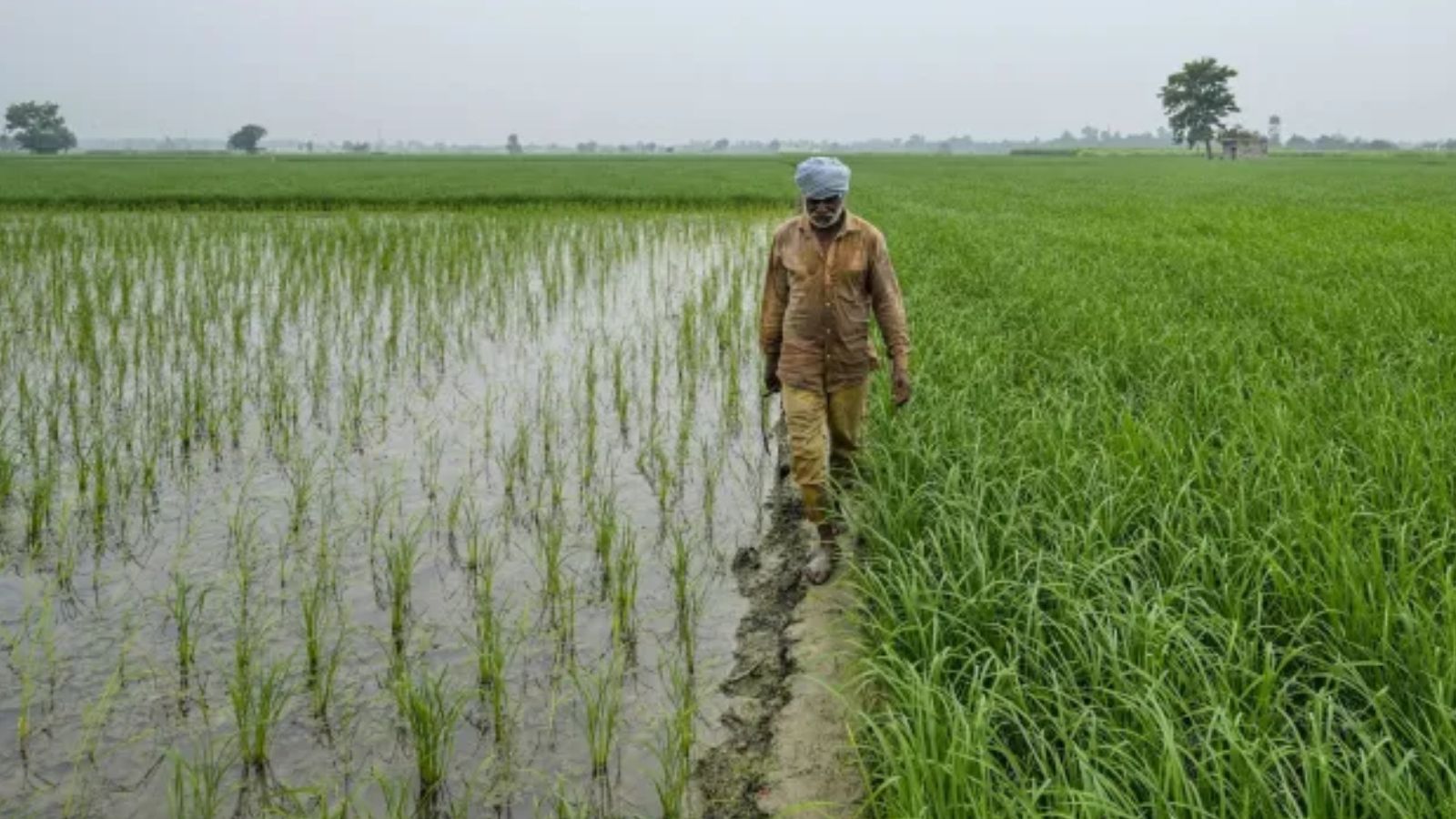
Punjab is a place in India where farmers grow a lot of rice, which is called paddy.
This year, farmers planted rice on more land than ever before — the biggest amount in the state's recorded history.
Most of the farmland in Punjab during this growing season is now used for rice.
Rice needs a lot of water to grow, and Punjab's water supply is running low.
The government has been asking farmers to grow other crops, like cotton, maize and sugarcane, to save water.
But farmers are growing less of those crops than they used to.
Cotton, once a major crop, is now grown on far less land than before.
Farmers say they keep planting rice because it gives them a guaranteed market and a secure income.
Officials say farmers will only switch to other crops if the government promises to buy those crops too.
So even though everyone knows rice uses a lot of water, farmers still plant it because it is the safest way for them to earn money.

Punjab's paddy area touched an all-time high of 32.76 lakh hectares (around 81 lakh acres) this kharif season.
More than 90 per cent of Punjab's kharif area — about 36 lakh hectares — is now under rice, including Basmati and non-Basmati varieties.
Basmati acreage rose to 6.86 lakh hectares but remains below the 7.63 lakh hectares recorded in 2015.
Alternative crops cotton, maize and sugarcane together have fallen to around three lakh hectares, with cotton down more than 76 per cent since 2015.
Officials say farmers will not shift to alternative crops unless the Centre provides MSP and assured procurement for them.
- Who
- Farmers in Punjab, the Punjab Agriculture Department, and officials including Joint Director (Plant Protection) Narinder Singh Benipal and agriculture economist Dr Sardara Singh Johal.
- What
- Punjab's paddy area reached an all-time high of 32.76 lakh hectares despite years of government efforts to diversify cropping and reduce groundwater depletion.
- Where
- Punjab, India.
- When
- The current kharif season (2025-26).
- Why
- Rice offers assured markets, price security and income, while alternative crops lack MSP and assured procurement — even as groundwater depletion raises serious concerns.
Diversification advocates
Paddy-dependent farm economy
Basmati as a solution
Diversification advocates
Officials see the Basmati increase as positive: it has a shorter growing cycle, requires less water and has an export-linked market.
Paddy-dependent farm economy
Experts note Basmati is still rice; total paddy area hit a record high and Basmati acreage remains below 2015 levels, so it does not solve water stress.
Enabling crop diversification
Diversification advocates
State officials argue the Centre must provide MSP and assured procurement for alternative crops before farmers will switch.
Paddy-dependent farm economy
Experts say diversification needs a broader policy framework that makes alternative crops financially viable, not just appeals to farmers.
Groundwater versus livelihoods
Diversification advocates
Groundwater experts warn of a looming agricultural crisis, with farmers potentially drilling about 1,000 feet for water by 2039.
Paddy-dependent farm economy
Farmers stick with paddy because it offers assured markets, price security and income that alternative crops cannot match.
Key facts
- Total paddy area (this kharif season)
- 32.76 lakh hectares
- Share of kharif area under rice
- More than 90 per cent
- Non-Basmati paddy area
- 25.90 lakh hectares
- Basmati paddy area
- 6.86 lakh hectares
- Cotton area this year
- About 80,000 hectares (down 76%+ since 2015)
- Non-Basmati average yield (2024-25)
- 7,101 kg per hectare
- Basmati average yield (2024-25)
- 5,047 kg per hectare
- Increase in Direct Seeded Rice area
- 36 per cent this year
Quotes
Narinder Singh Benipal
Joint Director (Plant Protection), Punjab
“The state government was making every effort to increase the area under Basmati, which has a crop duration of around one month less than conventional paddy and requires less water. The area under Direct Seeded Rice (DSR) had also increased by 36 per cent this year, helping reduce water consumption.”
 indianexpress.com
“The Centre has a major role to play in promoting crop diversification.”
indianexpress.com
Sources
Related news
Punjab’s Crop Diversification Plan Falters as Rice Claims 92%
North India Cotton Acreage Falls 23%, Punjab Hit Hardest

Punjab Gets Bamboo Diversification Push With Rs 2.49 Crore
Paddy Cultivation Surges in Karimnagar Despite Government Advice

Odisha Government Scrutinizes Vedanta’s Jharsuguda Water Use
India's Monsoon Reaches Halfway Mark Amid Wet-Dry Extremes

Shiv Sagar to Release Ramayan Production Documentary

Centre says no Tamil Nadu aid proposal for Cauvery‑Vaigai‑Gundar link
