

1 hr ago
Indian Rice Exporters Pursue Turkey, Jordan Beyond Traditional Markets
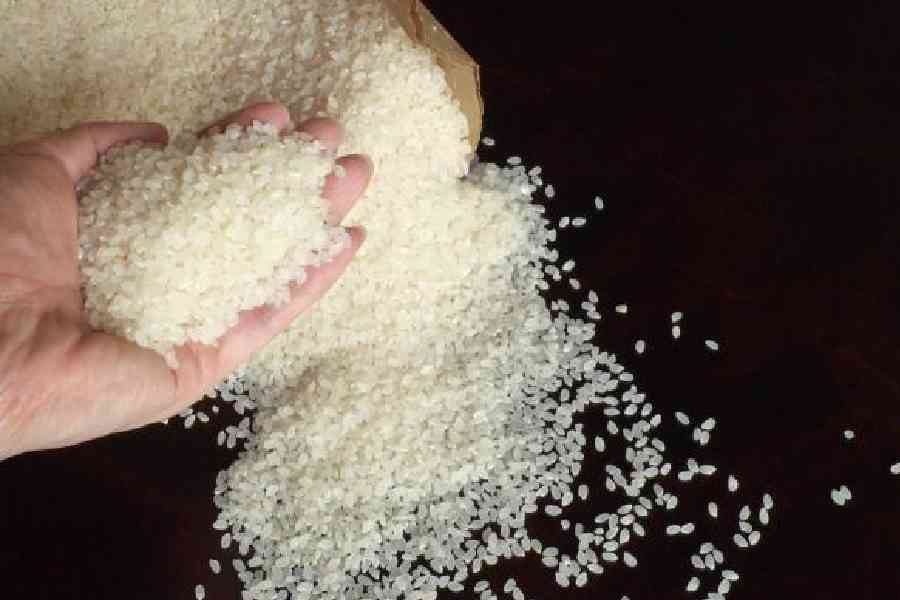
Indian rice companies usually look for the countries that buy the most rice.
Now they are also studying smaller markets such as Turkey and Jordan.
Rice shipments from India to Jordan have grown a lot, and basmati shipments to Turkey have doubled.
Some of this change happened because trade with Iran was disrupted.
This means some rice may now be moving through different regional routes.
More shipments to Jordan do not necessarily mean that people there are eating much more rice.
Jordan may also be useful as a place to distribute rice to other areas.
A conference in New Delhi will help exporters decide which markets, products, prices and business partners are most suitable.

Indian rice exporters are targeting Turkey and Jordan as potential growth markets beyond major traditional buyers.
Shipments to Jordan have risen nearly eight-fold, while Indian basmati exports to Turkey have doubled, according to conference organisers.
Some of the increase reflects disrupted Indian trade with Iran and the rerouting of regional shipments.
Global rice trade is projected to reach about 81 million tonnes by 2035, with Africa’s share of imports rising to roughly 45%.
The Bharat International Rice Conference 2026 will examine market viability and host business meetings from October 23 to 25 in New Delhi.
- Who
- Indian rice exporters, millers, international buyers, policymakers and trade experts, with the Indian Rice Exporters Federation involved in the conference discussion.
- What
- Indian rice exporters are seeking new opportunities in Turkey and Jordan while reassessing how they choose overseas markets.
- Where
- The conference will be held at Bharat Mandapam in New Delhi, India, while the targeted markets are Turkey and Jordan.
- When
- The market discussion will take place at the Bharat International Rice Conference 2026 from October 23 to 25; the reported export figures cover November 2025 to March 2026.
- Why
- Exporters want to diversify beyond established buyers and identify markets offering viable demand, prices, access and manageable commercial risks.
Traditional Market Focus
Diversification Focus
How to identify opportunities
Traditional Market Focus
The established approach prioritises the world’s largest rice-importing countries, assuming their high volumes offer the best opportunities.
Diversification Focus
Conference organisers argue that smaller, fast-growing or strategically located markets such as Turkey and Jordan may offer better returns and access to wider regions.
Meaning of Jordan’s growth
Traditional Market Focus
The sharp increase in shipments to Jordan should not automatically be treated as evidence of equally strong domestic consumption.
Diversification Focus
Even when shipments are driven by redistribution or changing regional routes, Jordan can still have commercial value as a distribution point.
What exporters should assess
Traditional Market Focus
Import-volume rankings provide a straightforward way to compare potential markets.
Diversification Focus
Exporters should also assess demand growth, prices, product fit, freight, duties, regulations, payment risk and the practical ability to find buyers and complete transactions.
Key facts
- Jordan shipments
- Indian rice shipments to Jordan have risen nearly eight-fold, according to conference organisers.
- Turkey exports
- Indian basmati exports to Turkey have doubled, according to conference organisers.
- Global trade outlook
- Global rice trade is projected to grow by around 22 million tonnes and reach approximately 81 million tonnes by 2035.
- Africa’s projected share
- Africa’s share of global rice imports is expected to rise from roughly 35% currently to about 45% by 2035.
- India’s export reach
- India currently exports rice to more than 170 countries.
- Priority-market exports
- Exports to 26 priority markets totalled about Rs 23,476 crore, or USD 2.8 billion, and 4.79 million tonnes from November 2025 to March 2026.
- Conference venue and dates
- Bharat International Rice Conference 2026 will be held at Bharat Mandapam in New Delhi from October 23 to 25.
Quotes
Dev Garg
Vice-President of the Indian Rice Exporters Federation
“Anyone can produce a list of the ten largest rice importers. The real value is understanding which markets an Indian exporter can actually enter, what product they should take there, what price they can realise, what risks they will face and who they need to meet to make the first transaction happen.”
 telegraphindia.com
“Turkey and Jordan are excellent examples. Very few people would have identified them as standout markets at the beginning of the year, yet the trade data changed dramatically.”
telegraphindia.com
Sources
Related news
India’s Record Wheat Harvest Opens $1.5 Billion Export Window
US Iran Sanctions Threaten India’s Rice Exports Through UAE

Trump Sanctions Threaten India’s Basmati Rice Trade With Iran

India to Seek Japan Market Access for Basmati Rice Exports

Global Uncertainty Threatens India’s $1 Trillion Export Target
Weak Monsoon and El Niño Threaten India’s Food Prices
Erratic Monsoon and El Niño May Keep Food Prices Elevated

Europe’s Earlier Harvests Expose Rising Climate Risks for Crops

India's Sugar Price Rise Exposes Wider Economic Tensions
