1 hr ago
Justice Dhulia Calls for Independent Institutions and Stronger Civil Liberties
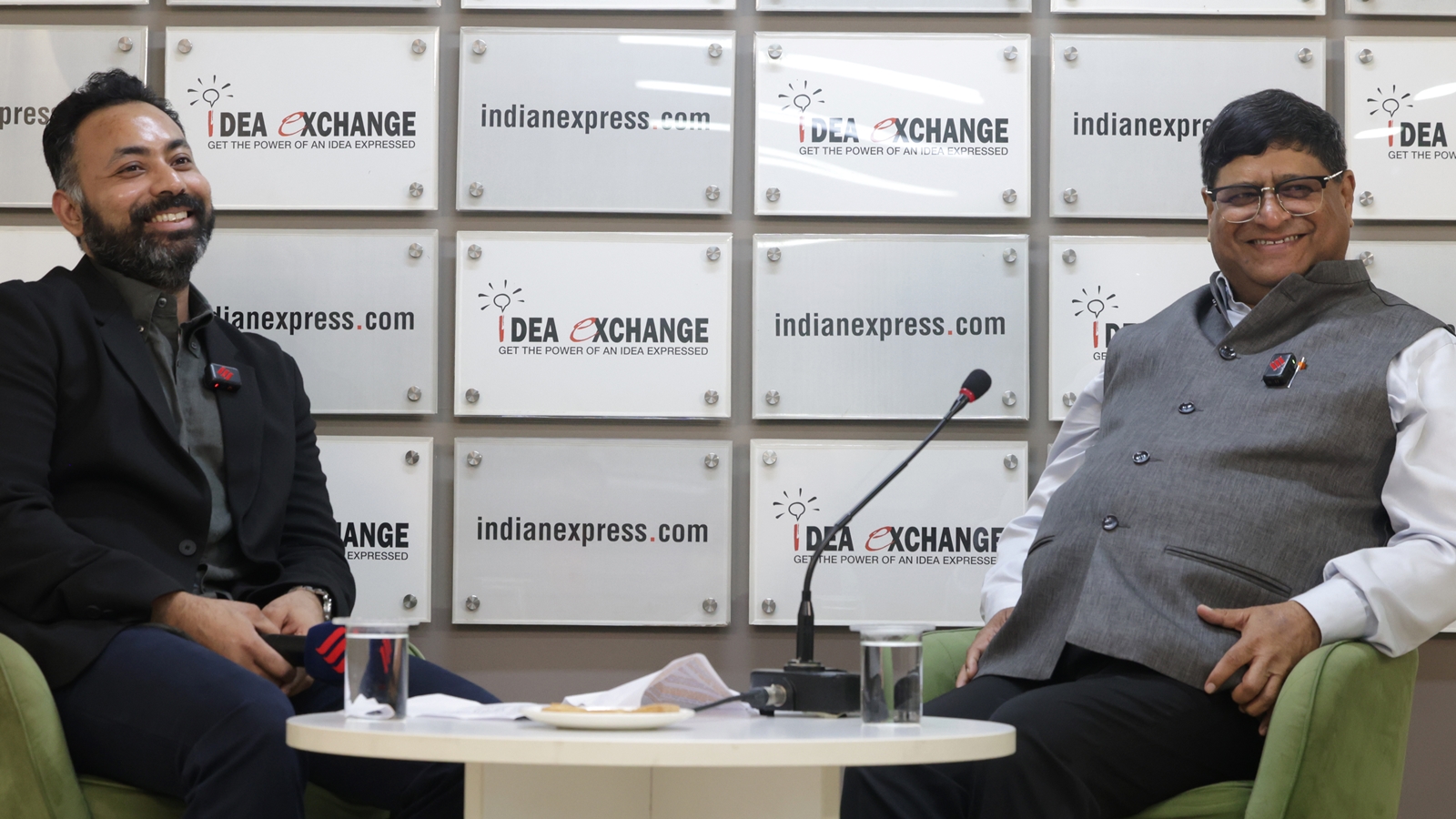
Justice Sudhanshu Dhulia spoke about how important independent public institutions are in a democracy.
He said the Election Commission should not be controlled by one political side.
He also said courts should usually be careful before stepping into political or administrative disputes.
On Umar Khalid’s long time in jail without a trial, he said bail should have been considered earlier.
He explained that bail is normally the rule and jail is the exception before a trial ends.
Dhulia said ordinary people should not always have to prove that they are citizens, especially when they may have no official papers.
He discussed a Supreme Court case about people being allowed to stand respectfully without singing a national song or anthem.
He also said judges must balance openness with the independence of the judiciary.
Overall, he argued that reliable institutions and personal liberty are essential for democracy.

Justice Sudhanshu Dhulia said an Election Commission controlled only by the Chief Election Commissioner would be a serious matter, while cautioning that the other side must be heard.
He defended an independent Election Commission and criticized the 2023 appointment law for giving the Prime Minister’s nominee on the selection panel a potentially dominant role.
Dhulia said Umar Khalid should have received bail earlier, arguing that the reasons for treating him differently from other accused people were not adequately explained.
He said citizenship cannot generally be presumed to be an individual’s burden to prove, especially for people lacking formal documents, and that the authority making the claim should provide proof.
Dhulia emphasized constitutional tolerance, judicial restraint, transparency, and the need for stable Supreme Court precedents.
- Who
- Justice Sudhanshu Dhulia, speaking in an Idea Exchange conversation moderated by Aamir Khan and Saurabh Dwivedi of The Indian Express.
- What
- He discussed Election Commission independence, judicial restraint, bail, citizenship proof, national symbols, judicial transparency, and the consistency of Supreme Court precedents.
- Where
- The interview was published by The Indian Express and addressed issues involving India, including Delhi, Goa, and the Supreme Court.
- When
- During the reported Idea Exchange interview; the discussion also referred to Umar Khalid completing six years in jail without trial on September 13.
- Why
- The conversation examined concerns about executive influence over institutions, prolonged incarceration, citizenship verification, and the protection of constitutional rights.
Institutional independence and individual liberty
Executive authority and procedural caution
Election Commission appointments
Institutional independence and individual liberty
The selection process should protect the Election Commission from political executive dominance and include genuinely independent participants.
Executive authority and procedural caution
The government’s 2023 law uses a selection committee that includes the Prime Minister, the Leader of the Opposition, and a Cabinet minister nominated by the Prime Minister; its constitutionality was being litigated.
Judicial intervention
Institutional independence and individual liberty
Courts may need to act when the functioning of an important democratic institution or compliance with court directions is seriously threatened.
Executive authority and procedural caution
Dhulia stressed that the judiciary should exercise restraint, hear the other side, and treat contempt as requiring proof of deliberate and wilful disobedience.
Prolonged pretrial detention
Institutional independence and individual liberty
Dhulia argued that Umar Khalid should have received bail earlier because the reasons for excluding him were not adequately explained after bail was granted to others.
Executive authority and procedural caution
The State’s position in the underlying case resulted in bail being denied to Khalid and Sharjeel Imam, while the matter remained subject to judicial proceedings.
Citizenship verification
Institutional independence and individual liberty
People should not bear the burden of proving citizenship when authorities question it, particularly when they lack formal documents.
Executive authority and procedural caution
Voter eligibility requires citizenship, and authorities may argue that verification is necessary, although Dhulia said the Election Commission’s role should not become a general citizenship determination.
Key facts
- Speaker
- Justice Sudhanshu Dhulia
- Election Commission concern
- Dhulia said decisions being taken only by the Chief Election Commissioner would be serious if that account were established.
- Appointment law
- The 2023 law provides for a selection committee comprising the Prime Minister, the Leader of the Opposition, and a Cabinet minister nominated by the Prime Minister.
- Umar Khalid
- Dhulia said Khalid should have received bail earlier and questioned why he was excluded when bail was granted to five other accused people.
- Bail principle
- Dhulia cited the established principle that bail is the rule and jail is the exception.
- Citizenship burden
- He said the authority claiming that someone is not a citizen should bear the burden of proof.
- National-song dispute
- Dhulia cited the 1986 Bijoe Emmanuel judgment, which protected students who stood respectfully but did not sing for religious reasons.
Quotes
Justice Sudhanshu Dhulia
Supreme Court judge discussing the Election Commission’s independence
“He should have got bail earlier because, in that case, certain parameters were set for the five people granted bail. Umar Khalid has done much less than that, yet it has not been explained why he was left out.”
 indianexpress.com
“If the decisions of the Election Commission of India were taken only by the Chief Election Commissioner (CEC), the way it has been presented by The Indian Express, then it becomes a serious matter.”
indianexpress.com
Sources
Related news
Supreme Court Split Tests Election Commission Appointment Law
Former Judge Defends Dissent, Choice and Linguistic Pluralism
Supreme Court Judges Split Over Election Commission Appointment Law
Supreme Court Split Over CEC Appointment Larger Bench
Supreme Court Split Over Election Commissioner Appointment Law Reference
Justice Flags Executive Veto in Election Commission Appointments
Bhupendra Patel Targets Rahul Gandhi Over SIR Dispute
Rajasthan High Court Says Breakup Alone Is Not Abetment
Uttam Kumar Reddy backs Rahul Gandhi for prime minister
Citizens Seek Supreme Court Stay on Electoral Roll Revision