1 hr ago
Supreme Court Split Tests Election Commission Appointment Law
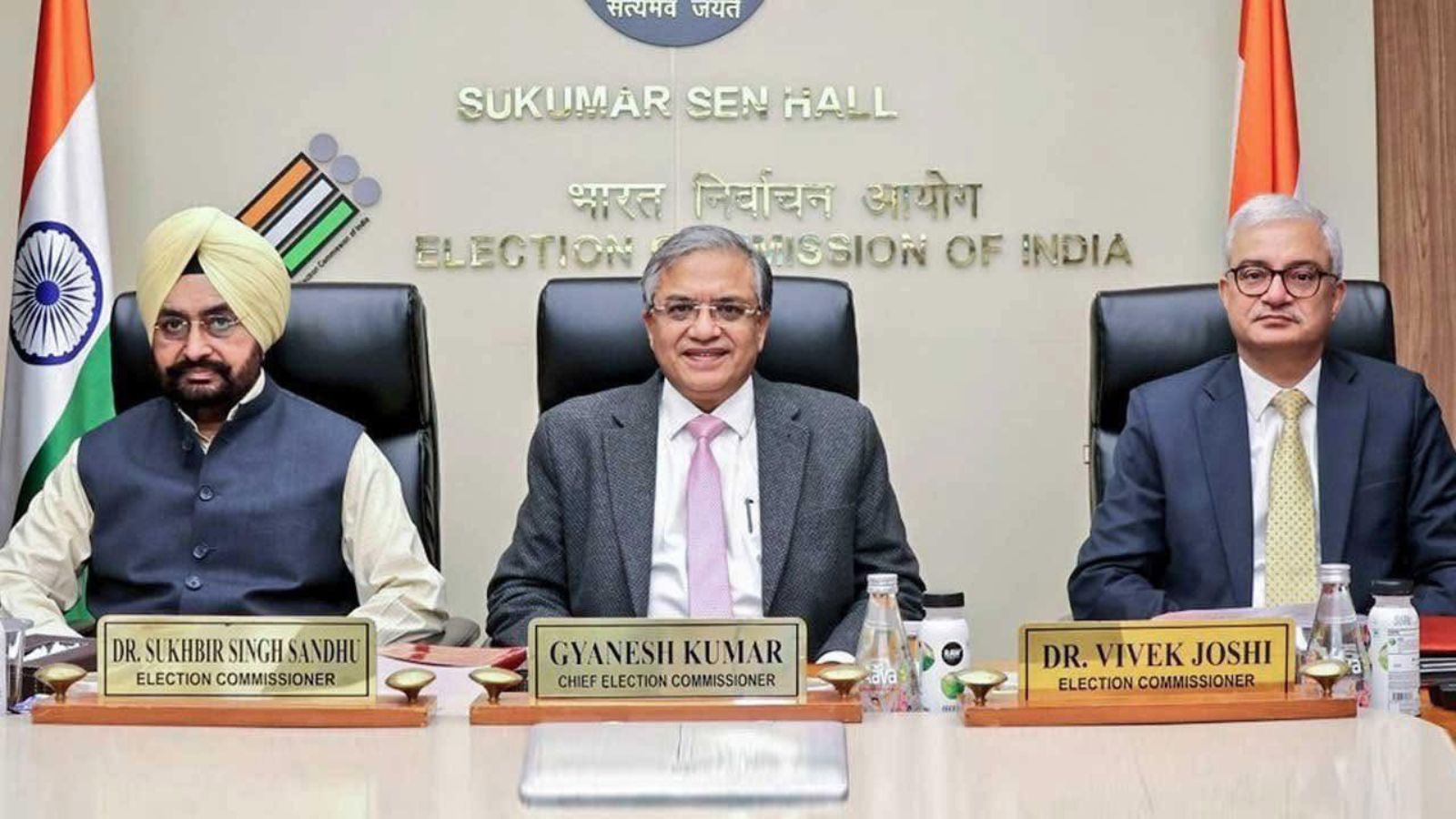
The Election Commission helps run elections in India.
A new law changed who helps choose its top officials.
The law includes the Prime Minister, the Opposition leader, and a minister chosen by the Prime Minister.
Two Supreme Court judges disagreed about how to examine challenges to this arrangement.
Justice Datta said an earlier ruling had already established that the Election Commission must be independent.
Justice Sharma said the court should send the issue to a larger Constitution Bench.
The disagreement is about whether the new law simply needs to be tested against an existing rule or requires a new constitutional interpretation.
The authors believe both the government and Opposition should agree before an Election Commissioner is appointed.

A two-judge Supreme Court bench differed over petitions challenging the 2023 law governing Election Commission appointments.
Justice Dipankar Datta said the law should be tested by applying the independence principle established in Anoop Baranwal.
Justice Satish Chandra Sharma accepted the government’s request to refer the matter to a Constitution Bench for further examination.
The 2023 law replaced the Chief Justice of India on the selection panel with a Union cabinet minister nominated by the Prime Minister.
The authors argue that appointments should not remain under exclusive executive control and suggest requiring unanimous committee decisions.
- Who
- The Supreme Court, the Union government, petitioners challenging the law, and the Election Commission are involved.
- What
- A two-judge bench disagreed over whether challenges to the 2023 Election Commission appointment law should be referred to a Constitution Bench.
- Where
- The matter is before the Supreme Court of India.
- When
- The disagreement was reported on Wednesday; the challenged law was enacted in 2023 and the earlier Anoop Baranwal ruling came in 2023.
- Why
- The challenge concerns whether the appointment process adequately protects the Election Commission from exclusive executive control and preserves public confidence in its independence.
Justice Dipankar Datta and the petitioners
Justice Satish Chandra Sharma and the government’s position
Need for a Constitution Bench
Justice Dipankar Datta and the petitioners
Justice Datta said the issue involved applying an established constitutional principle, not interpreting a new constitutional question, and rejected the referral request.
Justice Satish Chandra Sharma and the government’s position
Justice Sharma accepted the referral, reasoning that whether Parliament was justified in excluding a neutral selector presented an important question requiring independent examination.
Effect of Anoop Baranwal
Justice Dipankar Datta and the petitioners
Justice Datta viewed the ruling’s binding principle as protection of Election Commission independence, while treating its specific committee structure as an alterable remedy.
Justice Satish Chandra Sharma and the government’s position
Justice Sharma accepted that the earlier committee was ad hoc and maintained that the 2023 law still needed to be independently tested against the requirements of free and fair elections.
Role of the executive
Justice Dipankar Datta and the petitioners
The article argues that a cabinet minister nominated by the Prime Minister may not provide sufficient neutrality, especially because the executive participates in elections.
Justice Satish Chandra Sharma and the government’s position
The government relied on a constitutional analogy from the NJAC judgment to argue for a corresponding degree of constitutional independence for the executive.
Key facts
- Challenged legislation
- Chief Election Commissioner and other Election Commissioners (Appointment, Conditions of Service and Term of Office) Act, 2023
- Earlier ruling
- In Anoop Baranwal (2023), the Supreme Court prescribed an interim selection panel including the Prime Minister, Leader of the Opposition, and Chief Justice of India.
- Change under the 2023 law
- The law replaced the Chief Justice of India with a cabinet minister nominated by the Prime Minister.
- Judicial disagreement
- Justice Dipankar Datta rejected the government’s referral request, while Justice Satish Chandra Sharma accepted it.
- Constitutional principle
- The article says Election Commission appointments must be insulated from exclusive executive control and must appear independent.
- Proposed safeguard
- The authors recommend requiring unanimous decisions by the selection committee.
Quotes
Anoop Baranwal Constitution Bench
Supreme Court Constitution Bench that addressed safeguards for Election Commission appointments
“wide discretion is fraught with tyrannical potential even in high personages, absent legal norms and institutional checks”
 indianexpress.com
“a person who is in a state of obligation or feels indebted to the one who appointed him, fails the nation”
indianexpress.com
Sources
Related news
Supreme Court Judges Split Over Election Commission Appointment Law
Why India’s 2023 Election Commissioner Law Faces Supreme Court Review
Supreme Court Split Over Election Commissioner Appointment Law Reference
Supreme Court Split Over CEC Appointment Larger Bench
Justice Flags Executive Veto in Election Commission Appointments
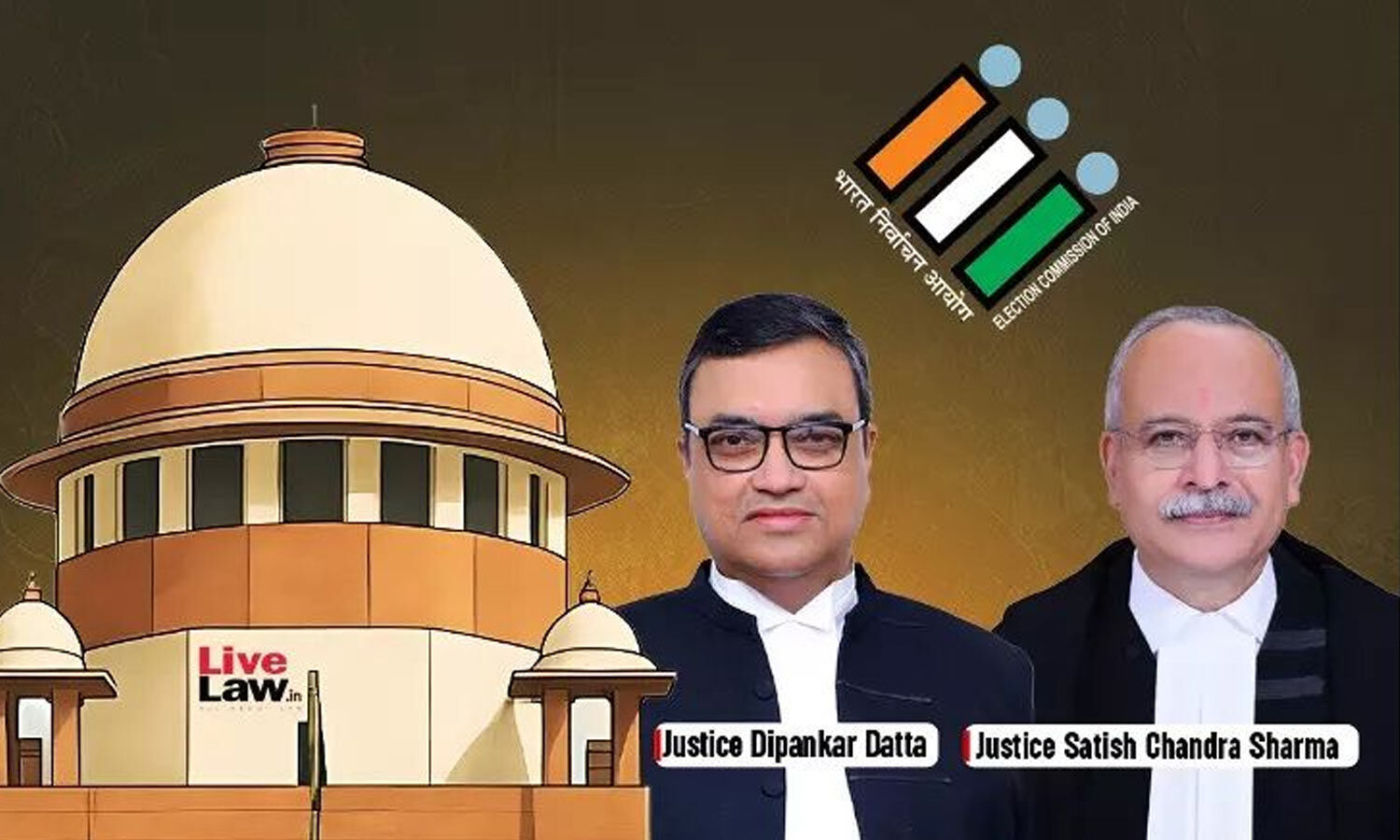
Supreme Court Splits Over Larger Bench for Election Law
Mohan Yadav Links Upadhyaya Vision to Modi’s Self-Reliance Push
Jairam Ramesh Questions Release in VanDyke Terror Probe
Telangana Government Faces Scrutiny After 1,000 Days in Office

Kishan Reddy attacks Rahul Gandhi over ‘deshdrohi’ remarks
Bandi Sanjay Kumar inaugurates new BSF facilities at Chennai camp