6 days ago
US Sanctions on Iran Face Limits Despite Trump Pressure
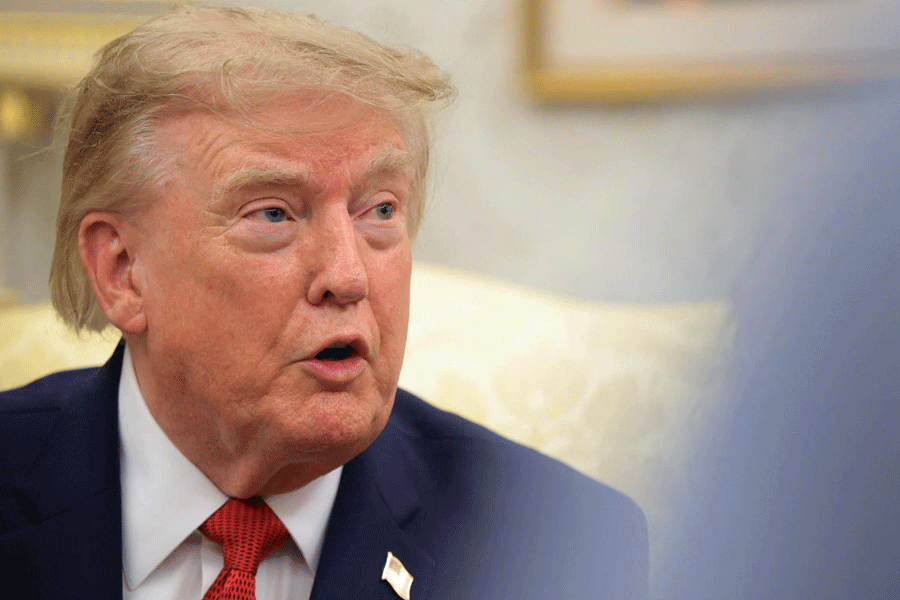
The United States has announced more economic penalties against Iran.
These penalties target Iranian businesses and people who trade with Iran.
Donald Trump’s administration hopes the pressure will weaken Iran’s government.
It has also warned other countries not to help Iran avoid the sanctions.
However, the United States has not punished many of those countries because doing so could hurt the global economy and American shoppers.
China and Russia say they will not follow all US demands.
Many Iranians have lived under American sanctions for generations.
The editorial says sanctions alone are unlikely to make Iran’s government give in.

The United States announced new sanctions against Iran, individuals and companies trading with it.
Donald Trump’s administration described the measures as an “Economic D-Day” for Tehran.
The administration has warned Iran’s trading partners of possible secondary sanctions but has not broadly imposed them.
China and Russia are expected to resist US demands, while oil-price increases have raised costs for American consumers.
The editorial argues that decades of sanctions have failed to force Iran’s government to change course and may strengthen it.
- Who
- The United States, Donald Trump’s administration, Iran, and countries and companies trading with Iran.
- What
- The United States announced new economic sanctions as part of its pressure campaign against Iran.
- Where
- The measures affect Iran and international trade involving Iran, with consequences for the global financial system.
- When
- The latest sanctions were announced after warnings about secondary sanctions; the article says the US military campaign had lasted six months.
- Why
- The Trump administration aims to pressure Iran’s government and restrict its economy, while avoiding wider penalties that could damage the United States and global markets.
US Administration’s Position
Editorial’s Critique
Purpose of sanctions
US Administration’s Position
The Trump administration presents economic pressure as a way to damage Iran’s economy and compel Tehran to respond.
Editorial’s Critique
The editorial argues that decades of sanctions have not forced Iran to bend and could strengthen the theocratic regime.
Secondary sanctions
US Administration’s Position
The administration has warned countries trading with Iran that they could face harsh penalties for helping Iran evade sanctions.
Editorial’s Critique
Avoiding widespread secondary sanctions acknowledges that punishing major trading partners could destabilize the global financial system and harm US consumers.
International pressure
US Administration’s Position
The United States seeks compliance from Iran’s trading partners to make the sanctions more effective.
Editorial’s Critique
The editorial says China and Russia can resist because they have developed financial structures less dependent on the US-led system.
Key facts
- Sanctions target
- Iran, along with individuals and companies that trade with it.
- US administration’s description
- The measures were called an “Economic D-Day” for Tehran.
- Secondary sanctions
- The United States warned Iran’s trading partners but has so far avoided imposing broad penalties on them.
- China’s position
- China, described as Iran’s largest economic ally, has said it will not comply with US demands.
- Russia’s position
- Russia is expected to ignore the US threats.
- Consumer impact
- The article links the Iran war and resulting oil-price spikes to higher prices in US supermarkets.
- Editorial conclusion
- Economic sanctions alone are unlikely to force Iran to change course and may strengthen its ruling regime.
Sources
Related news

Trump’s Economic Outcast Campaign Tests Iran Sanctions Strategy

Economic Pressure May Weaken Iran Without Forcing Surrender
Iran Vows Retaliation After US Widens Sanctions, Threatens Partners
US Expands Iran Sanctions, Threatening Partners With Dollar Cutoff

Trump Threatens Economic D-Day Against Iran and Its Partners

US Plans Toughest Iran Sanctions, Urges China Cooperation

RBI Governor Meets US Fed Chief Kevin Warsh at G20
Indian Firms Invest $40 Billion in U.S., Supporting Jobs
Trump Aides Seek Quiet Iran War Before Midterm Elections
Global Bond Sell-Off Pushes Japan Yields To 30-Year High

US and China Hold Quiet Talks Over Iran Conflict