1 week ago
West Asia Crisis Brings Four-Month Extensions for Renewable Projects

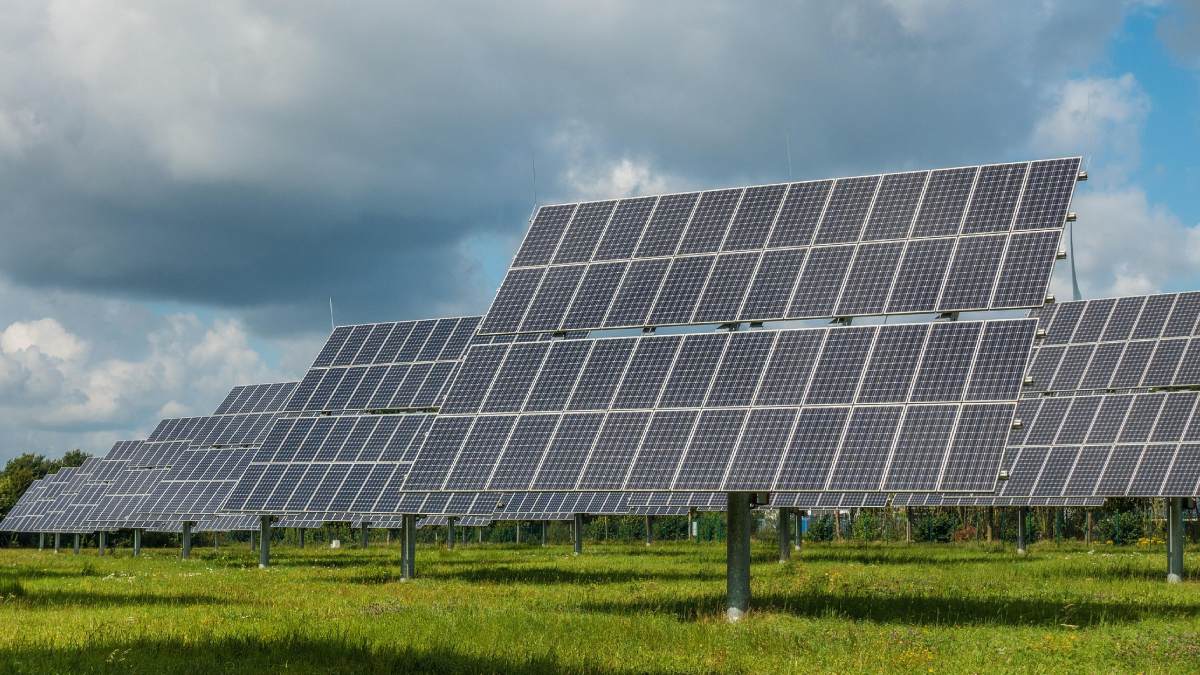
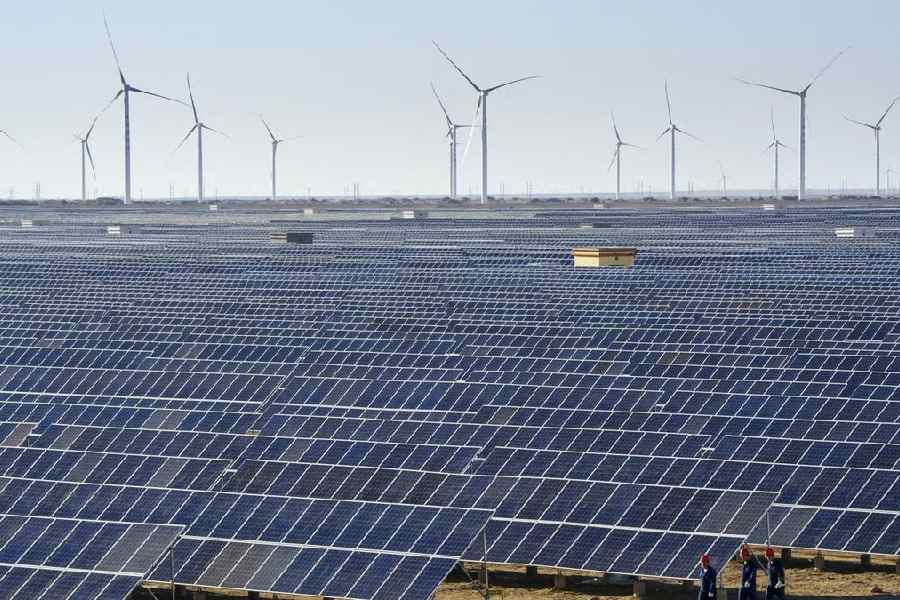
India is building solar, wind and other clean-energy projects.
A conflict in West Asia has made it harder to get some materials and finish construction on time.
Factories that use commercial gas have faced shortages.
This has slowed the production of steel structures, solar glass, cables and other equipment.
The Ministry of New and Renewable Energy said eligible projects may receive up to four extra months.
The projects must have been scheduled for supply or completion on or after February 28, 2026.
The decision uses a rule in energy contracts that covers unusual events such as war.
Solar building also slowed in the April-June quarter compared with the previous quarter.

The Ministry of New and Renewable Energy advised agencies to consider extensions of up to four months for eligible renewable energy projects.
The relief applies to projects with scheduled supply or commissioning dates, including previous extensions, falling on or after February 28, 2026.
The advisory relies on force majeure provisions in power purchase agreements, with the West Asia situation classified as a war.
Industry groups said commercial-gas shortages disrupted galvanizing, steel, solar-glass, cable and other manufacturing processes.
India added 11.8 GW of solar capacity in April-June 2026, down 18.1% from the previous quarter’s 14.4 GW.
- Who
- The Ministry of New and Renewable Energy, renewable energy implementing agencies, state and Union Territory authorities, and renewable energy industry groups are involved.
- What
- Authorities were advised to consider up to four months of additional time for affected renewable energy projects.
- Where
- The measure applies to renewable energy projects in India affected by disruptions linked to the West Asia situation.
- When
- The advisory was issued on August 21, 2026, and applies to eligible dates on or after February 28, 2026; the Department of Expenditure order was dated April 29, 2026.
- Why
- Conflict-related supply constraints, especially commercial-gas shortages, delayed manufacturing, logistics and project execution.
Industry groups seeking broad relief
Government’s case-by-case approach
Scope of deadline relief
Industry groups seeking broad relief
Industry groups sought urgent policy intervention and broader timeline relief, arguing that supply-chain disruptions were beyond developers’ control and could cause missed commissioning dates and loss of transmission-charge benefits.
Government’s case-by-case approach
The Ministry of New and Renewable Energy advised implementing agencies and state authorities to consider requests under the applicable force majeure provisions and contractual procedures; the advisory did not establish an automatic blanket extension.
Cause of project delays
Industry groups seeking broad relief
Industry representatives attributed delays to commercial-gas shortages that reduced or halted galvanizing capacity and disrupted upstream manufacturing, logistics and equipment delivery.
Government’s case-by-case approach
Authorities recognized the West Asia situation as a war-related force majeure event under the Department of Expenditure’s April 29 order, allowing agencies to assess eligible claims under existing power purchase agreements.
Key facts
- Maximum extension
- Up to four months
- Eligible projects
- Projects with scheduled supply or commissioning dates, including previous extensions, on or after February 28, 2026
- Advisory date
- August 21, 2026
- Legal basis
- Force majeure provisions in renewable power purchase agreements
- Affected manufacturing input
- Commercial gas
- Solar additions, April-June 2026
- 11.8 GW
- Solar additions, previous quarter
- 14.4 GW
- FY26 solar additions
- 44.61 GW, including 16.3 GW from distributed solar
Quotes
NSEFI Sustainable Energy Federation of Industry
A renewable-energy industry platform that represented concerns to MNRE.
“The Standard Bidding Guidelines for procurement of renewable power (solar/wind/hybrid/FDRE), issued under Section 63 of the Electricity Act, 2003, provide that the power purchase agreement (PPA) shall contain provisions with regard to Force Majeure definitions, exclusions, applicability and available relief on account of force majeure as per the industry standards.”
 indianexpress.com
“Owing to shortages and supply constraints, a large number of Hot Dip Galvanizing (HDG) facilities are operating at significantly reduced capacities, while some have temporarily suspended operations.”
indianexpress.com
Sources
Related news
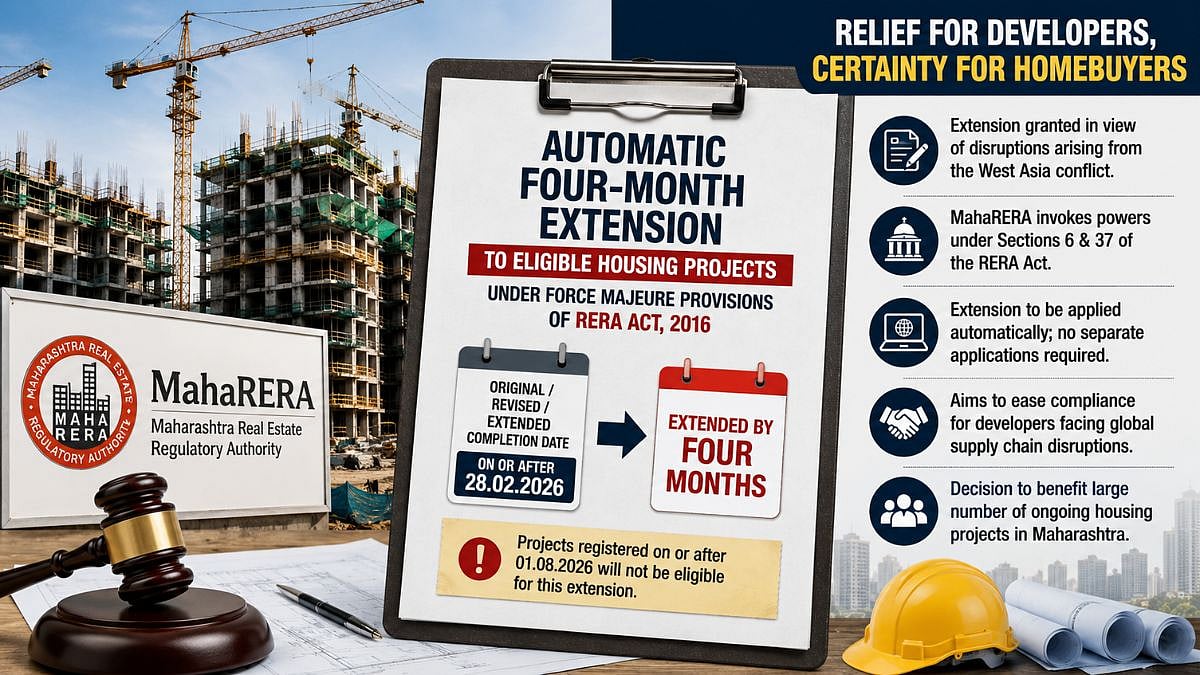
MahaRERA Grants Automatic Four-Month Extension to Eligible Housing Projects
CERC lets renewable developers pay to keep grid connections

CERC Framework Gives Malwa-Nimar Renewable Projects More Time

India's Solar Project Costs Face 20% Rise Amid Constraints
India Bars Renewable Energy Projects Within 1 km of Borders

India’s Power Sector Faces Rising Demand and Nuclear Constraints
India’s Non-Fossil Capacity Crosses 300 GW as Centre Pushes Transition

Karnataka Accelerates Rooftop Solar Projects for Government Buildings
Economy Quiz Covers Solar Projects, Forex Deposits And PPPs
Rajasthan Targets 125 GW Renewable Capacity by 2030