1 week ago
Iran Survives Militarily as Economic Costs Intensify
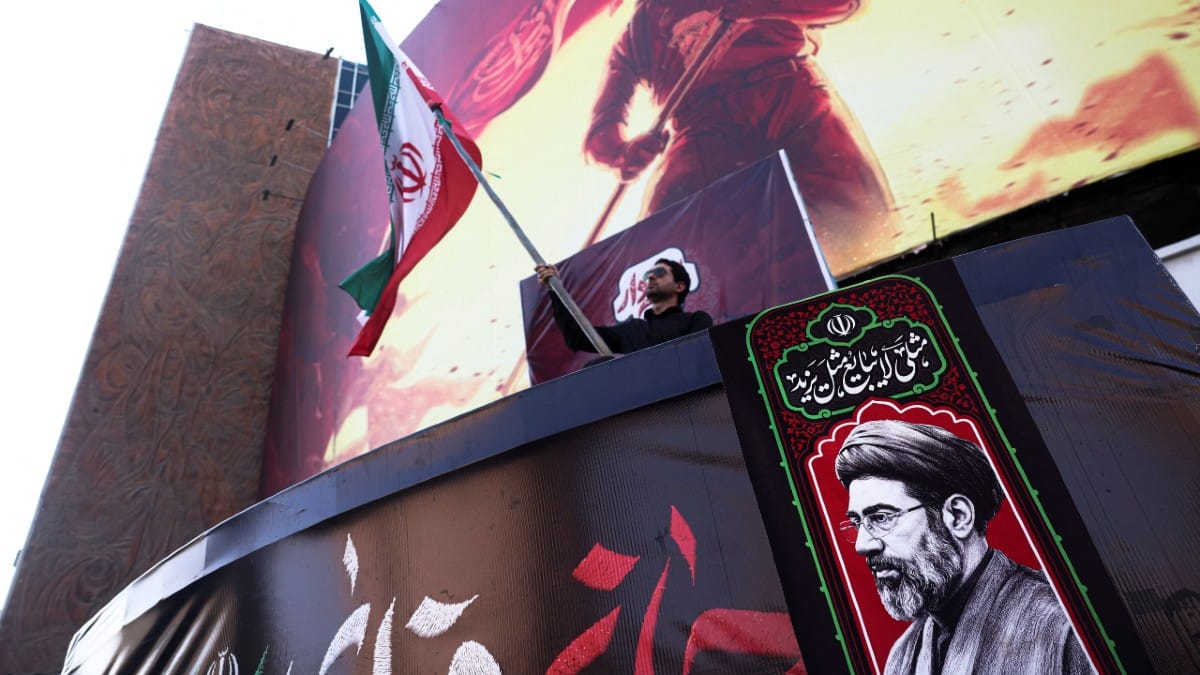
The article says Iran may be able to keep fighting without its government collapsing.
But staying in the fight is different from winning the war.
The United States has much stronger military forces, while Iran can still disrupt shipping and regional security.
Iran’s oil exports have fallen sharply during the conflict.
This means Iran may have less money available to run its economy and support its institutions.
The United Arab Emirates has added pressure by stopping trade and financial dealings with Iran.
The United States has also tried to keep oil shipping moving through a route near Oman.
Some reports say this route carries very large amounts of oil, but shipping data does not fully support the biggest claim.
Iran can use hidden ships, money networks and other workarounds, but those methods are costly and less efficient.

Iran’s ability to endure the conflict does not necessarily amount to strategic success, the analysis argues.
The United States retains superior military power, while Iran maintains disruptive capabilities and neither side has compelled the other.
Iranian crude loadings fell from 893,000 barrels per day in July to 156,000 through August 17.
The United Arab Emirates halted trade, commercial exchange and financial transactions with Iran after intercepting two Iranian missiles on August 18.
The article says sanctions and blockades may severely weaken Iran’s economy but are unlikely by themselves to remove its government.
- Who
- Iran, the United States, the Islamic Revolutionary Guard Corps, and the United Arab Emirates are the principal actors discussed.
- What
- The analysis examines how the conflict has shifted toward economic warfare, including US sanctions and a naval blockade and the UAE’s suspension of economic ties with Iran.
- Where
- The economic pressure centers on Iran, Kharg Island, the Strait of Hormuz, shipping routes along Oman’s coast, and the United Arab Emirates, particularly Dubai.
- When
- The article cites developments through August 18, including oil-loading data through August 17; it also discusses trade and financial data from 2024 and 2025.
- Why
- The stated aim and effect of the measures are to restrict Iran’s oil exports, financial access and commercial networks, increasing the cost of sustaining the conflict.
Cautious assessment
Maximum-pressure interpretation
Meaning of survival
Cautious assessment
Iran’s ability to preserve its government and maintain disruptive capabilities does not prove strategic success; the war’s final outcome remains unresolved.
Maximum-pressure interpretation
The Revolutionary Guard’s endurance and institutional consolidation can be viewed as evidence that Iran has resisted a militarily stronger opponent.
Scale of the US shipping corridor
Cautious assessment
The reported southern route may exist, but Kpler’s shipping and crude-flow data do not establish the claim that it carries nearly 10 million barrels per day.
Maximum-pressure interpretation
US officials and Axios describe a substantial protected corridor, supported by escort schedules, air cover and degraded Iranian surveillance.
Effect of economic pressure
Cautious assessment
Sanctions and blockades can impose severe cumulative costs but are unlikely on their own to remove Iran’s government, which has developed alternative trading and financial networks.
Maximum-pressure interpretation
The combination of US pressure and the UAE’s cutoff could create a much deeper and more immediate shock by restricting oil sales, imports, payments and channels associated with the Islamic Revolutionary Guard Corps.
Key facts
- Iranian crude loadings
- They fell from 893,000 barrels per day in July to 156,000 barrels per day through August 17.
- Kharg Island
- It handled about 94% of Iran’s crude exports over the preceding 12 months, at roughly 1.52 million barrels per day.
- Jask capacity
- Jask’s effective crude-export capacity was estimated at about 300,000 barrels per day and the alternative facility was lightly used.
- Shipping activity
- Kpler counted nine commodity-vessel transits on both Tuesday and Wednesday, compared with approximately 130–140 ships per day before the war.
- UAE-Iran trade in 2024
- The UAE supplied $21 billion, or 30.6%, of Iran’s merchandise imports and received $7.16 billion, or 12.8%, of its exports.
- UAE policy
- The UAE halted all trade, commercial exchange and financial transactions with Iran until further notice after intercepting two Iranian missiles on August 18.
- US shipping channel
- Axios reported a US-organized southern channel near Oman with 15–20 tankers entering and leaving nightly, but its claim of nearly 10 million barrels per day was not supported by the cited data.
Sources
Related news
Trump’s Iran Economic Pressure Faces Sanctions-Tested Resistance

Hormuz traffic nears standstill as US vows indefinite Iran blockade
Iran War Reaches Costly Stalemate as Trump Bets on Sanctions
Iran Says Economic War Signals US Military Defeat

Iran War Enters Sixth Month as Sanctions Reshape Economy

Iran War's Six-Month Shift From Victory Claims to Economic Warfare
Saudi Arabia Says Iranian Tanker Attack Killed Two Sailors
U.S.-Iran Exchange Escalates Across Middle East, Markets Slide
Trump Aides Seek Quiet Iran War Before Midterm Elections
US Warns Middle East Travelers Amid Escalating Iran-Linked Tensions

Indian Stocks Slide as Oil, Conflict and Yields Rise