3 weeks ago
Korean biotech firm develops fat-based treatment for 'Ozempic face'
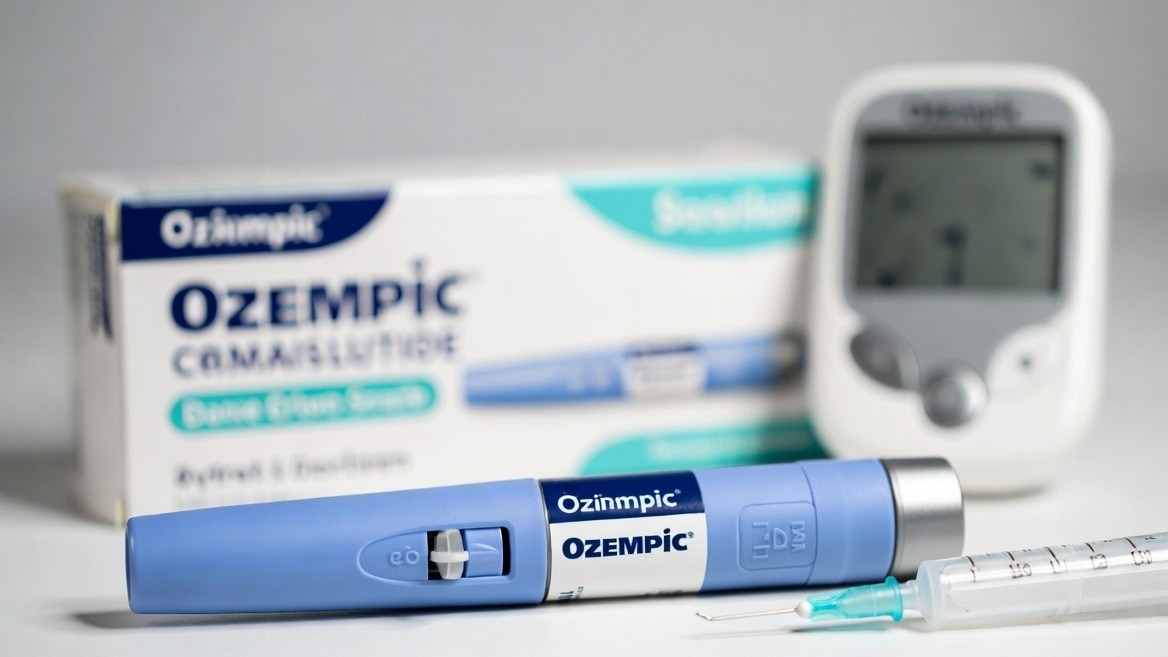
Some adults take special medicine to help them lose weight, and one of the most famous is called Ozempic.
This medicine can make people lose weight very fast.
But sometimes it makes their faces look thin and droopy, and doctors call this problem 'Ozempic face.'
A company in South Korea called L&C Bio has a new idea to help fix it.
They plan to use donated fat to make a special scaffold for the face, like a frame for building.
A person's own fat cells could then grow into the scaffold and fill out their cheeks again.
The company hopes to sell this product around the end of 2027.
South Korea recently changed its laws to allow donated fat to be used this way.
Some people worry the donated fat should be saved for patients who need it for medical care, like people with burns.

Weight-loss medicines such as Ozempic and Mounjaro can cause 'Ozempic face'—hollow cheeks and sagging skin—and doctors warn of real risks.
South Korean biotech company L&C Bio is developing a treatment, tentatively named MegaAdipoECM, that processes donated fat into an extracellular matrix scaffold.
The scaffold allows a patient's own fat cells to repopulate treated areas and restore volume naturally, and is described as a biological alternative to silicone breast implants.
Commercialisation was delayed because South Korean law classified donated fat as medical waste; lawmakers legalised the practice this year, and the launch is expected in late 2027.
Critics say commercialising donated tissue could divert scarce resources from burn victims and trauma patients, while L&C Bio says donors explicitly consent and it supports stronger regulations.
- Who
- L&C Bio, a South Korean biotech company whose spokesperson is identified only as Lee, with critics of donated-tissue use also weighing in.
- What
- Developing MegaAdipoECM, a treatment made from donated fat that aims to restore facial volume lost to GLP-1 weight-loss drugs, a condition known as 'Ozempic face'.
- Where
- South Korea, where the product can now be manufactured domestically; Singapore and the United States were previously explored for production.
- When
- South Korean lawmakers legalised the reuse of donated fat this year; the product launch is expected in late 2027 after a one-year grace period.
- Why
- To treat hollow cheeks and sagging skin associated with weight-loss jabs and to offer a biological alternative to silicone breast implants.
Critics
L&C Bio (Company)
Use of donated human tissue for cosmetic procedures
Critics
Commercialising donated material could divert scarce resources from burn victims and trauma patients who rely on donated tissue for medical treatment.
L&C Bio (Company)
Donors explicitly consent to aesthetic use of their tissue, and the company supports stronger regulations to provide greater clarity.
Key facts
- Product
- MegaAdipoECM (tentative name)
- Company
- L&C Bio (South Korean biotech)
- Condition targeted
- 'Ozempic face' from GLP-1 weight-loss drugs
- Technology
- Donated fat processed into an extracellular matrix scaffold
- Expected launch
- Late 2027
- Regulatory change
- South Korean lawmakers legalised reuse of donated fat this year
- Other uses
- Potential biological alternative to silicone breast implants
- Related launch
- Ozempic launched in India at a weekly starting cost of Rs 2,200
Sources
Related news

Nestle targets weight-loss drug users with AI-driven new products

Experimental Weight-Loss Drug Aims To Reduce Fat While Preserving Muscle

Expert Questions Whether GLP-1 Drugs Are Creating New Diet Culture

SynbioTech to Showcase TWK10® in GLP-1 Nutrition Market
GLP-1 Patent Expiries Bring Affordable Access and Counterfeit Risks
The dark side of India's booming market for weight-loss drugs
Eli Lilly’s Mounjaro Approved to Reduce Cardiovascular Risks

Hair Loss Drug Boom Sends Biotech Stocks Toward Next Ozempic
Bengaluru Peptide Party Cancelled Amid Safety Concerns Over Wellness Craze

Ram Kapoor Recalls 140-Kilogram Struggle and Repeated Weight Loss Journey