

2 weeks ago
Nestle targets weight-loss drug users with AI-driven new products
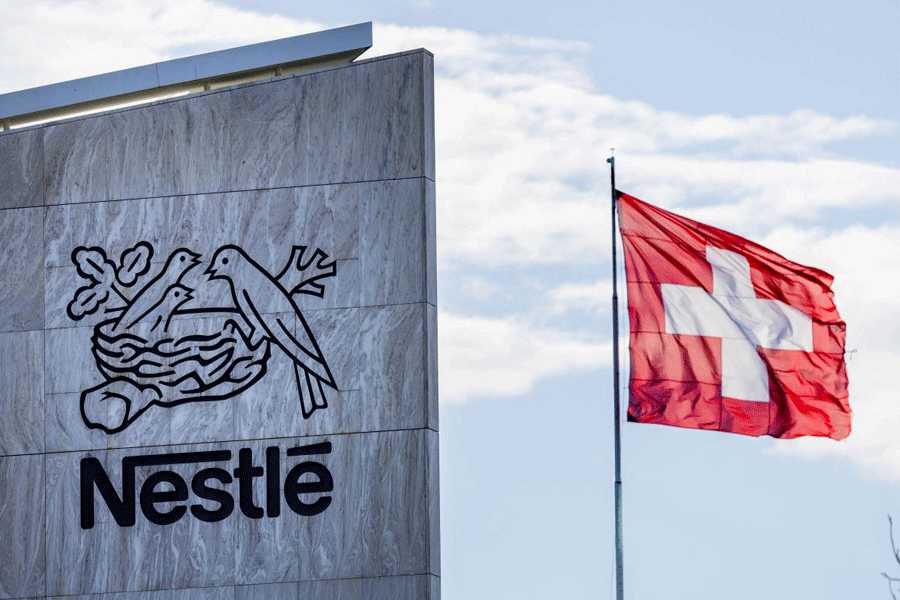
Many people are taking special medicines called weight-loss drugs to help them lose weight.
These medicines, called GLP-1 drugs, make people feel less hungry.
Food companies worry that people who take them will buy less food.
One big food company, Nestle, thinks this is a chance to make new products.
Nestle is using artificial intelligence, which is like very smart computer programs, to study how fast weight loss changes the body.
When people lose weight very quickly, they can lose muscle and even get changes in their face.
Nestle wants to make drinks and snacks with extra protein to help people stay healthy and strong.
They have made a protein shake and a special Milo drink for these customers.
Some nutrition experts say regular, fresh food is just as good and costs less, so special products may not be needed.
Nestle believes its new products will help many people, but experts think people may buy them mostly because of advertising.

Nestle is using artificial intelligence and nutritional science to develop products aimed at people taking GLP-1 weight-loss drugs such as Ozempic and Wegovy.
Chief Technology Officer Stefan Palzer called the GLP-1 market 'a huge opportunity,' with Nestle targeting side effects like muscle loss and 'Ozempic face.'
Nestle has launched Boost Advanced Nutrition Shake (35 grams of protein) in the U.S. and Milo PRO High Protein in Asia and Australia.
The company has patented ingredient combinations to reduce appetite after GLP-1 treatment ends and is adding collagen to its Vital Proteins brand.
Nutrition expert Amanda Avery of the University of Nottingham questioned the need for expensive specialty foods, though she expects the products to find buyers.
- Who
- Nestle, led by Chief Technology Officer Stefan Palzer, along with GLP-1 drugmakers Novo Nordisk and Eli Lilly; nutrition expert Amanda Avery commented critically.
- What
- Nestle is developing AI-powered food and nutrition products tailored to users of GLP-1 weight-loss drugs to address side effects of rapid weight loss.
- Where
- Global; products have been launched in the U.S., Asia, and Australia, with about 16 million GLP-1 users in the United States.
- When
- Not explicitly stated in the articles; developments are described as recent and ongoing.
- Why
- Rising adoption of appetite-suppressing GLP-1 drugs threatens packaged-food demand while creating a new market for products that manage weight-loss side effects.
Nestle and industry view
Nutrition experts' view
Need for specialized GLP-1 products
Nestle and industry view
Tailored products with protein, micronutrients, and patented appetite-reducing ingredients help GLP-1 users cope with muscle loss, 'Ozempic face,' and post-treatment hunger.
Nutrition experts' view
Amanda Avery argues it is 'sad' to turn to expensive new products when meat, fish, eggs, dairy, beans, nuts, and pulses provide the same protein and nutrients at lower cost.
Whether the market will grow
Nestle and industry view
With about 16 million Americans on GLP-1 drugs and numbers expected to rise sharply, Nestle sees a 'huge opportunity' for dedicated nutrition lines.
Nutrition experts' view
Avery says people may buy these products mainly because they are influenced by marketing, not because the foods are better.
Key facts
- Company
- Nestle
- Chief Technology Officer
- Stefan Palzer
- Target market
- GLP-1 weight-loss drug users; about 16 million Americans (Boston Consulting Group)
- Main competing drugs
- Ozempic and Wegovy (Novo Nordisk); Mounjaro and Zepbound (Eli Lilly)
- New products
- Boost Advanced Nutrition Shake (35g protein, U.S.); Milo PRO High Protein (Asia and Australia)
- AI platform
- Food Genie, using a database of roughly 120,000 recipes
- Brand getting collagen
- Vital Proteins
- Critic quoted
- Amanda Avery, associate professor, University of Nottingham
Quotes
Stefan Palzer
Nestle Chief Technology Officer
“"We are well positioned with the portfolio. It's a huge opportunity for our company."”
 telegraphindia.com
Sources
Related news

Ice cream brands turn to protein, smaller portions, simpler ingredients

GLP-1 Friendly Food Label Sparks Debate Over Diet Culture

Experimental Weight-Loss Drug Aims To Reduce Fat While Preserving Muscle

China’s Weight-Loss Drug Market Attracts Big Pharma Advertising Push

Expert Questions Whether GLP-1 Drugs Are Creating New Diet Culture

Mitsubishi Revives Pajero With 201PS Fifth-Generation SUV

IIM-Born CEO Says Australia’s Everyday Life Runs on Trust

UN Report Says 1.5°C Overshoot, Return Remains Possible

Uday Kotak Warns Global Bond Markets Face Roller-Coaster Volatility

Countrywide Visas Services, Reviews, and Complaints Explained
