1 week ago
China’s Rise and Demographic Decline Shape India’s Strategy
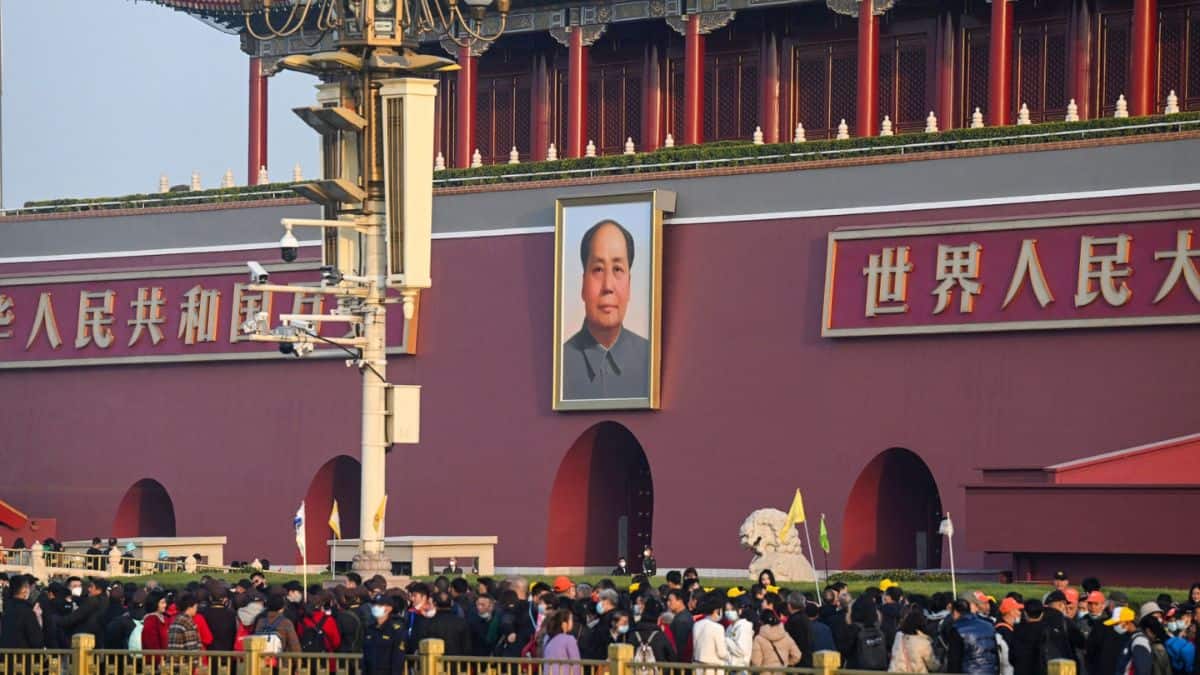
The article explains how China was once one of the world’s strongest countries.
It says China later fell behind Europe because it was isolated from the Industrial Revolution.
Britain used opium grown in colonial India to buy Chinese goods, which helped cause suffering in both India and China.
China became weaker after wars with Britain and the fall of the Qing dynasty.
Its economy grew rapidly after the United States shared technology and opened diplomatic relations with China.
Today, China is still powerful but its economy is growing more slowly and its population is ageing.
The article says China could become older and richer at the same time because its population may shrink.
It advises India to cooperate with both China and Western countries while remaining cautious about their past actions.

China was a global economic and demographic power until Western industrialisation and the Opium Wars weakened it.
The article says Britain used opium grown in colonial India to pay for Chinese tea, contributing to famine in India and addiction in China.
China’s economy expanded sharply after the United States opened access to technology and established diplomatic relations with Beijing in 1979.
China’s growth is now slowing amid weak domestic demand, population ageing, and a large per-capita income gap with the United States.
The author urges India to build partnerships with both Western countries and China while remembering their histories and strategic interests.
- Who
- China, Britain, the United States, India, and the author of the opinion piece.
- What
- An analysis of China’s historical decline, economic rise, current slowdown, and demographic challenges, along with advice for India.
- Where
- China, India, Britain, the United States, and the broader international economy.
- When
- The account spans the Qing period from 1644, China’s economic opening in the 1970s, current conditions, and projections to 2100.
- Why
- The author argues that Western pressure, technology transfers, economic change, and China’s ageing population have shaped its rise and possible renewed decline.
Decline and demographic crisis
Ageing alongside continued prosperity
China’s economic future
Decline and demographic crisis
The article argues that slowing growth, weak domestic demand, and population ageing could cause China to lose momentum and grow old before it becomes rich.
Ageing alongside continued prosperity
The article also says China’s population could halve by 2100 while per-capita income doubles, allowing it to become older and richer at the same time.
Effect of population policy
Decline and demographic crisis
The author attributes China’s future demographic difficulties to Mao Zedong’s one-child policy and describes the consequences as a severe demographic crisis.
Ageing alongside continued prosperity
The article’s population projection suggests that a smaller population could raise average income, even if it creates ageing-related challenges.
Key facts
- Opium Wars
- Britain fought China between 1839 and 1860, after which China ceded Hong Kong and signed unequal treaties, according to the article.
- China-US relations
- China and the United States established diplomatic relations in 1979.
- China’s GDP in 1979
- The article gives China’s GDP as $0.18 trillion, compared with $2.63 trillion for the United States.
- China’s GDP in 2012
- China’s GDP had risen to $8.67 trillion, compared with $16.25 trillion for the United States.
- Per-capita income
- The article cites nominal per-capita income of $13,800 for China and $91,880 for the United States.
- Current growth
- China’s GDP growth is described as slowing to around 4% annually, alongside weak industrial output and retail sales.
- Population projection
- United Nations projections cited in the article say China’s population could fall to 650 million by 2100.
Quotes

The Guardian
British newspaper cited in the article for reporting on China’s economic slowdown
“China’s economy is showing signs of extending a slowdown with a slump in industrial output and retail sales in July, adding to pressure on Beijing to intervene with measures to support activity. After the world’s second largest economy posted one of its lowest quarterly growth readings on record in the three months to June, the latest figures suggest it continued to falter in July.”
 firstpost.com
“Currently, the problem of insufficient domestic demand remains prominent, some industries and enterprises are facing increasing difficulties, and uncertainties in the external environment are rising. We should actively stabilise external demand, expand mutually beneficial international economic and trade cooperation and promote balanced trade development.”
firstpost.com
Sources
Related news

Prasher's Fifty-Seven Essays Illuminate the Conundrum of Modern China
China and US Race to Link Science, Industry
Dragon and Elephant: Xi's China may still need a deal
Yuan's Renewed Challenge to the Dollar-Led Global Order

Amitabh Kant Urges India to Beat China Through Competitiveness

How Independence Revived India's Hollowed-Out Economy After British Rule

Iran’s Economic Crisis Deepens as Food Prices Soar, Rial Falls

Jadavpur University Graffiti War Deepens State-Campus Political Divide

Naxalbari's Peasant Roots and the Urban Revolution Myth

Chinese Dissident Artist Gao Zhen Sentenced Over Mao Sculptures