10 hrs ago
China and US Race to Link Science, Industry

China and the United States are competing to become stronger in science, technology and industry.
China has many factories and wants to use artificial intelligence to make new discoveries and improve production.
The United States has powerful universities, laboratories and technology companies but wants to manufacture more at home.
Both countries believe that linking science to factories can create economic and national power.
India has launched missions involving artificial intelligence, semiconductors and quantum technology.
However, it spends much less on research than China and the United States.
The article says Indian businesses should invest more in science and basic research.
It also says India needs to reform its scientific institutions and work with global sources of talent, technology and capital.

China is using artificial intelligence to connect scientific discovery with manufacturing and industrial growth.
The United States is trying to rebuild domestic production capacity after innovation and manufacturing became separated through globalisation.
China spent 2.8 per cent of GDP on research and development in 2025, compared with 3.5 per cent for the United States.
India’s research and development spending is estimated at 0.64 per cent of GDP, substantially below China and the United States.
The article argues that India needs scientific-institution reform, greater private investment and continued international cooperation.
- Who
- China, the United States and India are the principal countries discussed; Xi Jinping is identified as a key driver of China’s strategy.
- What
- China and the United States are trying to connect scientific research, artificial intelligence and industrial production, while India is urged to catch up.
- Where
- The developments concern China, the United States and India, with the World Humanoid Games held in Beijing.
- When
- The comparison follows Beijing’s second World Humanoid Games and discusses research spending in 2025 and India’s 2025-26 Economic Survey.
- Why
- The countries see faster scientific discovery and stronger links between research and manufacturing as sources of economic growth and geopolitical power.
Key facts
- China’s R&D spending
- 2.8 per cent of GDP in 2025; basic-research expenditure rose by 11 per cent.
- United States R&D spending
- About 3.5 per cent of GDP, according to the comparison cited in the article.
- India’s R&D spending
- The Economic Survey 2025-26 puts it at 0.64 per cent of GDP.
- R&D spending in purchasing-power-adjusted dollars
- The World Intellectual Property Organization estimates India at $75 billion, China at $786 billion and the United States at $782 billion.
- China’s strategy
- Use artificial intelligence across robotics, manufacturing, automobiles, biotechnology, materials, energy, agriculture and scientific research.
- United States strategy
- Reintegrate knowledge production and manufacturing by building on universities, laboratories, technology companies and capital markets.
- India’s proposed response
- Reform scientific institutions, attract talent, increase private investment and cooperate with global science, technology, capital and talent.
Sources
Related news

China Challenges US Leadership in Escalating Global AI Contest
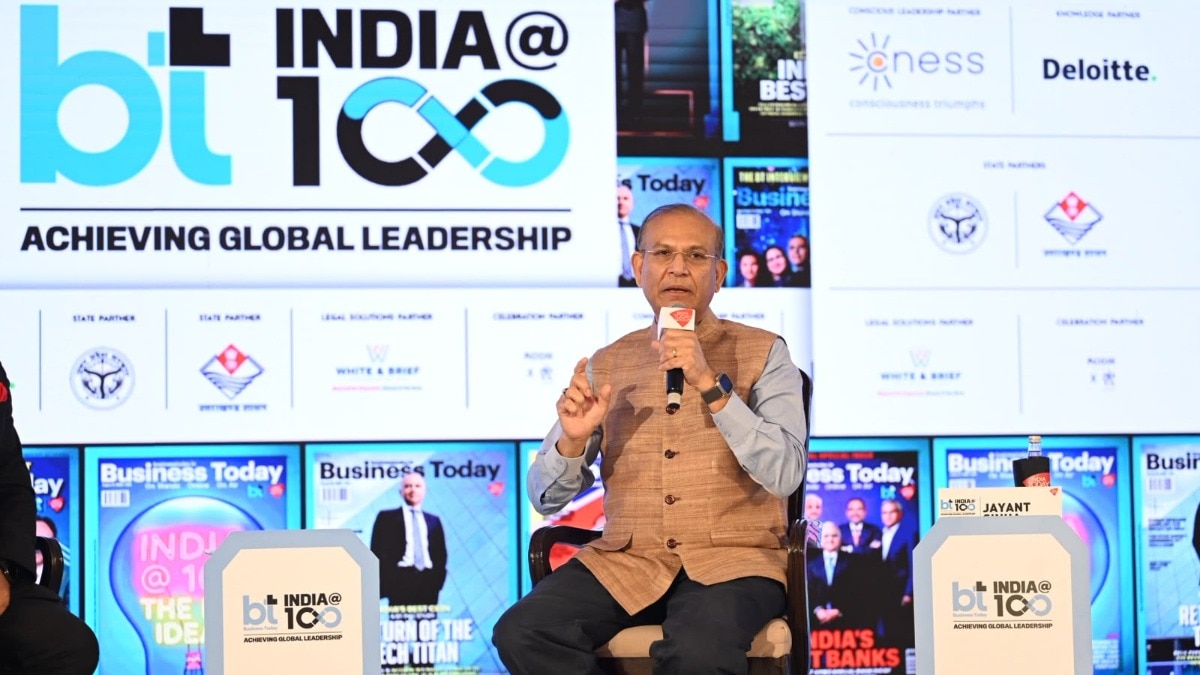
Jayant Sinha Warns India Must Scale AI Investment

India’s AI Race Gains Momentum, But Jobs Remain Uncertain

India-China Education Leadership Gap Shapes Technology Divide

India to be key player in AI, biotechnology-led industrial revolution

Why India Is Becoming Central to Global Industrial Competitiveness

India Ranks Fifth as Generative AI Patenting Accelerates Globally

India's Next Innovation Frontier: Building for the World

China's UN Influence Raises US Concerns