1 week ago
Yuan's Renewed Challenge to the Dollar-Led Global Order
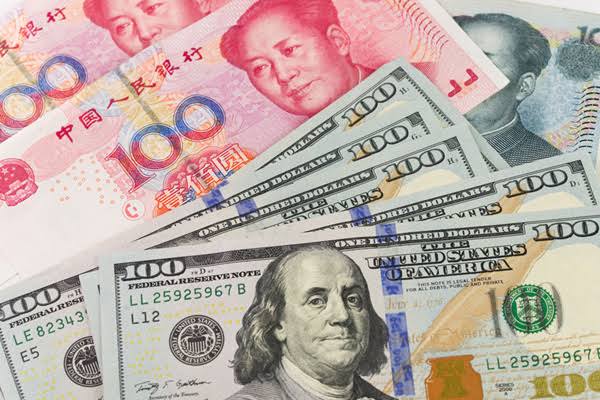
The US dollar has long been the main currency used around the world.
The article says China’s yuan is becoming an important competitor.
China saves a lot of money and uses it to build factories and sell goods abroad.
Chinese households spend less money than people in the United States, India and Malaysia.
The author says this is partly because China provides fewer public services and tightly manages money and movement.
China’s one-party government can make and carry out long-term plans quickly.
India has more open movement and some broader support programs, but its governments often lack money and administrative capacity.
The author says India should learn from China’s strengths without copying its political system or giving up its goal of more equal development.

China’s yuan is presented as a growing challenger to the US dollar’s central role in global finance.
The yuan depreciated 15% against the US dollar from 2014 to 2024, while China contributed about $1.2 trillion to global merchandise-export growth.
China’s state-directed model channels high domestic savings into manufacturing, infrastructure and exports, keeping personal consumption at about 31% of GDP.
The article credits China’s one-party system with enabling long-term economic planning but criticizes its limited welfare provision and financial repression.
India is urged to learn from China’s manufacturing policies while pursuing more equitable development and formalising its large MSME workforce.
- Who
- China, the United States, India and their respective currencies are the central subjects; the analysis is by Sanjeev Ahluwalia.
- What
- The article examines the yuan’s challenge to the dollar and compares China’s state-directed economic model with India’s development path.
- Where
- The analysis concerns the global financial and trading system, with specific comparisons involving China, the United States and India.
- When
- It discusses the yuan’s performance from 2014 to 2024 and compares currency movements since 2025; no publication date is provided.
- Why
- China’s export competitiveness, large reserves and managed exchange-rate system are presented as factors behind the yuan’s growing strategic importance.
Lessons from China
Reasons for Caution
State-directed development
Lessons from China
China’s coordinated savings, manufacturing subsidies, infrastructure investment and export focus created strong competitiveness and offer lessons for India.
Reasons for Caution
The model relies on financial repression, low household consumption, limited welfare provision and a socially oppressive one-party system.
Currency challenge
Lessons from China
The yuan’s trade backing, managed exchange rate and China’s large reserves make it a serious alternative to the dollar-centered order.
Reasons for Caution
The article says China’s trade practices can be devious and advises waiting until the yuan’s broader strategy is fully revealed before judging it.
Application to India
Lessons from China
India should pursue larger-scale manufacturing, mergers, production incentives and artificial-intelligence integration to formalise MSMEs and increase productivity.
Reasons for Caution
India should adapt lessons rather than copy China, preserving its emphasis on equitable development and avoiding China’s political and social controls.
Key facts
- China’s share of export growth
- China contributed about $1.2 trillion, or one-third, of the global increase in merchandise exports.
- China’s foreign-exchange reserves
- About $3.4 trillion, described in the article as the world’s largest reserves.
- Yuan movement, 2014-2024
- The yuan depreciated 15% against the US dollar.
- Personal consumption in China
- Consumption accounts for about 31% of China’s GDP.
- Personal consumption comparisons
- Consumption accounts for about 68% of US GDP and 62% of both Indian and Malaysian GDP.
- Recent currency comparison
- The yuan appreciated 6% to 7% against the US dollar since 2025, while the Indian rupee depreciated 14% to 15%.
- India’s export ambition
- The article refers to a goal of increasing merchandise exports from $440 billion in 2025 to $1 trillion by 2030.
Sources
Related news
Cheap Chinese Imports Test India’s Make in India Strategy
Bessent Urges G20 to Consider More Trade Barriers on China

Yuan Holds Steady as United States Iran Sanction Threats Grow
Bessent Presses G20 on China Trade and Iran Sanctions

US-China Trade Gap: Tariffs and IMF Talks

China Mocks Washington Over America's $40 Trillion Debt Monster

Trump administration weighs chip tariffs amid AI industry warnings

Why India Must Conserve Forex Despite Strong GDP Growth

CM Vijay Plans Britain Tour to Attract Tamil Nadu Investment

US and Australia Commit $580 Million for Pacific Islands

Tamil Nadu CM Vijay Plans UK Investment Outreach