3 weeks ago
Pakistan, Turkey, Saudi Arabia Pact Is Hedge Against Israel
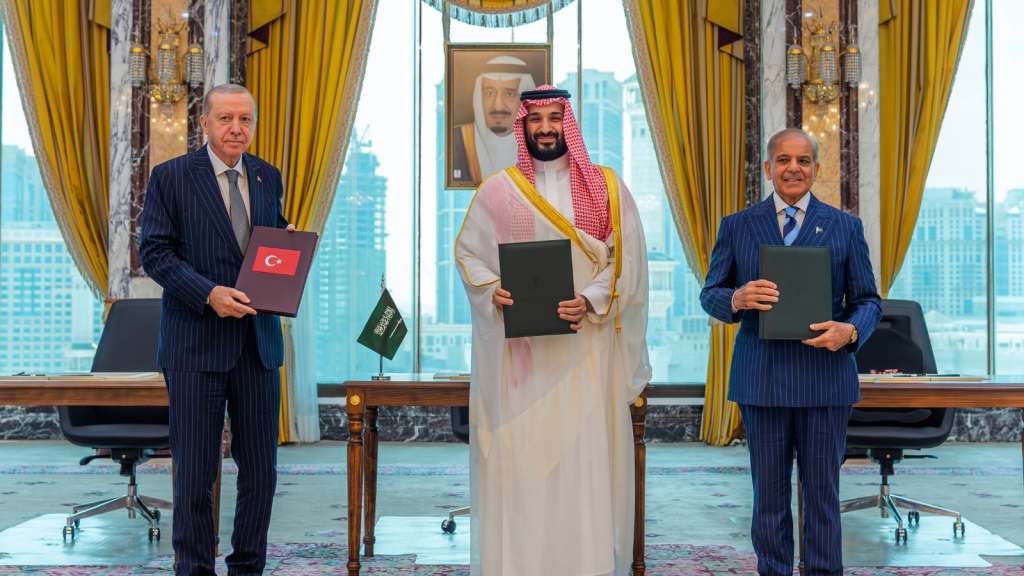
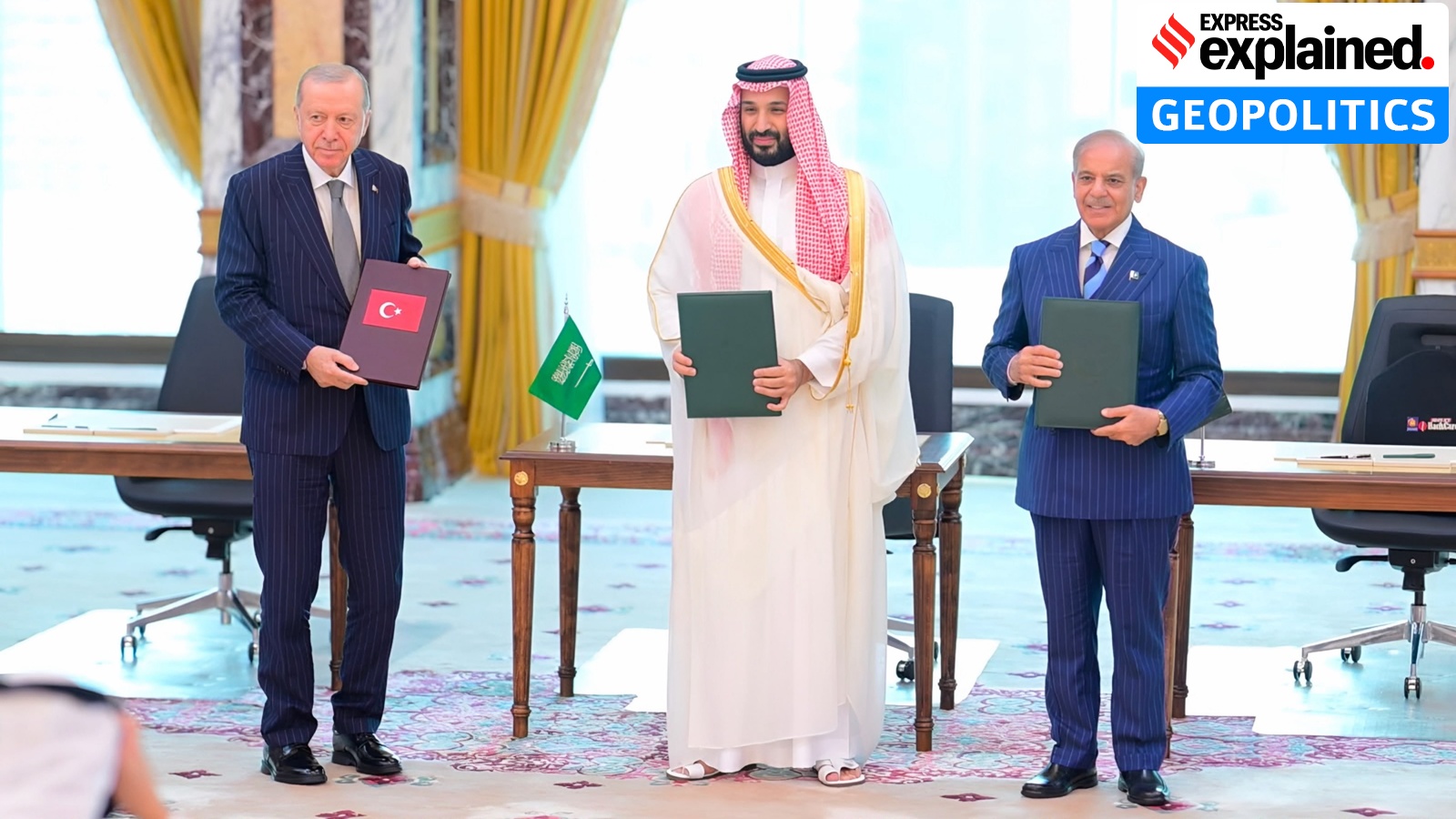
Three countries — Pakistan, Turkey and Saudi Arabia — have agreed to help each other if one of them is attacked.
It is like teammates promising to protect one another.
Some people are calling this new team an 'Islamic NATO,' after the real NATO, where countries defend each other.
Turkey brings defence technology, Pakistan brings military strength and nuclear weapons, and Saudi Arabia brings oil money.
Last year, Saudi Arabia and Pakistan also signed a promise to defend each other, right after Israel struck Hamas in Doha.
That promise was not used when Iran and its friends attacked Saudi Arabia's capital city Riyadh and its energy sites.
The article says the United States was busy prioritising Israel and did not protect Saudi Arabia and other Gulf states.
Turkey has often criticised Israel over Gaza and has hosted Hamas political figures.
The article says the pact could be a way for Saudi Arabia and Turkey to protect themselves against Israel, especially since Pakistan is the only Muslim country with nuclear weapons.

Pakistan, Turkey and Saudi Arabia have signed a trilateral collective-defence pact declaring that an armed attack on one signatory is regarded as an attack against them all.
The pact has triggered talk of an 'Islamic NATO', albeit a Sunni one, combining Turkish defence technology, Pakistani military prowess and nuclear arsenal, and Saudi oil-financial power.
Last year, after an Israeli strike on Hamas in Doha, Saudi Arabia and Pakistan signed a 'Strategic Mutual Defence Agreement' in Riyadh containing a similar NATO Article 5-type clause.
That earlier pledge was not invoked when Iran and its assets attacked Riyadh and its energy infrastructure, with the article saying the US, prioritising Israel, failed to protect Saudi Arabia and other Gulf states.
For Saudi Arabia and Turkey, the pact is a hedge against Israel's increasingly aggressive military stance, while Pakistan, dependent on Gulf remittances and Saudi funds, is the only Muslim country with nuclear weapons.
- Who
- Pakistan, Turkey and Saudi Arabia, with the US, Israel, Iran and Hamas playing key roles in the surrounding events
- What
- A trilateral collective-defence pact in which an armed attack on one signatory is regarded as an attack on them all, prompting talk of an 'Islamic NATO'
- Where
- Riyadh (site of the earlier Saudi-Pakistani agreement) and Doha (site of the earlier Israeli strike on Hamas), with the pact linking Asia and the Middle East
- When
- No exact date is given in the article; it notes that the Saudi-Pakistani 'Strategic Mutual Defence Agreement' was signed in Riyadh last year
- Why
- As a hedge against Israel's increasingly aggressive military stance and because the US prioritised Israel and failed to shield Gulf states from Iranian strikes
Defensive Collective Security
Anti-Israel Hedge
Purpose of the pact
Defensive Collective Security
The pact is presented as a NATO-style collective-defence agreement: an armed attack on one signatory is regarded as an attack on them all, pooling Turkish defence technology, Pakistani military power and Saudi oil-financial strength.
Anti-Israel Hedge
For Saudi Arabia and Turkey, the pact is a hedge against Israel, formed amid Israel's increasingly aggressive military stance and the US's failure to protect Gulf states from Iranian strikes.
Effectiveness of similar pledges
Defensive Collective Security
The model reflects NATO's Article 5 mutual-defence commitment, suggesting strong collective security among the signatories.
Anti-Israel Hedge
A similar Saudi-Pakistani pledge was not invoked when Iran attacked Riyadh and its energy infrastructure, raising doubts about whether such defence guarantees will actually be enforced.
US-Israeli war and Iran's nuclear ambitions
Defensive Collective Security
The US-Israeli war is allegedly waged to prevent Iran from obtaining nuclear weapons.
Anti-Israel Hedge
The war may instead provide Iran with the imperative to 'go nuclear', while the US prioritising Israel left Gulf states unprotected and energy shipments disrupted.
Key facts
- Pact members
- Pakistan, Turkey, Saudi Arabia
- Core clause
- "An armed attack on one signatory shall be regarded as an attack against them all"
- Dubbed
- "Islamic NATO" (albeit a Sunni one)
- Earlier deal
- Saudi-Pakistani "Strategic Mutual Defence Agreement" signed in Riyadh last year after Israeli strike on Hamas in Doha
- Pakistan's status
- Only Muslim country with nuclear weapons
- Turkey's role
- NATO ally that has criticised Israel over Gaza and hosted Hamas political figures
- US role
- Prioritised Israel; failed to protect Gulf states from Iranian strikes that disrupted energy shipments
Quotes

Saudi-Pakistani-Turkish collective defence pact
Defence pact between Saudi Arabia, Pakistan, and Turkey
“"An armed attack on one signatory shall be regarded as an attack against them all"”
 indianexpress.com
“"An attack on one will be treated as an attack on both"”
indianexpress.com
Sources
Related news
Pakistan seeks Mecca pact front against Israel and India
Saudi Arabia, Turkey, Pakistan Sign Mecca Joint Defence Agreement
Saudi Arabia, Turkey, Pakistan Sign Joint Defence Pact in Mecca
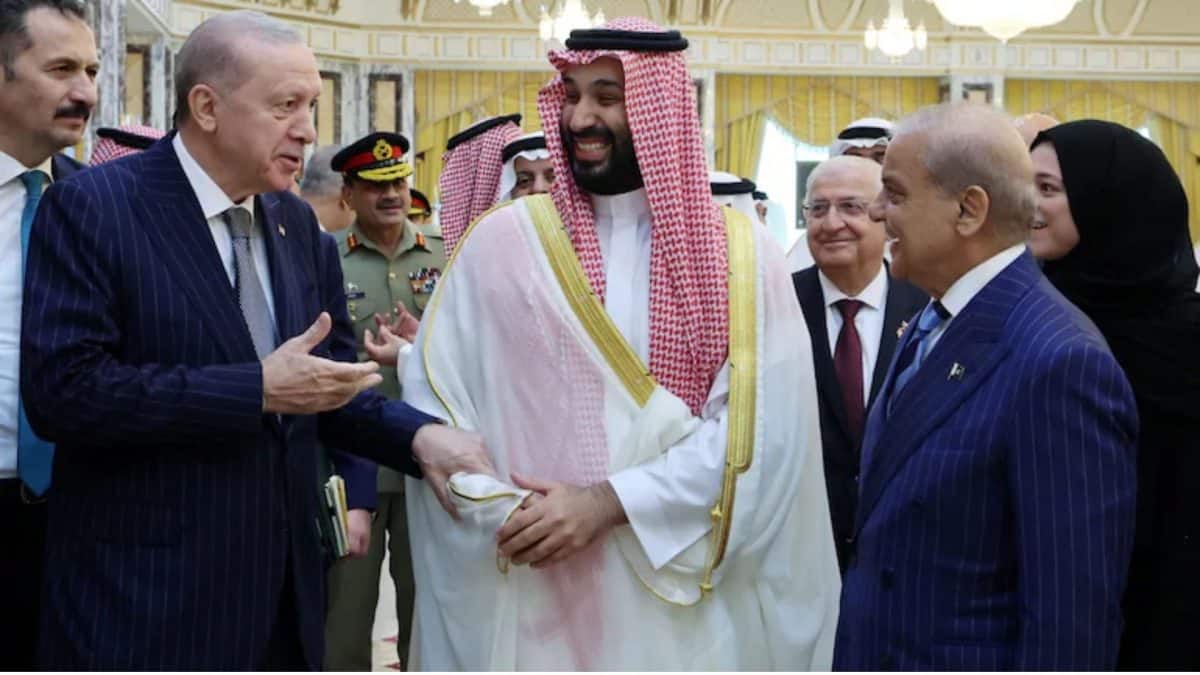
Saudi Arabia, Pakistan, Turkey Sign Joint Defence Agreement in Mecca
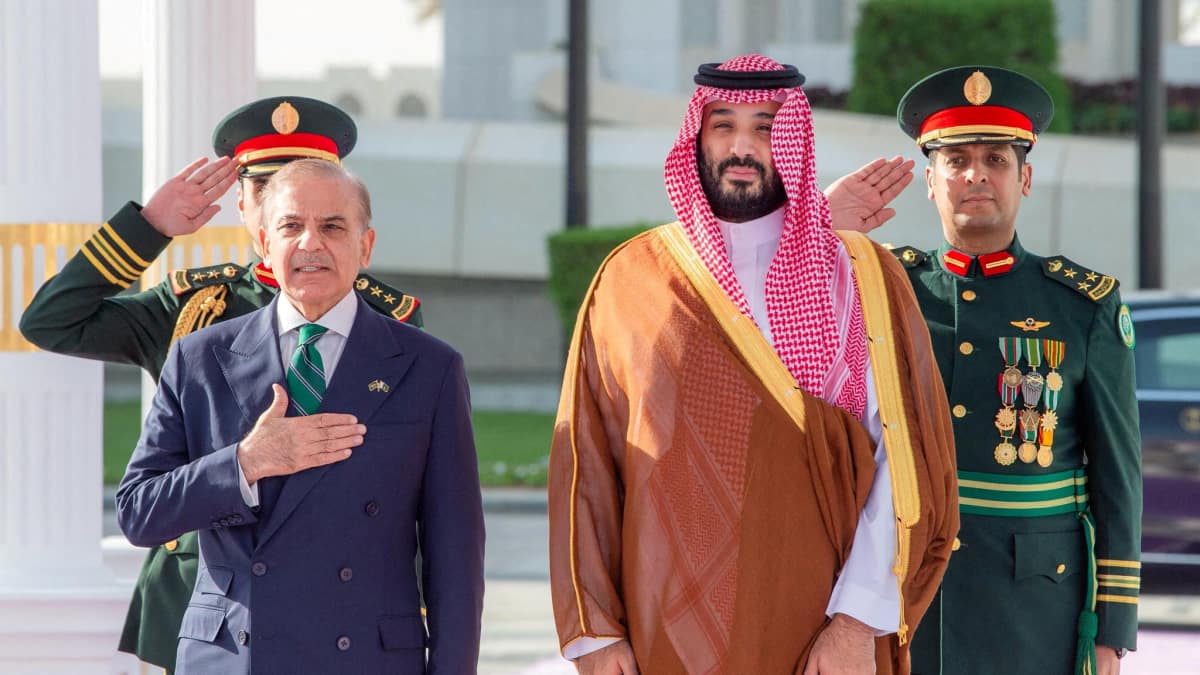
Pakistan, Saudi Arabia, Turkey Sign 'Islamic Nato' Defence Pact

Saudi Arabia, Turkey, Pakistan Sign Mecca Defence Agreement
Miliband Threatens West Bank Sanctions as Israel Warns Britain
Iran’s Proxy Network Weakens, But Its Wars Persist
World Roundup Spans Xi’s Egypt Visit and FBI Hamas Seizure

Israel Says Forces Captured Hamas Security Chief in Gaza
UN Halves West Bank Food Aid as Funding Shortages Deepen