

1 hr ago
Iran’s Proxy Network Weakens, But Its Wars Persist
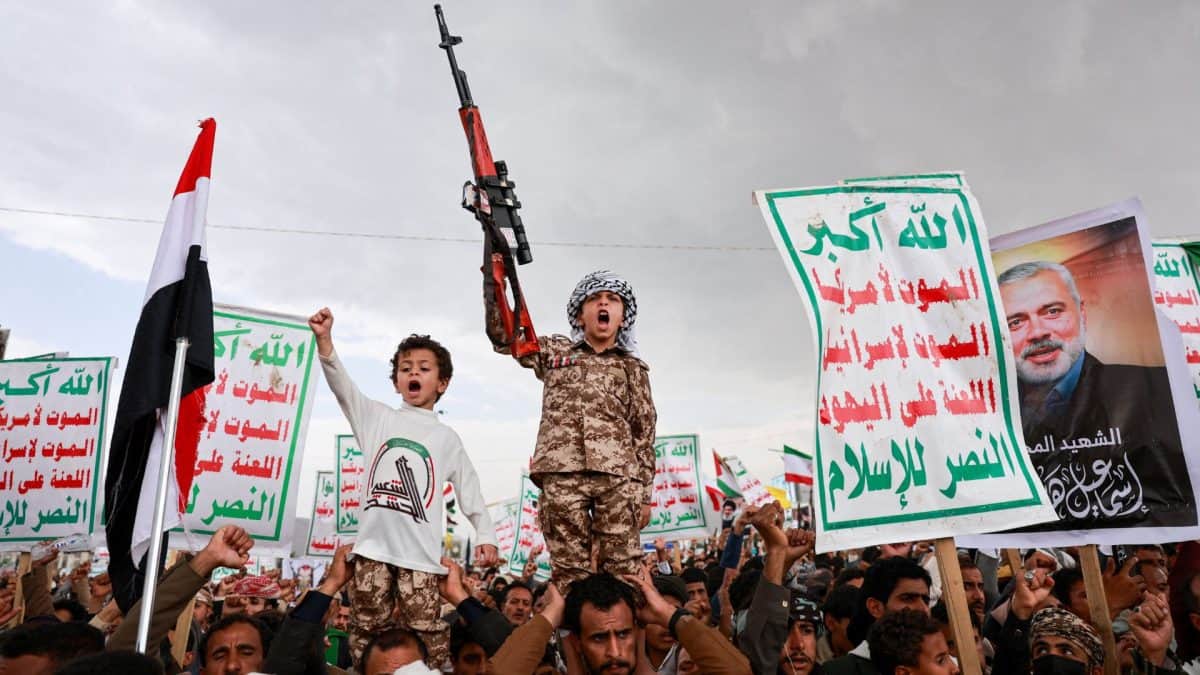
Iran spent many years helping armed groups in nearby countries fight its enemies.
This kept much of the fighting away from Iran.
The groups included Hezbollah in Lebanon, the Houthis in Yemen, and militias in Iraq.
These groups have been weakened, but they still have weapons and supporters.
Hezbollah’s weapons have contributed to more fighting in Lebanon.
Houthi attacks have disrupted ships and trade in the Red Sea.
Iraqi militias have sometimes operated even when Iraq’s government did not fully control them.
Iran can influence these groups, but it cannot always tell them exactly what to do.
This has made ceasefires easier to start than lasting peace.

Iran spent more than four decades building armed partners across West Asia through the Islamic Revolutionary Guard Corps and Quds Force.
The network has been weakened by the Gaza war, Hezbollah’s losses, Assad’s 2024 collapse, and direct war reaching Iran in 2026.
Hezbollah remains armed despite major losses and has rejected surrendering weapons north of Lebanon’s Litani River.
Iran-backed Houthi attacks since November 2023 disrupted Red Sea shipping, while the group’s attacks and threats resumed during the 2026 Iran war.
Iraq is pressuring Iran-aligned militias to place weapons under state control, but legal incorporation has not guaranteed government command.
- Who
- Iran, through the Islamic Revolutionary Guard Corps and Quds Force, and armed groups including Hezbollah, the Houthis, and Iran-aligned Iraqi militias.
- What
- Iran’s weakened regional proxy network continues to enable armed groups to initiate or prolong conflicts beyond Tehran’s full control.
- Where
- Across West Asia, especially Lebanon, Yemen, Iraq, Syria, the Red Sea, and the Gulf of Aden.
- When
- The strategy developed over more than four decades; the article focuses on developments through the 2026 Iran war, with Houthi attacks beginning in November 2023.
- Why
- Iran built the network to keep battlefields away from its territory, pressure its adversaries, and raise the costs of confrontation without directly fighting every war.
Arguments for Disarmament and State Control
Arguments for Retaining Armed Groups
Hezbollah’s weapons
Arguments for Disarmament and State Control
Lebanese state control and disarmament are presented as necessary for sovereignty and a durable peace with Israel.
Arguments for Retaining Armed Groups
Hezbollah rejects surrendering its weapons, particularly north of the Litani River, and maintains that its arsenal is needed for defense against Israel.
Iranian influence
Arguments for Disarmament and State Control
The network’s survival after ceasefires creates armed actors that can restart conflicts and undermine governments’ ability to guarantee peace.
Arguments for Retaining Armed Groups
Iran’s partners have developed their own constituencies, territorial ambitions, and strategic calculations, so they are not simply remote-controlled forces.
Iraqi militia integration
Arguments for Disarmament and State Control
Weapons should be placed under the Iraqi state’s command so Baghdad can control operations conducted from its territory.
Arguments for Retaining Armed Groups
Formal incorporation, government payrolls, or legal reorganization may preserve militia fighters, finances, political networks, and separate command structures.
Key facts
- Network name
- Iran calls the network the “Axis of Resistance”; its doctrine also uses “forward defence” and “unity of the fronts”.
- Hezbollah losses
- Israel killed Hezbollah chief Hassan Nasrallah and much of the group’s senior command, according to the article.
- Lebanon displacement
- The 2026 fighting involving Hezbollah killed thousands and displaced more than one million people.
- Houthi attacks
- The Houthis launched more than 100 attacks on commercial and naval vessels in the Red Sea and Gulf of Aden since November 2023.
- Shipping impact
- Container traffic through the Suez Canal collapsed at the height of the Red Sea crisis, prompting diversions around the Cape of Good Hope.
- Iraq deadline
- Iraq’s government set a September deadline for armed groups to place their weapons under state control as the US-led anti-ISIS coalition withdraws.
Sources
Related news
Iran War Exposes Limits of American Military Power
Iran Survives Militarily as Economic Costs Intensify
Iran hard-liners brace for prolonged war, expand military control

Six Months Into Iran War, Who Really Gained?
Pezeshkian: Enemies Failed To Turn Iran Into Syria

IRGC adviser says Iran may prolong war until Trump leaves

Welspun Corp, Perma-Pipe Plan Jordan Pipe Manufacturing JV

WhatsApp Group Exposed Vast Hawala Network Tied to Crime

India Seek First Win Over Syria in U20 Qualifiers
Turkey-Israel Rivalry Deepens Over Syria and Regional Influence
