1 hr ago
Indian Farmers Receive First Carbon Credit Payments for Sustainable Practices
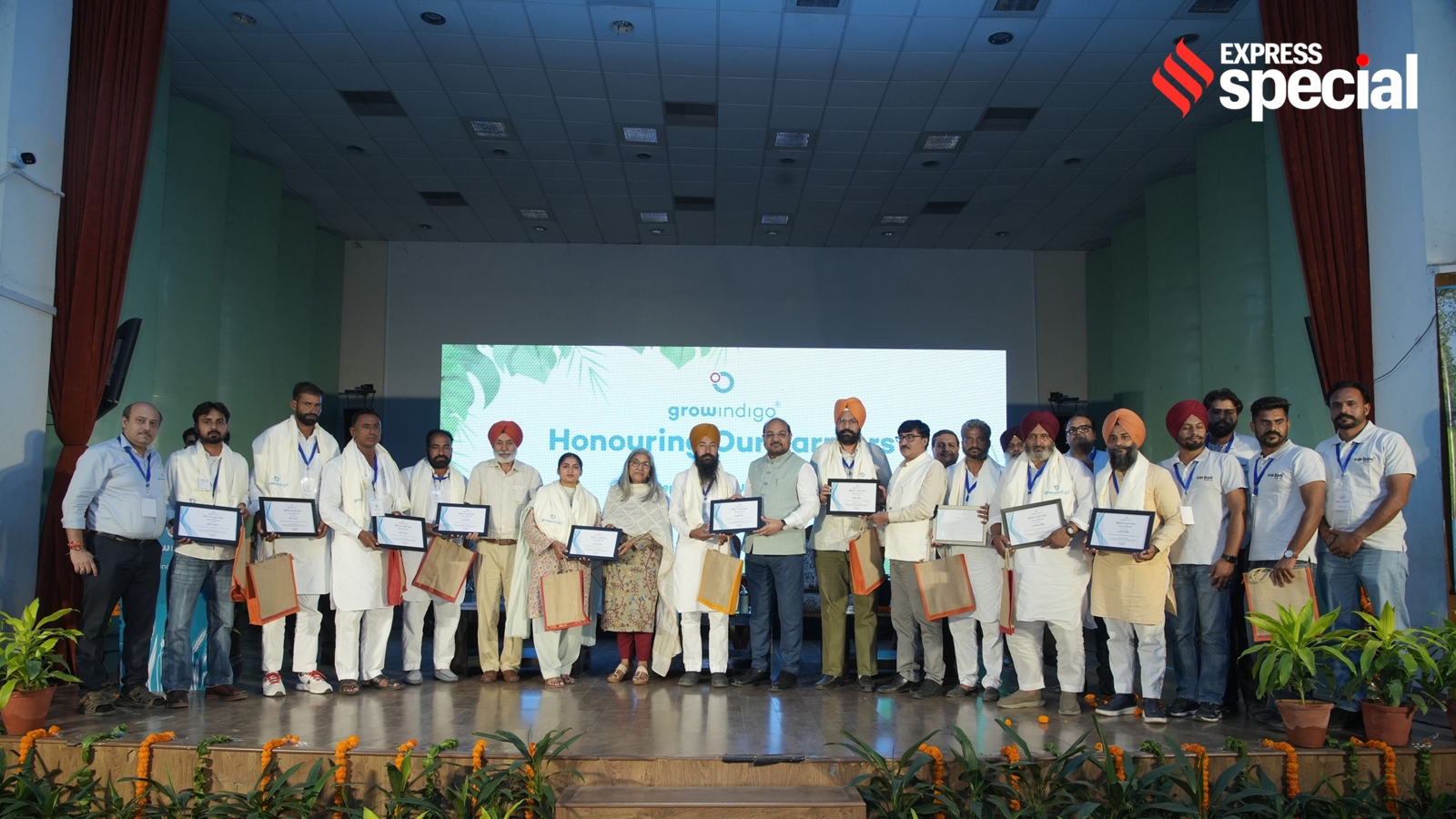
Some farmers in Punjab and Haryana received money for farming in ways that help the environment.
This is the first time Indian farmers have received these kinds of payments.
They earned carbon credits by reducing pollution and keeping more carbon in the soil.
Examples include not burning leftover rice plants, using less water and testing soil.
About 2,500 farmers received a total of around Rs 2.50 crore.
The payments were based on verified improvements, not simply on how much land a farmer owned.
Grow Indigo and agricultural scientists checked the practices using field evidence and technology.
Officials hope the payments will encourage more farmers to use climate-friendly methods.

Around 2,500 farmers in Punjab and Haryana received about Rs 2.50 crore in carbon credit payments.
The farmers generated more than 50,000 verified carbon credits through improved agricultural practices.
Payments ranged from about Rs 3,000 to Rs 15,000, although some examples cited payments of Rs 19,000.
Practices included direct-seeded rice, reduced tillage, residue management, soil testing and efficient fertiliser use.
Grow Indigo launched the programme in 2019 with technical guidance from the Indian Council of Agricultural Research.
- Who
- Around 2,500 farmers from Punjab and Haryana, with support from Grow Indigo and the Indian Council of Agricultural Research.
- What
- Farmers received their first carbon credit payments for adopting practices that reduce emissions and conserve soil and water.
- Where
- The beneficiaries were mainly from Punjab and Haryana, and a farmer felicitation event was held in Ludhiana.
- When
- The first payout round was reported in 2025; the programme began in 2019.
- Why
- The payments provide an economic incentive for farming practices that reduce greenhouse-gas emissions and increase or retain carbon in soil.
Key facts
- Beneficiaries
- Around 2,500 farmers: about 1,400 from Punjab and the remainder from Haryana.
- Total payout
- Approximately Rs 2.50 crore.
- Carbon credits
- More than 50,000 verified credits were generated.
- Payment basis
- Payments were linked to verified carbon credits attributed to farmers, not acreage.
- Qualifying practices
- Direct-seeded rice, reduced or zero tillage, residue management and more efficient fertiliser use.
- Monitoring
- Satellite and remote-sensing systems, geo-fencing and soil sampling are used for verification.
- Programme origin
- Grow Indigo initiated the programme in 2019 with technical guidance from the Indian Council of Agricultural Research.
Quotes
Dr Rajbir Singh
ICAR deputy director general for Agricultural Extension.
“Carbon credits can provide farmers an additional economic incentive to adopt climate-smart practices. Our role is to educate farmers and ensure that these practices are properly documented and verified through field evidence and technology.”
 indianexpress.com
“My way of farming has finally acquired an economic value.”
indianexpress.com
Dr M. L. Jat
Secretary of DARE and Director General of ICAR.
“Satellite and remote-sensing systems, including geo-fencing, are used to monitor fields and residue burning, while soil sampling can help assess changes in soil properties, including soil organic carbon.”
indianexpress.com
Sources
Related news
Bengal Urged to Make Rice Farming Climate Smart

Drones and AI Help Monitor More Than a Million Trees
Village-Scale Biochar Could Make Punjab’s Parali More Valuable
India's Regenerative Agriculture Gains Momentum to Restore Soil, Build Resilience

Agricultural KVKs Highlighted as Key to Raising Farmers’ Income

Kisan Karwan 2.0 Opens in Gorakhpur With Farmer Innovation Talks
Centre Mediates Historic Inter-State Disputes Through Cooperative Federalism
Journalist Murder Conviction Overturned as Son Continues Justice Fight
CAQM Intensifies NCR Pollution Inspections Ahead Of Winter
AAP's Pannu Warns Chandigarh Draft Could Cut Punjab Share