

1 week ago
Bengal Urged to Make Rice Farming Climate Smart
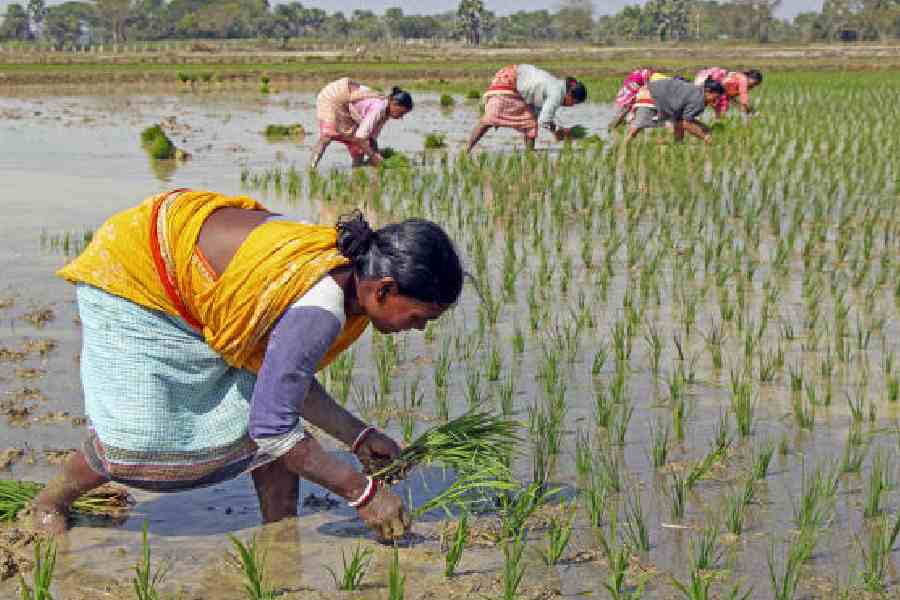
West Bengal grows a lot of rice, but farming is becoming harder and more expensive.
Flooded rice fields can also release methane, a greenhouse gas.
Farmers may be able to reduce water use and emissions by letting fields dry to a safe level before watering them again.
This method is called Alternate Wetting and Drying.
Other practices could improve soil, nutrients and leftover plant materials.
These changes might qualify for carbon finance, which could provide farmers with extra income.
Farmers would need to work together through groups because carbon projects are costly to organize and measure.
The state government is being asked to protect farmers through clear rules, monitoring and fair payment agreements.

West Bengal’s rice sector faces rising costs, erratic rainfall, groundwater pressure, labour shortages and shrinking margins.
Alternate Wetting and Drying could reduce irrigation needs and methane emissions from flooded rice fields.
Sustainable Agricultural Land Management would combine improved water, nutrient, residue and soil management.
A proposed Bengal Rice Carbon Mission would organize farmers into clusters and use carbon finance to create additional income.
The state is urged to ensure reliable monitoring, transparent contracts and fair revenue sharing, with farmers receiving 50–60% of net carbon revenue under one suggested model.
- Who
- West Bengal’s rice farmers, farmer organizations, investors, technical partners and the state government.
- What
- A proposal to change rice cultivation through Alternate Wetting and Drying and Sustainable Agricultural Land Management, and use verified emission reductions to attract carbon finance.
- Where
- West Bengal, beginning with selected rice-growing clusters where water control, farmer mobilization and monitoring are practical.
- When
- The proposed Bengal Rice Carbon Mission would begin during the new government’s first year.
- Why
- To reduce water use and methane emissions while improving farm resilience, margins and potential farmer income.
Key facts
- Proposed initiative
- Bengal Rice Carbon Mission
- Main practice
- Alternate Wetting and Drying allows rice fields to dry to a safe level before irrigation resumes.
- Additional approach
- Sustainable Agricultural Land Management includes water and nutrient management, residue management, soil-health improvement and climate-resilient farming.
- Project organization
- Farmer Producer Organisations, cooperatives, self-help group federations, panchayat-level institutions and irrigation associations could organize participants.
- Measurement requirements
- Projects should use geo-tagged plots, farmer records, mobile data collection, irrigation and drainage monitoring, field verification and remote sensing.
- Suggested farmer share
- One proposed model would allocate 50–60% of net carbon revenue to farmers.
- Government role
- The state is urged to act as an enabler and regulator by issuing guidelines, approving technical agencies and requiring transparent contracts and benefit sharing.
Sources
Related news

Haryana Plans World Bank-Backed Water Security Agriculture Programme
Meghalaya launches bamboo carbon project to restore land, boost incomes

Tamil Nadu Budget Launches Carbon Trading for Farmers, Soil Mission

Bengal’s Untapped Prawn Potential Could Unlock Rs 10,000-Crore Economy
