

1 hr ago
August 2026 Tied July 2023 as Hottest Month Ever

Scientists say August 2026 was the hottest month ever measured worldwide, tied with July 2023.
The average temperature near Earth’s surface was 16.96 degrees Celsius.
This was about 1.65 degrees warmer than before large-scale industrialization.
The oceans were also warmer than ever recorded for an August.
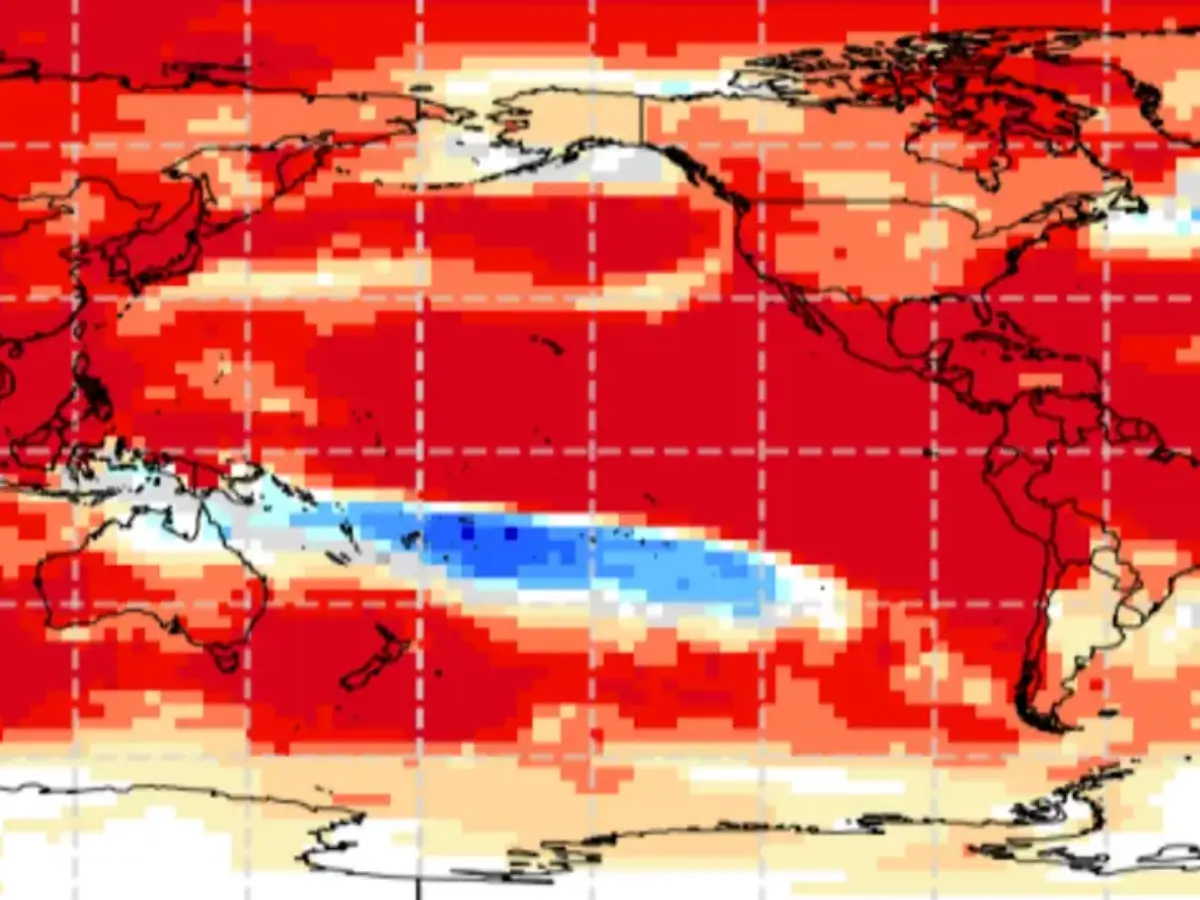
Global warming and a powerful El Niño helped raise temperatures.
Europe had a very dry summer, leaving soil and rivers unusually dry.
Heat and dryness contributed to droughts and wildfires.
Other places experienced floods, heatwaves and other extreme weather.
Scientists said these events show that climate change is affecting everyday life.

August 2026 tied July 2023 as the hottest month globally recorded.
Global average surface air temperature reached 16.96 degrees Celsius, about 1.65 degrees above pre-industrial levels.
Global sea surface temperatures also reached a record high, influenced by global warming and an unusually powerful El Niño.
A very dry summer in western and central Europe contributed to drought, wildfires, low river levels and severe heat impacts.
Extreme weather included flash floods in Nepal, wildfires in Indonesia, Greece and Belgium, droughts in Romania and heatwaves across western Europe.
- Who
- The Copernicus Climate Change Service and the World Meteorological Organization reported the findings, with comments from climate researcher Samantha Burgess.
- What
- August 2026 tied July 2023 as the hottest month ever recorded globally and also saw record global sea surface temperatures.
- Where
- The temperature record was global, while major impacts were reported in Europe, Nepal, Indonesia, Greece, Belgium and Romania.
- When
- The findings were reported on Thursday; the measurements covered August 2026 and the June-to-August summer period.
- Why
- Global warming and an unusually powerful El Niño contributed to the heat, while dry conditions intensified impacts in Europe.
Key facts
- Global average temperature
- 16.96 degrees Celsius in August 2026
- Difference from pre-industrial levels
- Nearly 1.65 degrees Celsius higher
- Previous matching record
- July 2023
- Ocean temperatures
- Global average sea surface temperature reached a record high
- European summer conditions
- Western and central Europe and southern Scandinavia received far less rain than usual from June to August
- Arctic sea ice
- August had the 12th-lowest Arctic sea-ice coverage recorded for that month
- Reported impacts
- Droughts, wildfires, floods, heatwaves and sharply reduced Danube and Rhine water levels
Quotes
Samantha Burgess
Climate researcher at the European Centre for Medium-Range Weather Forecasts
“We’ve really seen the impact across Europe of how maladapted we are, with roads melting, train lines buckling, schools closing, hospitals completely overwhelmed, and record wildfires for the time of year. The narrative around climate change has really transitioned from being quite an abstract concept that happens in a faraway place to disrupting our daily lives.”
 theprint.in
“August 2026 was a remarkable month in the global climate record. It was both the warmest August and the warmest month ever recorded. Combined with record global sea surface temperatures and the warmest summer on record for Western Europe, these observations show how climate change is driving extremes across both the atmosphere and the oceans.”
theprint.in
Sources
Related news

World Records Warmest August Ever, European Climate Agency Says

August Ties Record as World’s Hottest Month

August 2026 Sets Global and Indian Heat Records

Record Ocean Warmth Signals Climate Change Entering Unfamiliar Territory

Global Sea Surface Temperature Sets Record Amid El Niño Warming
Earth’s Oceans Reach 125,000-Year Heat Record Amid El Niño

AfD Victory Highlights Europe’s Resurgent, Adaptable Far-Right Challenge

AfD Victory in Saxony-Anhalt Raises Questions for Europe

Europe’s Rightward Shift Puts Political Establishment Under Pressure
