1 month ago
AI Helps Solve 25-Year-Old Wireless Communication Problem, Professor Says
Your phone sends information using invisible signals through the air.
Sometimes those signals get jumbled up, like when many people talk at once in a noisy room.
A special way of sending data called MIMO uses several antennas to send more information at the same time.
But when the signals arrive, the receiver has to figure out which message was originally sent.
Doing this perfectly, a method called maximum-likelihood detection, takes a huge amount of computing power.
Scientists spent many years trying to find a faster way to do it.
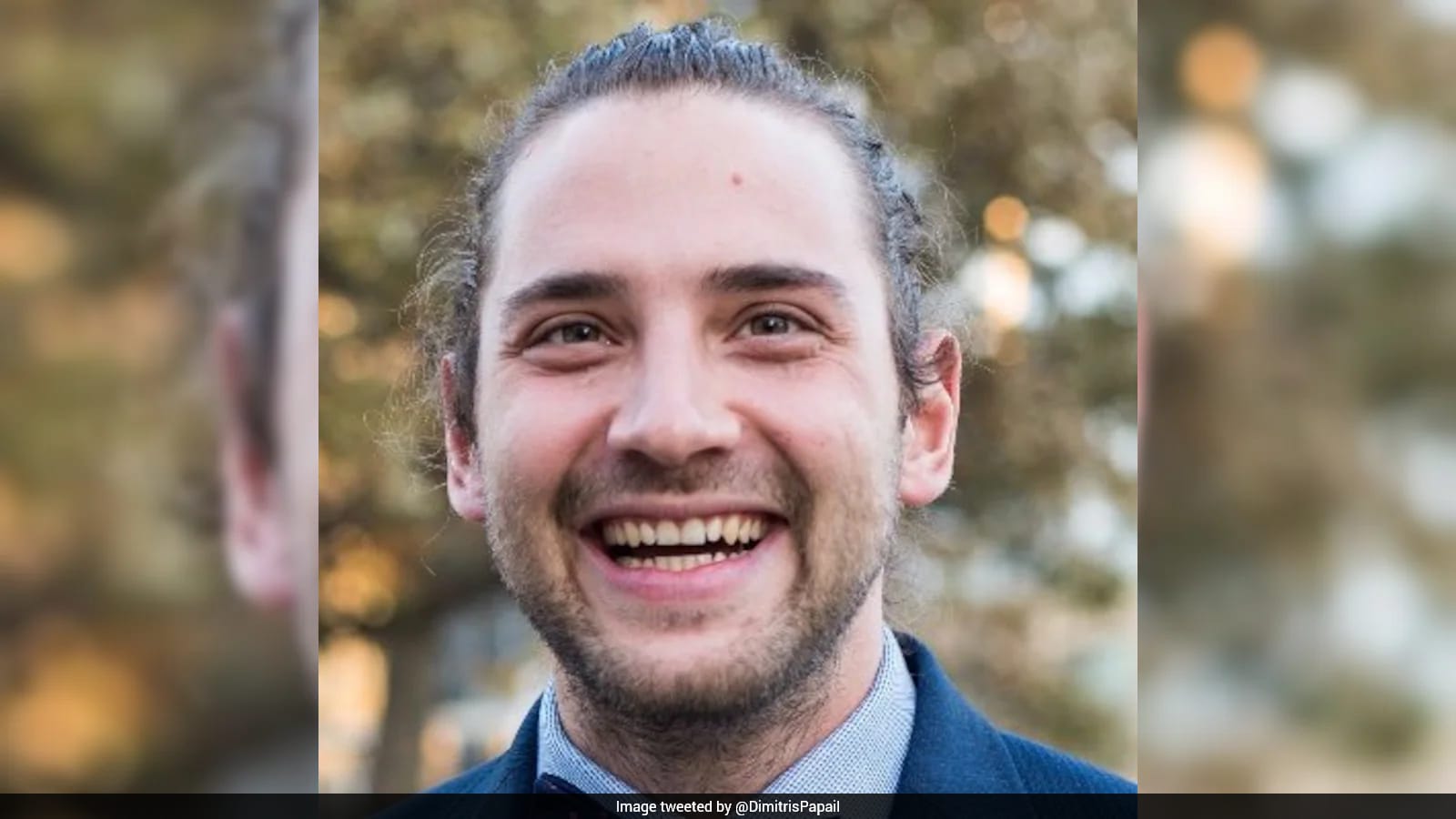
A professor named Dimitris Papailiopoulos asked smart computer programs to help solve the puzzle.
The AI programs, called GPT-5.6 and Claude Fable 5, helped develop and verify answers to the problem.
This could make wireless connections more efficient in the future.

Researchers at the University of Wisconsin-Madison used AI to tackle a decades-old problem in wireless communications involving MIMO technology.
The work was led by Dimitris Papailiopoulos, a University of Wisconsin-Madison professor currently on leave at Microsoft Research.
According to Papailiopoulos, AI systems GPT-5.6 and Claude Fable 5 were used to develop and verify possible solutions.
MIMO uses multiple antennas to transmit data, but receivers must reconstruct signals distorted by noise, a task that can demand enormous computing power.
The development could improve the efficiency of MIMO-based wireless systems by reducing the computational effort needed for complex signal-processing tasks.
- Who
- Dimitris Papailiopoulos, a University of Wisconsin-Madison professor currently on leave at Microsoft Research, and his research team.
- What
- Used AI systems GPT-5.6 and Claude Fable 5 to help settle a theoretical wireless communications problem in MIMO detection that had stumped researchers for about 25 years.
- Where
- University of Wisconsin-Madison, with research ties to Microsoft Research.
- When
- Not specified in the article; the problem was studied extensively from the 2000s through the 2010s.
- Why
- Maximum-likelihood detection is accurate but requires enormous computing power, so researchers sought faster techniques with the same level of accuracy even when signals are affected by noise.
Key facts
- Lead researcher
- Dimitris Papailiopoulos
- Institution
- University of Wisconsin-Madison
- AI systems used
- GPT-5.6 and Claude Fable 5
- Technology
- MIMO (multiple-input multiple-output)
- Problem duration
- Studied extensively from the 2000s through the 2010s
- Core challenge
- Checking every possible transmitted message requires enormous computing power
- Potential impact
- More efficient MIMO-based wireless systems with less computational effort
Sources
Related news

Meta Says Muse Spark Helped Solve Six Math Problems
OpenAI Claims Navier-Stokes Breakthrough After 88-Hour AI Effort
OpenAI Navier-Stokes Claim Raises Questions About AI Research

AI Animal Communication Research Offers Hope Alongside Risks

OpenAI Says AI Agents Solved Decades-Old Maths Problem

OpenAI Says Unreleased AI Model Solved 100 Math Problems

Gut Bacterial Molecule Linked to Alzheimer’s-Related Brain Changes

UAE Indian Passport Services: No Premium Queues, 30-Minute Target

Brown University Shooting Suspect Identified

Students Spark Bengaluru’s Pickleball Revolution