

1 day ago
Meta Says Muse Spark Helped Solve Six Math Problems

Meta says its Muse Spark AI helped mathematicians make progress on six difficult research problems.
These were not school-style questions with one known answer.
The problems involved several areas of mathematics and related research.
Meta says mathematicians guided the work and checked the model’s contributions.
In one case, Muse Spark generated a computer search program that helped find a counterexample.
Meta also announced Muse Gadgets, tools developers can use to make hardware that works with Muse.
The company introduced a device called Muse Home Link, which can connect Muse to home devices such as TVs and speakers.
Meta says it made 5,000 Home Link units for its subscribers.

Meta said mathematicians used Muse Spark 1.1 and 1.2 in Thinking Mode to work on six research problems.
The problems covered probability, differential equations, group theory, optimisation, arithmetic physics and non-associative algebra.
Meta said researchers led the work, developed the arguments with the model’s assistance, and had a second group review it.
Separately, Meta announced Muse Gadgets, an open-source ESP32 firmware and Linux SDK for building Muse-compatible hardware.
Meta also introduced the USB-C-powered Muse Home Link and said 5,000 units had been manufactured for Muse subscribers.
- Who
- Mathematicians working with Meta’s Muse Spark; Meta also announced Muse Gadgets and Muse Home Link.
- What
- Meta said Muse Spark assisted with six mathematical research problems and announced an open-source hardware development project.
- Where
- The research was conducted using the standard Meta AI chat interface; Home Link is intended to connect Muse to devices on a home network.
- When
- The articles do not specify a date.
- Why
- Meta said Muse Gadgets is intended to let developers build hardware compatible with Muse, while Muse Home Link lets Muse interact with smart-home devices.
Meta’s account
Caveats and scrutiny
AI’s role in mathematical research
Meta’s account
Meta said Muse Spark assisted mathematicians with six research problems, including generating a GAP search program that found a counterexample.
Caveats and scrutiny
The article says mathematicians led the research and developed the arguments, and a second group reviewed the work; it does not describe the results as work done by the model alone.
Claims about AI problem-solving
Meta’s account
Meta presented the results as progress on significant research questions beyond Olympiad-style problems.
Caveats and scrutiny
The article notes that OpenAI’s earlier claim that its model solved the Navier-Stokes Millennium Prize problem was challenged by researchers who alleged their work may have been used.
Key facts
- Model versions
- Muse Spark 1.1 and 1.2
- Model setting
- Thinking Mode through the standard Meta AI chat interface
- Research problems
- Six, across probability, differential equations, group theory, optimisation, arithmetic physics and non-associative algebra
- Muse Gadgets
- Open-source ESP32 firmware and Linux SDK
- Muse Home Link
- USB-C-powered device that connects Muse to a home network and smart devices
- Home Link production
- Meta said 5,000 units had been manufactured for distribution among Muse subscribers
Quotes

Meta
The company, in a blog post about research work using Muse Spark.
“Open research is different. There is no answer key or guarantee that a given approach will work.”
 thehansindia.com

Alexandr Wang
Meta’s AI lead, announcing the Muse Gadgets project.
“Today we’re announcing Muse Gadgets! It’s an open-source ESP32 firmware and Linux SDK that lets anyone build Muse-compatible hardware”
thehansindia.com
Sources
Related news

OpenAI Says Unreleased AI Model Solved 100 Math Problems
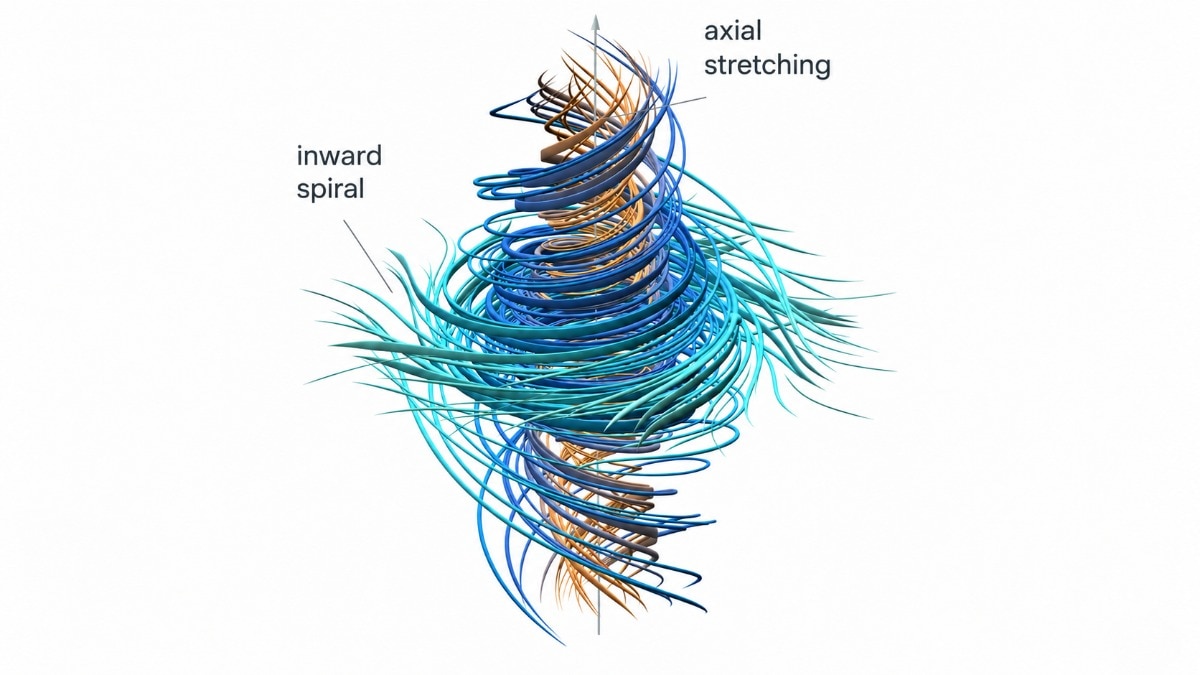
OpenAI Claims Navier-Stokes Breakthrough After 88-Hour AI Effort

OpenAI Navier-Stokes Proof Claim Faces Questions From Mathematicians

OpenAI Says AI Agents Solved Decades-Old Maths Problem

Meta’s Muse AI Agent Makes AI Helpful—and Scary

Meta Says Muse AI Agent Was Inspired by OpenClaw

Meta AI Chief Deletes Edited Modi Photo Amid Muse Promotion

Meta Muse AI Upgrade Adds Avatars, Glasses And Controls

Meta AI Chief Apologises After Joking About Muse Flight Booking
Zuckerberg Says AI Alignment, Not Slowdowns, Will Decide Winners
