1 hr ago
OpenAI Claims Navier-Stokes Breakthrough After 88-Hour AI Effort
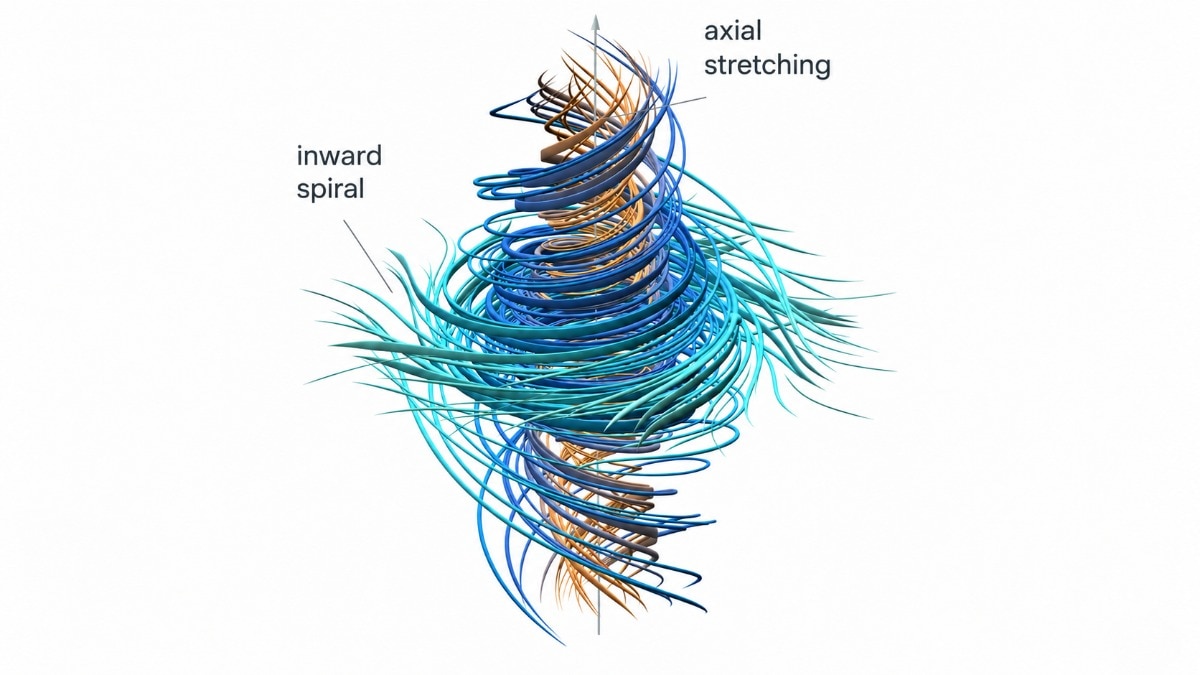
OpenAI says a large group of AI programs worked together on a very difficult mathematics problem.
The problem is called Navier-Stokes and has been unsolved for about 90 years.
Some programs tried to prove the answer, while others tried to find an example showing the answer was wrong.
OpenAI says the programs reached a resolution after about 88 hours.
Another OpenAI model spent 17 more hours formalising and checking the result.
The company says it will not claim the $1 million prize connected to the problem.
That is because outside mathematicians still need to examine the work.
Some mathematicians have also questioned whether OpenAI’s effort could have been influenced by related private research.
OpenAI denies that its agents accessed private user data and says its proof was developed independently.

OpenAI says around 10,000 AI agents produced a resolution to the Navier-Stokes problem in about 88 hours.
The agents examined different versions, with some seeking a proof and others searching for counterexamples.
The effort generated about 2.7 million messages and approximately 130 billion output tokens.
GPT-6 Astra later formalised and verified the initial result in an additional 17 hours, according to OpenAI.
The claim has not been independently verified or accepted by the Clay Mathematics Institute, and mathematicians have raised questions about possible data influence.
- Who
- OpenAI, its AI agents, mathematicians Tristan Buckmaster and Levent Alpöge, and the Clay Mathematics Institute are involved in the claim and its scrutiny.
- What
- OpenAI says its AI system produced a resolution to the Navier-Stokes Millennium Prize Problem, but the result has not been independently verified.
- Where
- The articles do not specify a physical location; the work was conducted using OpenAI’s AI systems.
- When
- OpenAI began the effort in late August; it launched the agents on September 1 and reported the resolution around September 5, with the announcement dated September 8, 2026.
- Why
- OpenAI decided to test its more capable mathematics model after hearing reports that two Millennium Prize Problems had been solved, and it focused on the remaining Navier-Stokes problem.
OpenAI’s account
Mathematicians’ concerns
Independence of the result
OpenAI’s account
OpenAI says its proof was developed independently, differed significantly from related work, and was produced without accessing private user data.
Mathematicians’ concerns
Tristan Buckmaster questioned how OpenAI reached a similar result so quickly after he and Levent Alpöge had been working on related problems using AI models.
Reliability of the claimed resolution
OpenAI’s account
OpenAI says the initial result was formalised and verified by GPT-6 Astra and addresses the relevant mathematical problem.
Mathematicians’ concerns
The result still requires independent scrutiny and has not been accepted by the Clay Mathematics Institute.
Use of user data
OpenAI’s account
OpenAI says no human or AI agent involved in the project looked at user data, while acknowledging that de-identified data can be used to improve its models.
Mathematicians’ concerns
Buckmaster raised concerns about whether information from private Codex sessions could have influenced OpenAI’s effort.
Key facts
- Problem
- Navier-Stokes Millennium Prize Problem
- AI agents used
- Approximately 10,000
- Initial effort
- About 88 hours
- Agent communications
- Approximately 2.7 million messages
- Output generated
- Approximately 130 billion tokens
- Additional formalisation
- 17 hours using GPT-6 Astra
- Prize
- $1 million, which OpenAI says it will not claim
- Current status
- Not independently verified or accepted by the Clay Mathematics Institute
Sources
Related news
OpenAI Navier-Stokes Proof Claim Faces Questions From Mathematicians

OpenAI Says AI Agents Solved Decades-Old Maths Problem

Indian Scientist’s 2017 Paper Cited in OpenAI Math Claim

OpenAI Launches GPT-6 Astra as ‘World’s Most Intelligent’ Model
Nvidia CEO Declares AGI After OpenAI Launches GPT-6 Astra