2 weeks ago
OpenAI Navier-Stokes Claim Raises Questions About AI Research
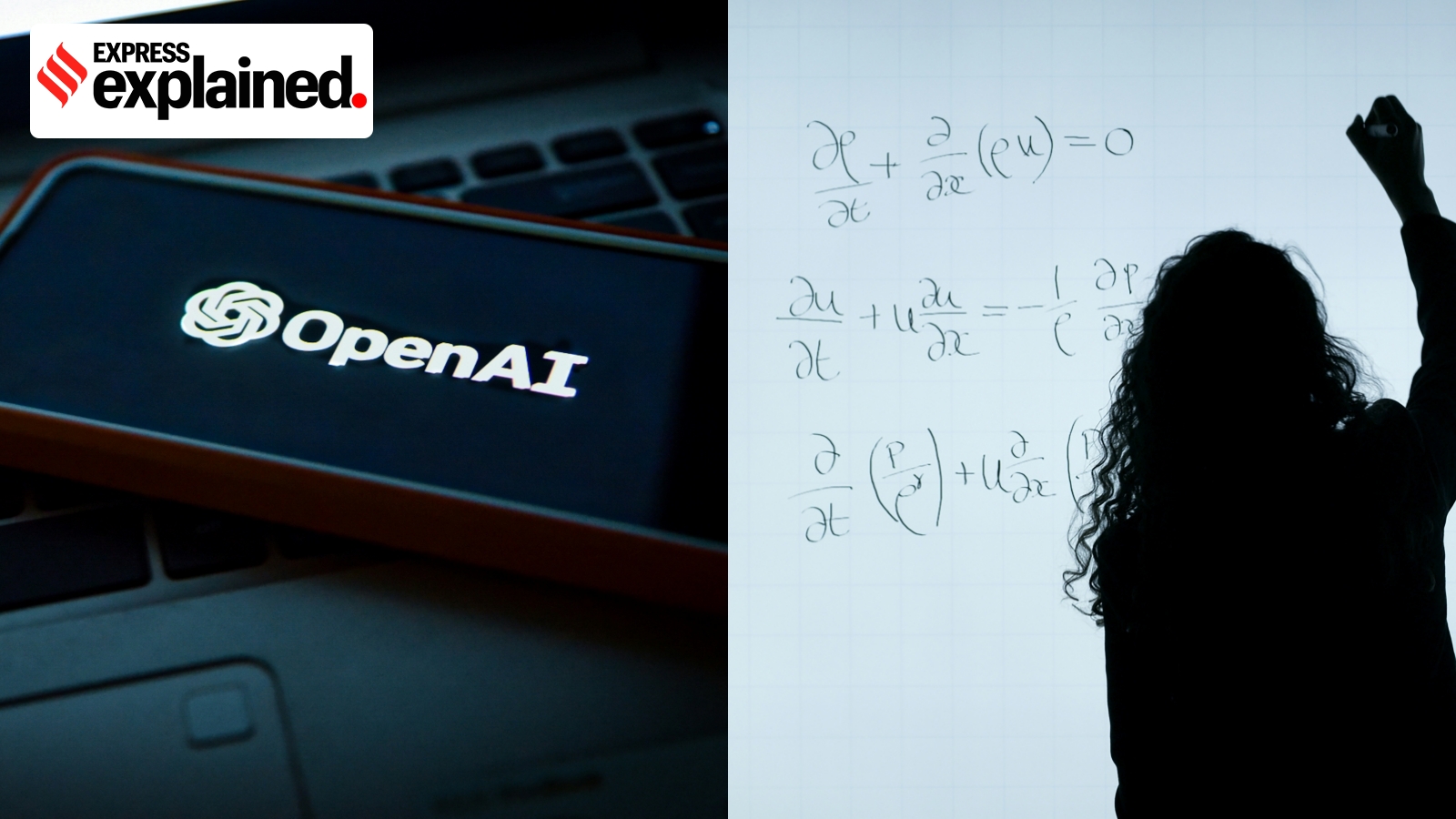
OpenAI says its AI agents found a possible answer to a very difficult math problem about how fluids move.
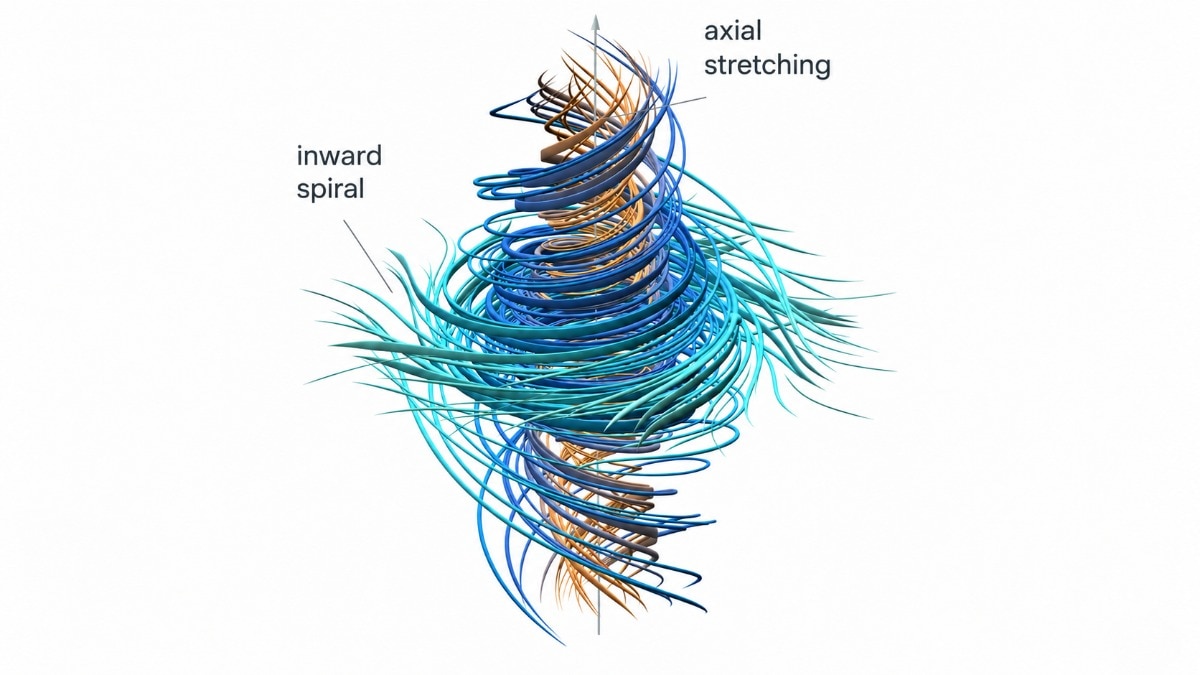
The problem asks whether smoothly moving fluids can suddenly become infinitely intense.
The agents reportedly worked for about 88 hours and checked their result using a computer system called Lean.
However, mathematicians have not yet confirmed that the result is correct.
The Clay Mathematics Institute still lists the problem as unsolved.
Some researchers are worried that conversations they had with AI tools may have helped improve those tools.
Removing names from conversations does not necessarily remove the ideas inside them.
This raises questions about whether researchers should be told or credited if their ideas help an AI produce a result.
It also raises a bigger question about whether a machine can make a mathematical discovery.

OpenAI says 10,000 concurrently running AI agents produced a Navier-Stokes result in about 88 hours.
The result was formalised in Lean but has not been independently verified or accepted by mathematicians.
OpenAI says it did not access specific user data, while acknowledging de-identified interactions may have improved its models.
Mathematicians question whether researchers’ private ideas could be used without clear consent or acknowledgement.
The claim also renews debate over whether AI-generated, difficult-to-understand proofs count as mathematical discoveries.
- Who
- OpenAI, mathematicians, and researchers including Tristan Buckmaster, Levent Alpöge, Andreas Thom, Vijay Keswani, and Siddhartha Gadgil.
- What
- OpenAI reported that AI agents generated and formally checked a proposed result concerning the Navier-Stokes Millennium Prize Problem.
- Where
- The research and debate involve OpenAI and mathematicians at institutions including New York University, Anthropic, the Indian Institute of Technology Delhi, and the Indian Institute of Science Bangalore.
- When
- OpenAI described the result in a blog post on Tuesday, September 8; the articles do not specify the year.
- Why
- The report has prompted questions about whether de-identified researcher interactions contributed to AI development and whether AI-generated proofs qualify as mathematical discoveries.
Concerns About Consent and Discovery
Potential Benefits of AI-Assisted Mathematics
Use of researcher conversations
Concerns About Consent and Discovery
Critics say de-identified conversations may still contain researchers’ ideas and could be used without meaningful consent, acknowledgement, or credit.
Potential Benefits of AI-Assisted Mathematics
OpenAI says its researchers and agents did not access specific user data to solve the problem, while distinguishing that claim from possible use of de-identified data to improve models.
Whether the result is a solution
Concerns About Consent and Discovery
Mathematicians stress that the result has not been independently verified or accepted, and formal verification does not by itself establish how the AI found it.
Potential Benefits of AI-Assisted Mathematics
Supporters point to Lean formalisation as a potentially powerful way to check whether a mathematical argument follows from its formal assumptions.
AI as a mathematical discoverer
Concerns About Consent and Discovery
Some researchers argue current systems remain dependent on humans to frame problems, set objectives, and decide whether results succeed, making claims of autonomous discovery premature.
Potential Benefits of AI-Assisted Mathematics
Others note that AI has produced new constructions for difficult problems and could generate proofs or insights that humans had not previously found.
Key facts
- Problem
- The Navier-Stokes problem asks whether smooth three-dimensional fluid motion can develop an infinite-velocity singularity in finite time.
- Prize
- The Clay Mathematics Institute offers a $1 million prize for solving each of its Millennium Prize Problems.
- OpenAI claim
- OpenAI said 10,000 concurrently running AI agents worked for about 88 hours.
- Formalisation
- The proposed result was formalised in Lean, a proof assistant used to check mathematical arguments.
- Verification status
- The result has not been independently verified or accepted by the mathematics community.
- Data issue
- OpenAI said no specific user data was accessed to solve the problem but could not rule out de-identified interactions helping improve its models.
- Current status
- The Clay Mathematics Institute continues to list Navier-Stokes as unsolved; the Poincaré Conjecture remains the only resolved Millennium Prize Problem.
Quotes
Siddhartha Gadgil
Professor of mathematics at the Indian Institute of Science, Bangalore
““Is it fair for a company to have visibility into researchers’ ideas and be able to leverage that visibility, combined with vast computing resources available only to them, to scoop the researchers whose thinking informed the result?””
 indianexpress.com
““Lean provided hope for a superhuman level of correctness. This can be much better than human evaluation for checking correctness””
indianexpress.com
Sources
Related news
OpenAI Navier-Stokes Proof Claim Faces Questions From Mathematicians
OpenAI Claims Navier-Stokes Breakthrough After 88-Hour AI Effort

Indian Scientist’s 2017 Paper Cited in OpenAI Math Claim

OpenAI Says Unreleased AI Model Solved 100 Math Problems

OpenAI Says AI Agents Solved Decades-Old Maths Problem