1 hr ago
IISc Bengaluru Develops More Effective Uranium Extraction Method
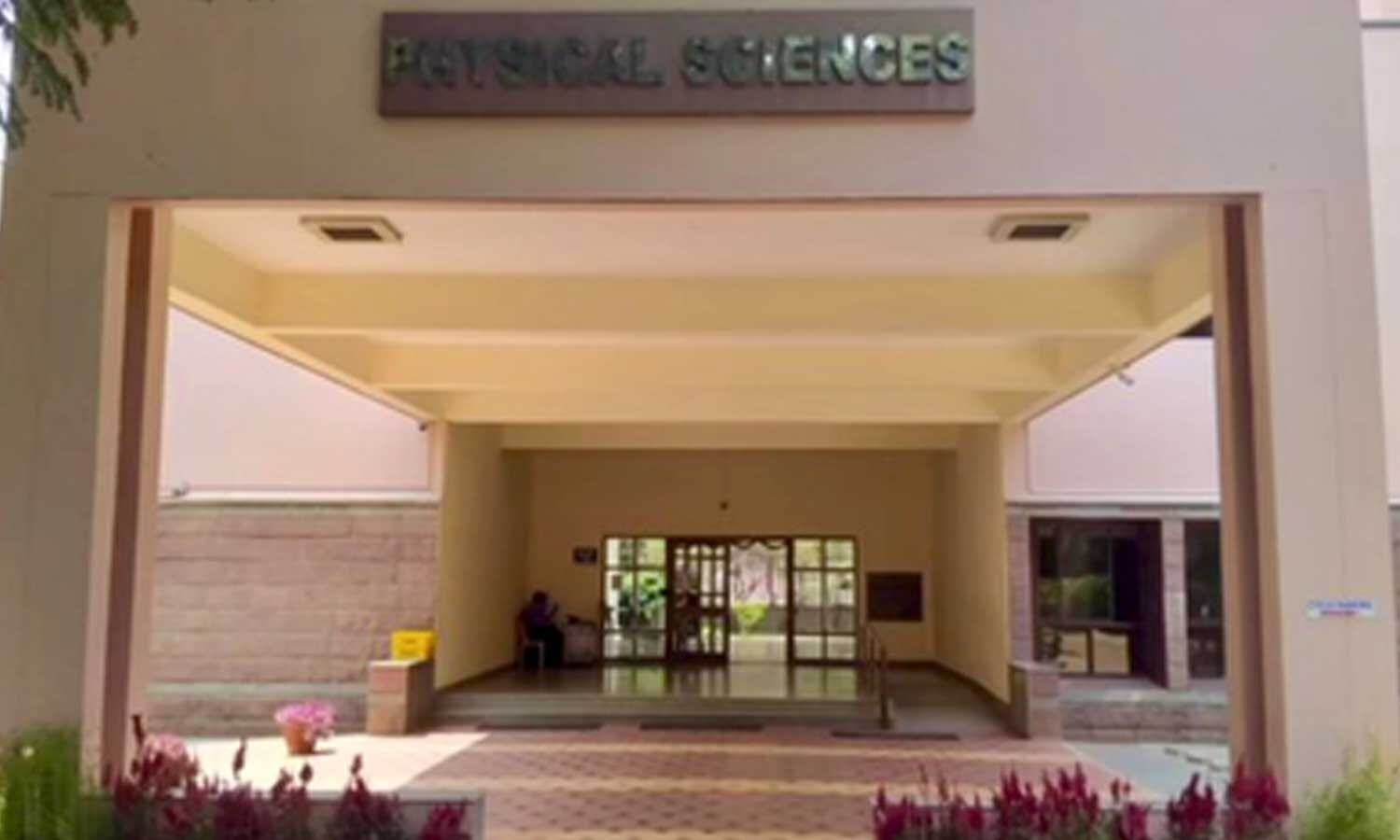
Researchers at the Indian Institute of Science found a new way to separate uranium from seawater.
Uranium is used as fuel for nuclear power plants.
There is much more uranium in seawater than in land deposits, but it is difficult to collect because seawater contains many other substances.
The researchers created special membranes made from layered materials called covalent organic frameworks.
These membranes block uranyl ions, which contain uranium, while letting common seawater ions pass through.
The layers are slightly shifted to create tiny pathways that control how ions move.
This means the method depends more on the membrane’s structure than on adding many chemical binding sites.
The approach could also help remove uranium from groundwater.
The study used molecular simulations and membrane design to understand and improve the separation process.

Researchers at the Indian Institute of Science developed a method to extract uranium from seawater more effectively.
The approach may also improve uranium removal from contaminated groundwater.
Slipped covalent organic framework membranes can reject uranyl ions while allowing common seawater ions to pass through.
The method relies primarily on nanoscale structural confinement rather than extensive chemical functionalization.
The research was conducted by Yogendra Kumar and Binu Varghese under Prabal K Maiti, with Accenture Labs, Bengaluru.
- Who
- Researchers Yogendra Kumar and Binu Varghese, under the mentorship of Prabal K Maiti, at the Indian Institute of Science, in collaboration with Accenture Labs, Bengaluru.
- What
- They developed a slipped covalent organic framework membrane method for selectively separating uranium from seawater and potentially removing it from groundwater.
- Where
- The research was conducted at the Indian Institute of Science in Bengaluru, with collaboration from Accenture Labs, Bengaluru.
- When
- Not specified in the report.
- Why
- The method aims to support a sustainable uranium supply for nuclear fuel and address uranium contamination in groundwater.
Key facts
- Research institution
- Indian Institute of Science, Bengaluru
- Target material
- Uranium in seawater and groundwater
- Membrane technology
- Slipped covalent organic framework membranes
- Separation result
- The membranes completely reject uranyl ions while allowing common seawater ions to pass through
- Estimated uranium reserves
- About 7.5 million tonnes on land and about 4.5 billion tonnes in seawater
- Key design principle
- Nanoscale structural confinement controls ion transport without relying mainly on extensive chemical functionalization
- Collaboration
- Accenture Labs, Bengaluru
Quotes
Indian Institute of Science
The Bengaluru-based research institute
“A recent study from the Department of Physics, IISc, presents a new approach to addressing this challenge. The team has shown that specially designed slipped covalent organic framework (COF) membranes can completely reject uranyl ions while allowing common seawater ions to pass through.”
 thehansindia.com
“Developing efficient technologies to extract uranium from seawater could offer a promising long-term pathway toward securing a sustainable supply of nuclear fuel. At the same time, uranium contamination of groundwater is an important environmental and public health concern.”
thehansindia.com
Sources
Related news
IIT Guwahati Develops Low-Cost Reactor for Arsenic, Fluoride Removal

IIT Guwahati Develops Reactor to Remove Arsenic and Fluoride

MIT-Born Tap Filter Challenges India’s Reliance on RO Purifiers

Panel urges policy roadmap for contractor-run uranium mining in India

Thorium Could Shape India’s Nuclear Future Amid Uranium Supply Pressures

PM Modi: 99% 'no-go' coastal waters now open for exploration
E.C.G. Sudarshan’s Physics Legacy Outshone by Nobel Recognition Gaps

Bengaluru Earns Global Nightlife Recognition, Balancing Growth With Identity

Science Quiz Covers Vehicle Communication, Space, Medicine, Missiles and Time

GATE 2027 Registration Opens With Revised Schedule and New Paper